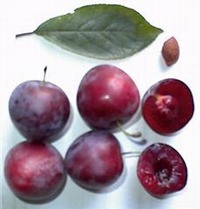
 Japanese plum (Prunus salicina Lindel.) is a highly perishable fruit. Commercial storage and shipping conditions (0-5 °C and 80-95% RU) delay softening and reduce fresh weight loss and disease development, but may also cause cold storage disorders such as chilling injury (CI) symptoms.
Many plum cultivars are susceptible to express CI symptoms (flesh browning, mealiness, flesh translucency, flesh bleeding, etc.) after a prolonged cold storage and ripening at room temperature. The CI symptoms affect the postharvest storage and shipping, and they reduce the consumer acceptance.
Many studies have demonstrated that storing the plums at temperatures higher than 7.5°C let to avoid CI in several cultivars and was effective in controlling the cold storage disorders, but it enhanced the over-ripening and senescence of fruit. To avoid softening problems due to temperatures higher than 7.5°C, some scientists have tested the controlled atmosphere (low O2, 3-5 kPa, and d high CO2, 10-15 kPa) combined with temperatures higher than 7.5 °C, this combined approach not only increased the softening fruit but also favored the off-odors development.
Another technique to control the fruit senescence is the application of 1-MCP (1-methylcyclopropene) which inhibits the ethylene production and action. In California, the recommended application for stone fruit is 0.5 µL /L at 0°C for 24 h in a sealed room. The 24-h application period is a critical issue for the chain because it delays storage and packaging, thus interrupting the current operation flow.
Forced-air cooling (FAC) is a commercial practice used all over the world and it allows that perishable produce to be marketed over long distances without compromising the safety and quality of the produce. In California, the FAC is applied immediately after harvest and lasts from 6 to 9 hours. It has been estimated that 3.6 Millions GJ of electricity are annually consumed for FAC and short cold storage, which represent 5.5% of total electricity used in agriculture and 0.4% of the California total consumption.
Storing the Japanese plums at temperatures from 7.5 to 10 °C after 1-MCP application could be the optimal combination to save energy and avoid CI symptoms. A research group (Minas et al., 2013) has evaluated the efficacy of 1-MCP application during FAC to control fruit senescence and avoid interruptions of the current operation flow, followed by the storage at 10°C after 1-MCP application to avoid CI symptoms occurring during plum distribution and reduce energy consume.
The research was conducted testing some plum cultivars and following wing treatments:
- Control;
- 1-MCP standard application – Application of 0.5 µL/L of 1-MCP at 0°C for 24 h, then treated fruits were stored at 0 and 10 °C for 10, 20 and 30 days;
- 1-MCP innovative application - Application of 0.5 µL/L of 1-MCP at 0°C for 6 h in a forced-air cooler (FAC phase simulation), then treated fruits were stored at 0 and 10 °C for 10 and 20 days.
After cold storage at 0 and 10 °C, the plums are put at room temperature to ripen simulating the conditions of a retail market, this phase lasted 6 days for standard treatment and 8 days for innovative one. During these days the fruit stone quality was evaluated measuring ethylene production, respiration rate, flesh firmness, soluble solids content, titratable acidity, skin and flesh color, consumer acceptance. For the last parameter, a value scale from 1 (= dislike extremely) to 9 (like extremely) was used considering the firmness, sweetness and sourness of the plum.
Both 1-MCP application systems resulted effective in protecting all cultivars from softening and senescence processes during ripening after 10 or 20 days storage at 0°C or 10°C. The ethylene production resulted lower in 1-MCP treated fruits stored at 10 °C than in untreated fruits stored at 0°C. The 1-MCP application delayed the acidity loss and flesh color change, and had not negative effects on consumer acceptance in the case of low-acidity plums.
In general, treating the Japanese plums with 1-MCP and storing them at 10° allowed to limit the CI symptoms and fruit softening occurring during commercial distribution at room temperature. In addition, pre-storage 1-MCP treatment followed by storage at 10°C would cost about 126.0 kJ/kg versus the 194.4 kJ/kg needed for storage at 0°C for up to 20 days in the California climate. Thus, this new approach would reduce energy use by 35%, reducing fresh fruit costs from 8.10$ to 5,25$ per ton of produce.
The reduction of 1-MCP application duration from 24 to 6 hours could have a beneficial effects on the operation flow. The reduced time required would allow this technology to be easily adopted by growers because the application of 1-MCP during FAC does not add an extra step to the current postharvest handling.