The outlook for the new peach and nectarine crop in Greece's main production region, Imathia, is optimistic. First of all, no damage from frost or hail has been recorded so far. In addition, this year's spring began with the trees having already fulfilled their required chilling hours.
The condition of the crops is described by Dr. Pavlina Drogoudi, Research Director at the Institute of Plant Breeding and Genetic Resources, Department of Deciduous Fruit Trees in Naoussa (ELGO-DIMITRA): "The current winter period creates positive expectations for the production of deciduous fruit trees in Imathia, as the chilling conditions are considered sufficient for their normal development. Based on the recorded temperatures and the chilling requirements of the varieties, it is estimated that this year will move at normal yield levels."
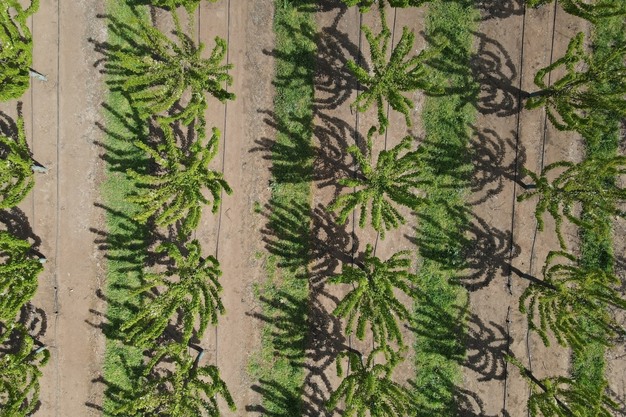 © Department of Deciduous Fruit Trees in Naoussa
"Specifically, during the winter of 2025–2026, chill accumulation reached 79 portions according to the dynamic model or 1.523 Utah units. This value is significantly higher compared to previous 'problematic' years for the region, such as 2020, 2023, and 2024, when values ranged between 70 and 73 portions (approximately 1.400 Utah units). At the same time, this year's chilling level approaches the historical average of 83 portions for the Naoussa area (period 1967–2013), further strengthening the estimate of favorable conditions."
"Furthermore, according to measurements carried out at the Department of Deciduous Fruit Trees in Naoussa, concerning the chilling requirements of a significant number of cultivated varieties in our country (data from Dr. G. Pantelidis), the level of 79 portions recorded this year is considered sufficient to meet their requirements," Dr. Drogoudi explains regarding the measurement results.
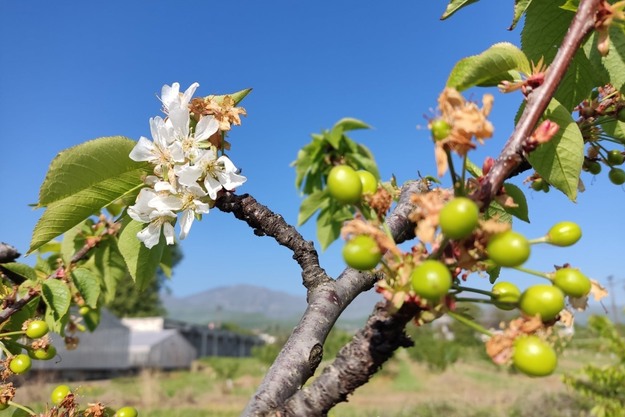 © Konstantinos Kazantzis, Department of Deciduous Fruit Trees in Naoussa
Chill accumulation is also considered positive for other deciduous fruit trees. As Dr. Drogoudi notes, "Systematic records of flowering time in a large number of deciduous fruit tree varieties, conducted in the orchards of the Department in Naoussa, show that this year's flowering development in peaches, apricots, and almonds is very close to that of 2021. This was a year with similar levels of winter chill to this year (78 versus 79 chill portions)."
"This finding is an important indication that flowering time in the region is mainly influenced by when the trees' chilling requirements are met and less by the occurrence of high temperatures. This is because, for flowering to begin, the chilling requirements must first be satisfied, followed by the fulfillment of heat requirements," the Greek scientist observes.
As she adds, "In years with insufficient chill accumulation, symptoms such as flower drop, the presence of imperfect flowers leading to flower drop, and reduced fruit set, as well as prolonged flowering duration, are observed in varieties whose requirements are not met. Questions arise from the recording of flower drop, mainly in the apricot varieties Farbaly and Bora, by producers in Imathia and Pella this year, the causes of which require further investigation."
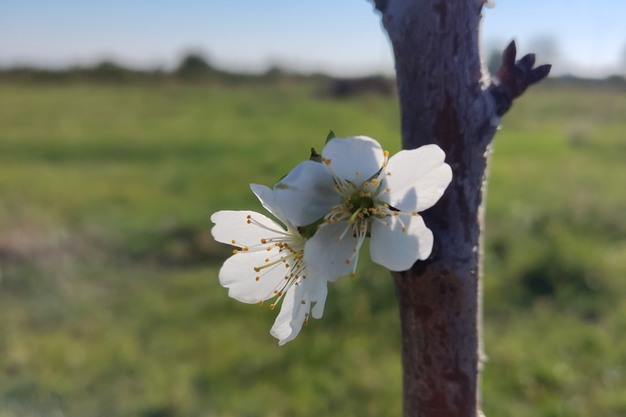 © Department of Deciduous Fruit Trees in Naoussa
Finally, Dr. Drogoudi invites interested parties to attend the conference titled "Resilience and quality in fruit growing: The contribution of propagation material in a changing climate" (May 8, 2026, Department of Deciduous Fruit Trees in Naoussa). The event will present results from a study on the effectiveness of different models for calculating winter chill accumulation in predicting flowering time and how chill correlates with yield in deciduous fruit trees. The conference is co-organized by ELGO-DIMITRA (Institute of Plant Breeding and Genetic Resources) and AEGILOPS (Network for Biodiversity and Ecology in Agriculture).
For more information:
Pavlina Drogoudi
Department of Deciduous Fruit Trees in Naoussa (ELGO-DIMITRA)
Tel: +30 233 204 1548
Email: [email protected]
www.pomologyinstitute.gr