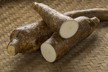
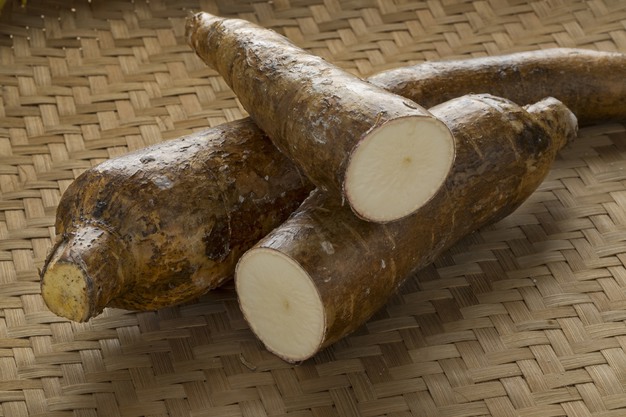
Over the past five years, Costa Rica has exported an average of nearly 135,000 tons of cassava annually, making it one of the top global exporters. It is the primary source of cassava for markets in Europe and the United States. The Roots and Tubers Export Chamber, CERyT, represents its 22 members, who together produce 75% of the country's cassava.
 © ID 112134313 © Picture Partners | Dreamstime.com
"Since CERyT was established eight years ago, the cassava market has grown at an average rate of nearly 12% annually. Weekly export volumes have increased from about 100 containers to 145, with 100 containers containing fresh cassava and 45 frozen cassava," stated Alberto Bonilla, president of CERyT. Data from Procomer, Costa Rica's export promotion agency, shows that approximately 70% of exports are destined for North America, around 25% for Europe, and smaller quantities are shipped to Caribbean islands.
According to Eurostat figures, the EU imported 35,000 tons of cassava from Costa Rica last year, seven times more than from Thailand, the second most important source for the European market. Smaller quantities are supplied by countries such as France, Spain, Portugal, Ecuador, Vietnam, India, Madagascar, and Ghana.
 © CERyT
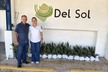
CERyT's founding philosophy remains unchanged. "We are friends, we are colleagues," says Bonilla. "We talk to our colleagues every day. Costa Rica's real competition does not come from within, but from Ecuador, Colombia, and Panama. Against this backdrop, the 22-member exporters have every reason in the world to stick together and promote a crop that the world is only beginning to appreciate."
Exports are increasing steadily, but last year revealed a weakness. "In our rush to expand market share aggressively, the sector overlooked its productive foundation. When El Niño disrupted weather patterns, yields fell short of demand," Bonilla admits. "We realized we needed to focus on expanding the cultivated area, which was our mistake."
 © CERyT
 © CERyT
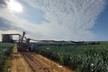
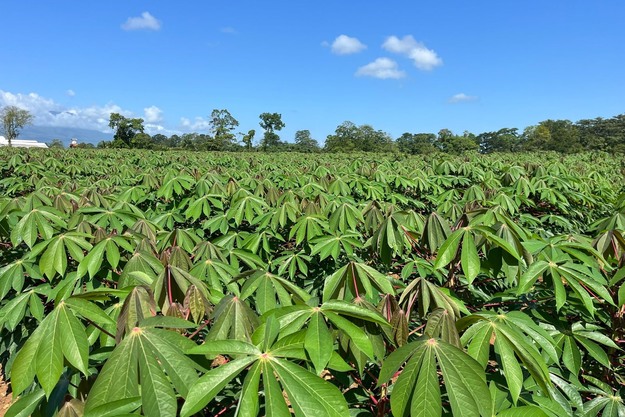
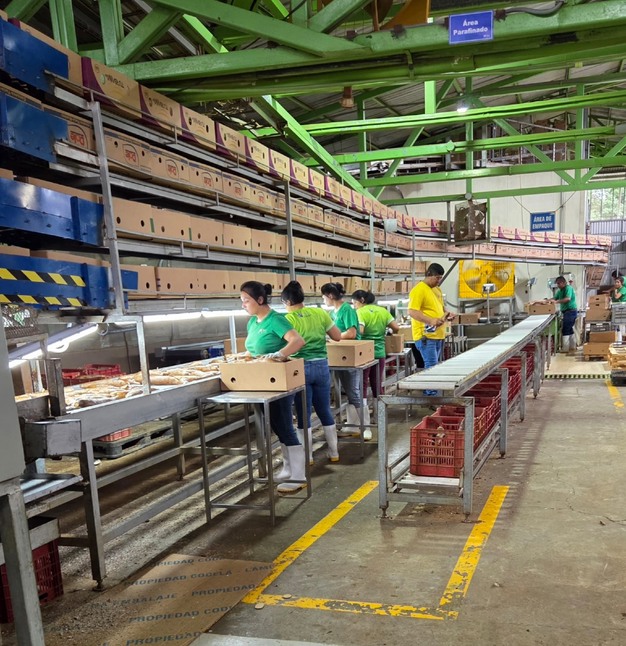
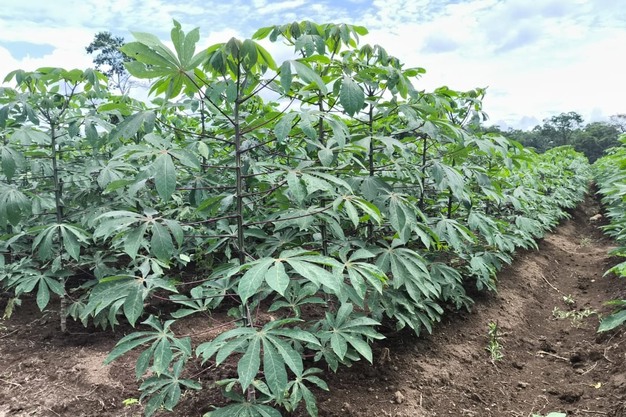
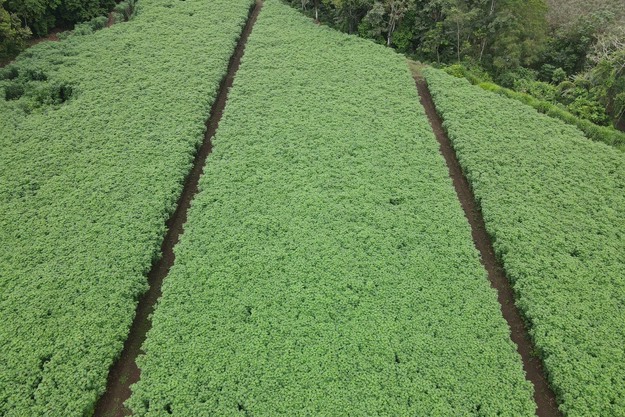
The lesson did not fall on deaf ears. CERyT is collaborating through public-private partnerships with organizations such as the Ministry of Agriculture and Livestock (MAG), Procomer, and El Colono Agropecuario—one of Costa Rica's leading agricultural suppliers with over 25 branches nationwide—to professionalize cassava farming. "The goal is to implement drainage systems, standardize planting densities, and bring real discipline to a crop traditionally managed by intuition. Our moral commitment is to double production per hectare to help feed the global population."
Why Costa Rica produces the world's best cassava
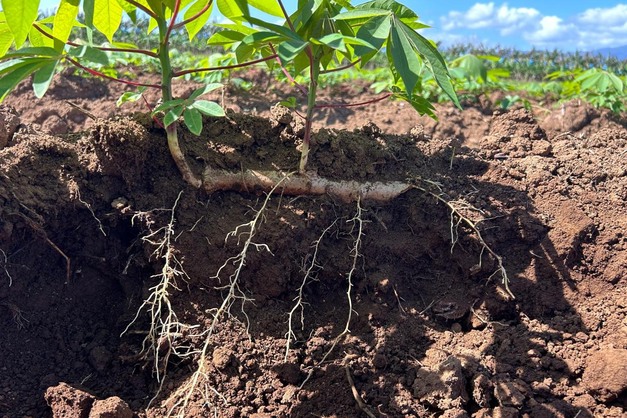
Costa Rica grows the Valencia variety, which Bonilla describes as superior and well accepted worldwide. But the variety alone doesn't explain everything. "Colombia and Ecuador also grow this variety, but they don't have the volcanic soils of Costa Rica, its constant rainfall, and stable temperatures; a unique combination that cannot be replicated anywhere else."
 © Colono Comercial
Another strength of Costa Rica is its focus on exports. Bonilla illustrates this with the story of Café Britt's founder, who came to the country expecting to find the best coffee in the world but was disappointed with the local market offerings. He attributes this to a deeply ingrained cultural habit: "Costa Rican growers were born with the mindset of exporting. The best always goes abroad." This export-oriented mentality, along with the country's ideal natural conditions, explains why Costa Rican pineapple, coffee, chayote, and cassava hold significant shares in international markets.
Four years to rectify an administrative error
The most notable incident in CERyT's recent history involves a regulatory issue that very few outside the sector are aware of. In 2021, Costa Rican exporters found out that their product had been technically illegal to sell in the EU since 2008, not because they did anything wrong, but because of a simple administrative oversight.
 © CERyT
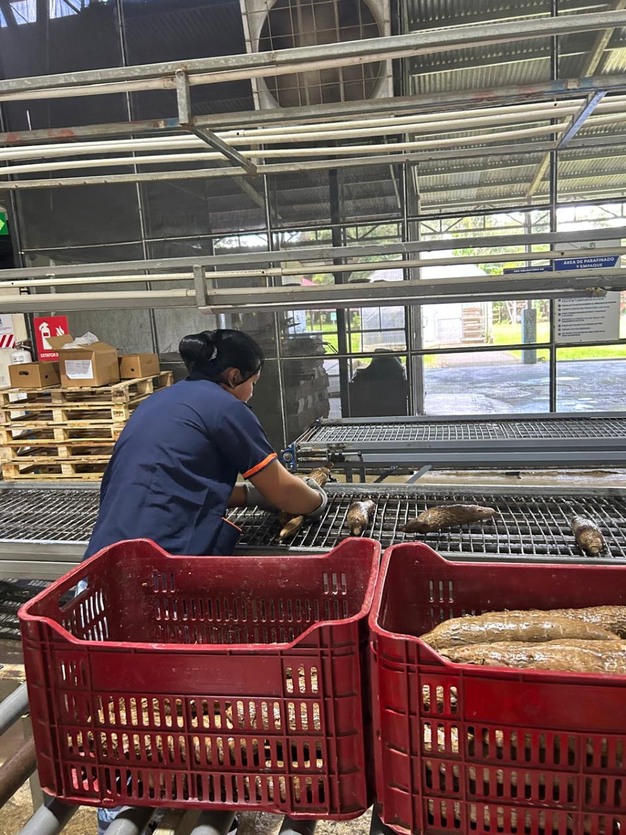
Here's the story: EU Regulation 1333/2008, which governs food additives, includes a list of products approved for use with paraffin wax, a common post-harvest coating that helps preserve cassava and prevent it from drying. "When this list was created, cassava was simply not included. It wasn't an intentional omission; the listwriters just didn't mention it. As a result, cassava coated with paraffin had been technically non-compliant for over ten years without anyone noticing," Bonilla explains.
When the issue was identified in 2021, exports continued to flow while CERyT worked to address it. "We worked for four years with the Costa Rican Ministry of Foreign Trade (COMEX), Procomer, its legal teams, and Belgian scholars to fix this issue. The green light finally came a year ago, but with an unexpected requirement. Since paraffin is derived from petrochemicals, EU regulators mandated a shift to natural alternatives. Two options are now approved: One made from beeswax and another from a different natural source. Visually and functionally, they are identical to paraffin. The main obstacle is cost. "If demand increases, we'll get better prices from suppliers. It will happen. We just need time."
The time for cassava
In Europe, the market is already moving in a positive direction. Immigration from the Caribbean, Latin America, and Africa has introduced cassava to new consumers, who then spread awareness to their neighbors. "It started as a Caribbean delicacy about twenty years ago. Now, as these communities merge with others on the continent, their popularity is growing. Nowadays, you can find cassava on restaurant menus." Cassava chips, Bonilla points out, have gone from being a rarity to a widely recognized product in just a few years.
 © CERyT
Looking ahead, Bonilla sees great potential in cassava flour and is also exploring the use of its peel, which is currently a waste product, as pet food. Both initiatives are still in early development, partly due to Costa Rica's high energy costs. Nonetheless, the main objective remains unchanged: "Produce twice as much per hectare, make agriculture profitable, and expand the market."
For more information:
Alberto Bonilla (president)
CERyT (Cámara de Exportadores de Raíces y Tubérculos)
Costa Rica
Tel: +506 8576-2876
Email: [email protected]
www.ceryt.org