"Until late February, nearly at the start of March, we experienced 14.5% growth compared to the previous year." However, this positive trend has recently been affected: "The rain caused significant damage throughout almost all of March, and this will impact production," stated Paulov Sifuentes Fernández, the commercial manager of Agroexportadora Sol de Olmos.
At the same time, the international market is seeing high demand, especially from the United States, Chile, and Central America. "This has caused prices to increase. We originally sold at 60 cents on the dollar, but now the price has climbed to $1.10, driven by strong demand for lemons," he explained.
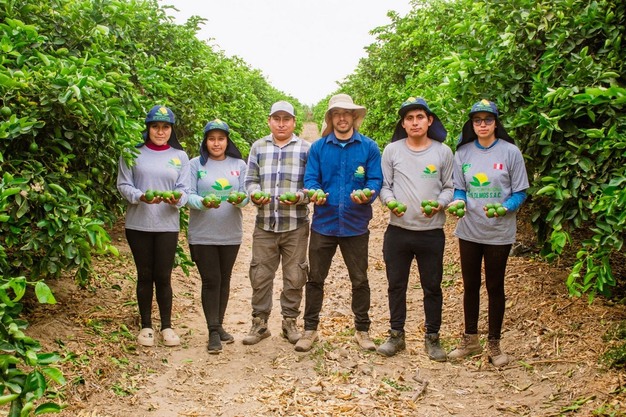 © Agroexportadora Sol De Olmos SAC
Peruvian lemons are known for their quality, thanks to the unique desert conditions in northern Peru. "Peruvian lemons have more juice content and less peel because they are produced in the desert and with drip irrigation," the executive stated. This characteristic has helped them gain popularity in high-demand markets, especially in North America.
Historically, the United States has been the primary destination market, but this season, Chile has gained significant prominence. "This year, demand is evenly split between Chile and the United States; demand from Chile has increased a lot," Sifuentes stated.
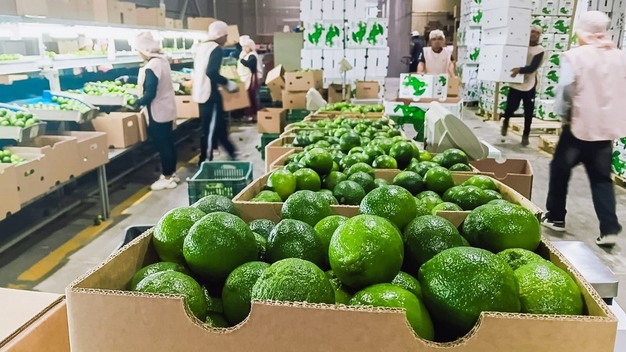 © Agroexportadora Sol De Olmos SAC
Peruvian production, mainly concentrated in Piura (about 80%) and Lambayeque, benefits from year-round availability. However, the commercial strategy focuses on targeting specific windows. "We try to go out between November and April, when Mexico and Colombia have less fruit," he explained.
This window is crucial for Peruvian competitiveness, especially against Mexico, whose lower production costs exert pressure on international prices. "If we exported all year round, we wouldn't be able to compete with Mexico," he said.
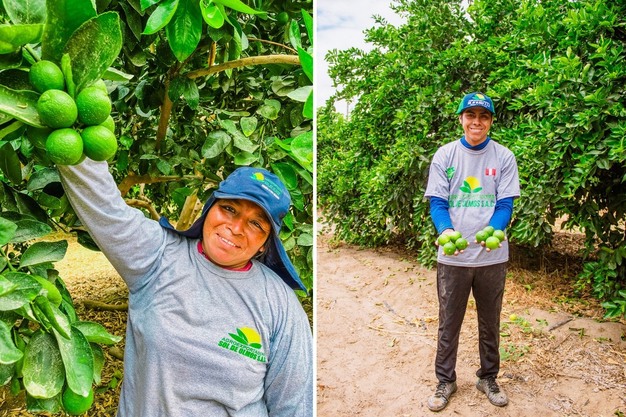 © Agroexportadora Sol De Olmos SAC
The current situation also points to an unusual year for regional production. Specifically, Sol de Olmos predicts a significant decrease in volumes, with Sifuentes noting, "We are going to have around 1,500 tons less in the orchards, about 30% less than projected."
In the short term, market behavior might shift. "In two or three months, prices are expected to decline because Mexico's harvest arrives and prices typically drop after Easter," he said.
"Peru exports around 42,000 tons of lemons annually, primarily from November to February, strengthening its position in the global market during periods of lower supply worldwide. In this context, factors such as quality, timing, and demand will remain crucial for the sector's success," he stated.
 For more information:
Paulov Sifuentes Fernández
Agroexportadora Sol de Olmos
Peru
Tel: +51 982 509 468
Email: [email protected]
www.soldeolmos.com