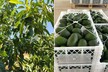
Dragon fruit cultivation is expanding in India as growers move away from traditional crops such as coconut, mango, coffee, and pepper. In Karnataka, Arun Srinivas shifted to dragon fruit in 2020 after evaluating production and market factors. "It was not just a good financial return crop, it also requires very little water and has lower disease risk compared to other crops, like other fruits. I felt it was the right crop for my land," he said.
Srinivas developed the crop on approximately 4.5 hectares, producing around 220 tons annually. Dragon fruit is grown on support structures, with vines trained over rings. The crop, originally from Central America, has been adopted in India since 2009, with more structured research beginning around 2013–14.
Dr. G. Karunakaran of the Indian Institute of Horticultural Research said adoption increased after 2021. "Dragon fruit adoption in India spread like mobile phones, once farmers saw the income potential, everyone wanted to grow it," he said. The crop allows staggered harvesting over six months, supporting a continuous supply.
Pollination remains a factor in production. In Karnataka, Srinivas uses honey bees. "Nature has already designed the perfect pollination system. When humans interfere too much, it often disturbs that balance," he said. In Kerala, Cheradeep Ma uses self-pollinating varieties due to the risks associated with manual pollination at night. "In Wayanad, going into the plantation at night is risky. We have snakes, wild boars, sometimes even leopards and elephants," he said.
Ma cultivates multiple varieties and supplies planting material to other growers. "Dragon fruit has helped me diversify the farm income. If coffee prices fall or pepper prices fluctuate, crops like dragon fruit help me sustain the estate," he said.
Varietal selection remains a focus. Dr. Sunila Kumari identified plant lines with higher yields and fruit size. The Indian market shows a preference for red-flesh fruit. "These varieties are visually attractive, have a richer flavor profile, and generally command a better market price," she said.
Yields in India range from 15 to 25 tons per hectare, compared to more than 30 tons per hectare internationally. Kumari said production systems need to shift toward higher-density structures and improved canopy management.
Post-harvest handling remains a constraint. "Without an integrated network of solar-powered, on-farm, pre-cooling units and specialized cold-chain logistics, our fruit will never reach premium European or North American markets in peak condition," she said.
"We must treat dragon fruit not as a hardy cactus that survives neglect, but as a high-value horticultural asset," Kumari added.
Source: BBC