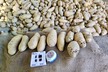
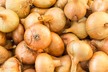
Onion harvesting in South Africa can begin when most of the tops have fallen over, while the necks and leaves are still green. At this stage, it is important to allow the tops to dry before trimming, as nutrients are still being transported to the bulbs.
Where onions are grown on raised beds or flat ground, a blade can be drawn under the crop to loosen bulbs from the soil and sever roots, allowing them to dry. If plants remain upright, they can be left in the field to dry under suitable weather conditions. When bulbs are pulled, they should be arranged in windrows or heaps, with leaves covering the bulbs to protect them from sunlight. Grass or straw can also be used for protection until drying is complete.
Cutting tops immediately after lodging reduces quality and shelf life, which affects market returns. Properly cured onions develop smooth, shiny skins and a uniform appearance.
Sorting by size before packing supports market presentation. Mixed sizes or the inclusion of split bulbs can reduce returns.
In addition to dry onions, there is demand for green onions in rural areas and certain markets. These are harvested before full maturity, when tops have not yet fallen over, and are pulled and tied into bunches. Both stems and leaves are used in consumption.
Texas Grano is used for this segment due to early maturity and sweetness. Allocating part of the crop to this variety can support earlier market entry.
Intermediate-day onions, typically produced in the Western Cape, can also be planted in short-day regions to extend the green onion supply window. These varieties initiate bulbing later than short-day onions, allowing harvest continuity after early varieties have been cleared.
In northern regions of South Africa, intermediate-day onions may not form mature bulbs and can be harvested as green onions through December and into early January.
For market preparation, outer leaves are pulled down over the bulb and removed to improve appearance.
With early direct seeding of short-day varieties in warm regions, green onions can be marketed from mid-September to early January. If sets are used, marketing can begin from May. In local rural markets, this supports an extended supply period.
Source: Farmer's Weekly