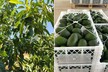
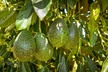
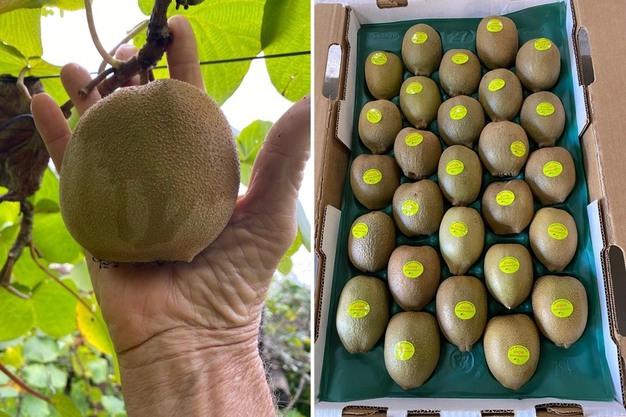
Nooyenskopje's kiwi harvest started four weeks ago, amidst what must surely be the most challenging season the nascent yellow kiwi industry has yet experienced, as the Middle East is wiped off the marketing table this season, or kiwis are flown there at terrific cost.
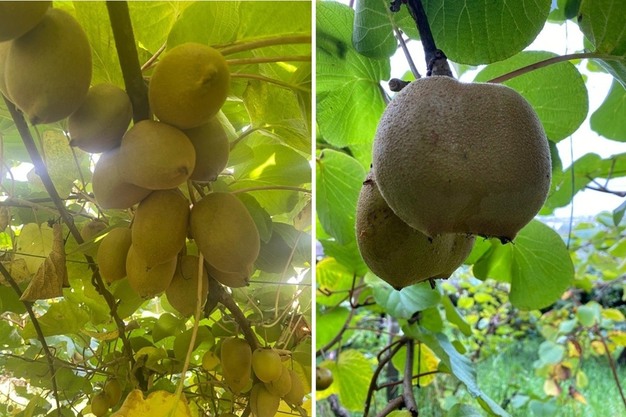
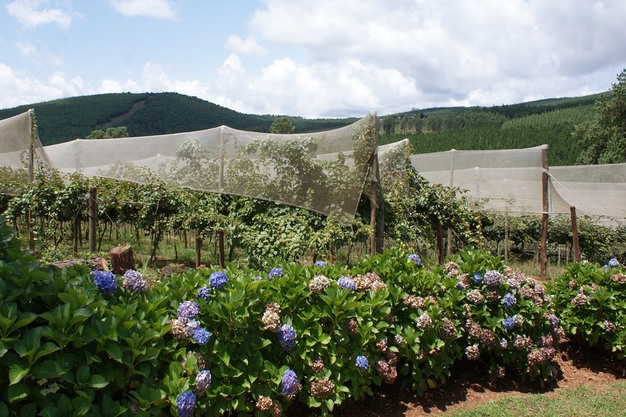
Back in Magoebaskloof, Limpopo, the winter has been proper cold and even the tremendous rainfall – 2,400mm since December and counting! – hasn't stopped a handsome crop from developing, a much better crop than last year, farmer Danie Meyer says. He grows close to every variety of kiwi and kiwi berry available in South Africa and can stretch the harvest into June, especially with green Hayward kiwis.
Approaching 2.5m of rain over three months, he hasn't even been to his new kiwi orchards across the Broederstroom stream in three months; fortuitously, the vines are too young to be harvested. In between the rain, they have packed yellow kiwis to be flown out to Germany and the Netherlands.
 © Nooyenskopje
"An island" in the kiwi industry
In South Africa, production of the green Hayward kiwi has taken a backseat to the much-vaunted yellow kiwi represented by various cultivar owners. Few green kiwi growers remain. He describes Nooyenskopje as "an island", marching to its own beat along with its 'family' and a steady supply of green kiwis.
Dependence on yellow kiwis, of which many containers go to the Middle East traditionally, has been a major risk factor for kiwi growers. "I truly feel for the kiwi growers this year. Our traditional markets in the Middle East don't exist anymore. It requires a major adjustment."
Coupled with a preponderance of small fruit (apparently ascribed to insufficient pollination), kiwi packhouses in the Western Cape, KwaZulu-Natal, and Mpumalanga are faced with crates of yellow kiwis for which there is no buyer.
Kiwi packhouses are under huge pressure to find clients for fruit without a home, he says, while yellow kiwi prices on the local market are very low. Bruising leads to immediate ripening on yellow kiwis, and some fruit has had to be dumped.
Last year already, he says, the relative pricing for South African yellow kiwis in the Middle East was lower than expected.
 © Nooyenskopje
At the Johannesburg municipal market, Meyer has been entrusting his kiwi fruit since 1994 to Alex Christodolides from GROW BothaRoodt, later joined by Ricardo Kotze, whom he trusts absolutely with his interests as well as the small early volumes of Nooyenskopje's red kiwis, smaller than traditional kiwis but as delicious, Meyer says, as marshmallows. "Alex understands the kiwi industry inside out."
Nooyenskopje has had the same long relationship with Shoprite Freshmark, whose shelves carry his green and yellow kiwis and kiwiberries during autumn. The largest portion of his crop goes to them. Their producer-friendly attitude appeals to him, he says, and the retailer returns the favour by allowing Nooyenskopje co-branding with the house brand, a position only a handful of others in the fresh produce industry are allowed.
Locally, consumers have not shown a great liking for yellow kiwis, which surprises him, given their taste. "I expected that the local market would take a strong percentage of yellow kiwis, but it's as if people still think a kiwi can be only green. The demand hadn't expanded as the marketing buzz suggested it would."
The other negative of the yellow kiwi is its tendency to easily become soft, to ripen upon bruising, while the green kiwi is more 'user-friendly', he says.
 © Nooyenskopje
 For more information:
Danie Meyer
Nooyenskopje
Tel: +27 82 568 3224
Email: [email protected]