The potato market is going through a period of severe pressure this year. With more than 8 million tons produced, the 2025-2026 campaign will reach a record level, even though outlets are contracting (lower consumption and exports). Faced with this imbalance, the sector is organizing itself to manage these surpluses, with the introduction of a dedicated protocol.
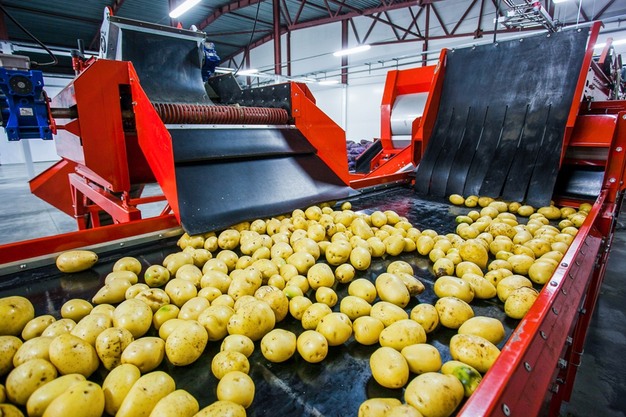 © Vadim Ginzburg | Dreamstime
Plant supplies are based solely on contracted pre-season volumes
"In a normal year, the volumes contracted each year represent more than 80% of the volumes processed by manufacturers. Since the start of the year, tonnages delivered to factories have been falling, as a result of processing rates adjusting to demand. Against this backdrop, manufacturers will not be able to process more volumes than last year, and are not buying batches that are not covered by contract," according to the French Interprofessional Body for the Promotion of Potatoes (GIPT).
Falling consumption
The sector is also suffering from a downturn in outlets. After several years of growth, household consumption of processed products is down this year, directly affecting demand for potatoes for processing. While the precise reasons for this drop are hard to pin down, Bertrand Ouillon, general delegate of GIPT, points to a possible growth crisis. "The sectors have generally seen an increase in consumption over the last ten years or so, but this year we can see that prices are stable, or even decreasing slightly, and that consumption is also falling. (In detail: frozen foods remain dynamic, purees are on the decline, and certain segments, such as the mid-range, are more erratic).
Weakened exports
On the export side (fries), the situation is also deteriorating. While French exports were still on the rise in the second half of 2025, the war in the Middle East is now causing considerable uncertainty, both in terms of consumption and export flows, pointing to a significant drop in volumes shipped. The European market accounts for around 60% of volumes, compared with 40% for third countries, which are currently experiencing a slowdown, particularly in Asia and the Middle East. The United Kingdom remains the leading destination for European fries, ahead of Saudi Arabia. Exports of processed products from the main European producer countries (Belgium, the Netherlands, Germany, and France) fell by around 2 to 3% last year, even though processing capacity continues to increase.
Above all, however, the sector fears a drop in demand due to inflation. "With the rising cost of fuel, consumers could be forced to arbitrate their spending, to the detriment of outings in particular, especially in the catering segment," explains Bertrand Ouillon.
Finally, while certain regions, such as South America, remain on an upward trend, they could quickly become highly competitive, with all exporting countries seeking to redirect their volumes there. "In this context, the dominant position of Belgium and the Netherlands on the world market could accentuate the pressure on available outlets, especially for the French supply," explains Bertrand Ouillon.
Very large surpluses with no food outlets
Given the high level of production, falling demand, and increased rejection, the sector estimates that there is a surplus of several hundred thousand tons of potatoes on the French market. This surplus cannot be absorbed by the sector due to a lack of additional orders and requires specific management to maintain economic and health balances, including for fresh potatoes.
The sector faced a similar crisis during COVID. The experience gained in 2020 shows that large volumes can be used for animal feed (like the Opbovins platform launched last month by UNPT, designed to put producers and cattle breeders in touch with each other to sell volumes that cannot be found on the open market) or to feed methanization plants. "Despite everyone's efforts, it is likely that very large quantities of potatoes will not find an outlet," according to GIPT.
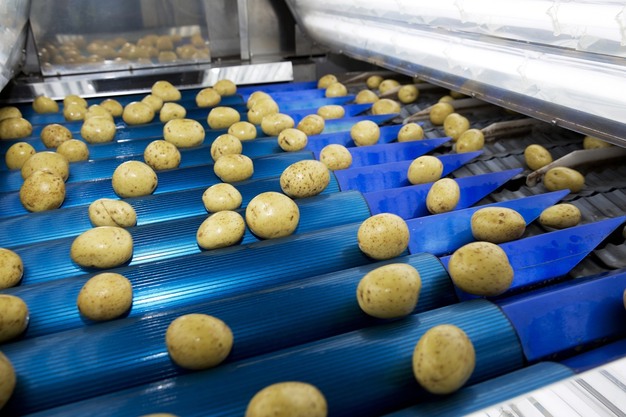 © Gemenacom | Dreamstime
A surplus management and destruction protocol in preparation with Arvalis
To support producers faced with unsold volumes, the sector is working with Arvalis - Institut du végétal to draw up a simple, secure, and inexpensive protocol for destroying potatoes. The aim of this protocol is to limit the health risks associated with the uncontrolled management of tubers and to provide farmers with a framework of practices that are appropriate and rapidly applicable. The detailed technical recommendations will be sent shortly to producers, cooperatives, and players of the sector.
The sector calls for collective responsibility
The trade organizations are calling on all players - producers, producer organizations, cooperatives, and operators - to demonstrate collective responsibility. "Given what is at stake in terms of volumes, everyone needs to be aware of the risk," explains Bertrand Ouillon. "The market is not going to recover in the short term, so we are going to have to communicate collectively on good destruction practices, for example, because not all volumes will find takers."
For more information:
Groupement Interprofessionnel pour la Valorisation de la Pomme de Terre (GIPT)
43-45 rue de Naples 75008 Paris
[email protected]
www.gipt.net