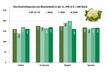
In the Rio Grande do Norte and Ceará production region, average melon yields in February reached 30 tons per hectare, a decline of around 4% compared to January. With the 2025/26 harvest season approaching its end and expected to conclude by late March, recurring rainfall from mid-February affected productivity, which had remained high during most of the season.
Rainfall reduced the share of export-quality melons, as excess moisture affected fruit development and increased cases of stretching and deformities. Part of the production was either discarded or directed to the domestic market. The reduction in quality was partly limited as some growers advanced harvesting schedules ahead of the rains to avoid harvesting during wet conditions.
Despite the February decline, average productivity for the season from August to February reached 31 tons per hectare, up 9% compared to the 2024/25 campaign. This performance is linked to phytosanitary management, including control of leafminer, the main pest affecting melon crops in the region.
Production costs increased in February compared to January, reaching around US$0.59 per kilogram, up 17%. According to Hortifrúti/Cepea collaborators, higher costs are linked to additional harvest and post-harvest operations during the rainy period, including increased use of biological inputs and treatments.
For the coming months, productivity is expected to continue declining through April. At the same time, planting for the 2026/27 season, expected to begin in April, may be delayed due to rainfall forecasts for the period.
Source: HFBrasil