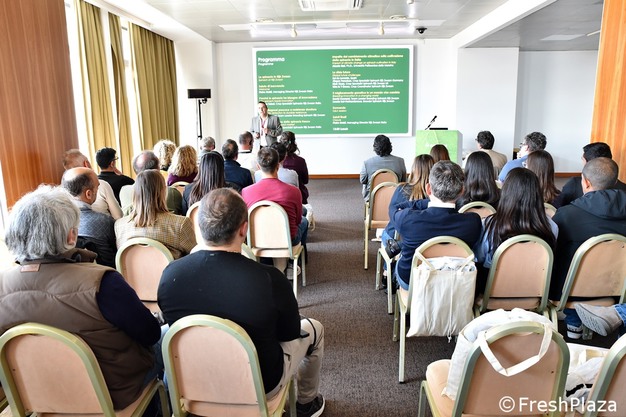
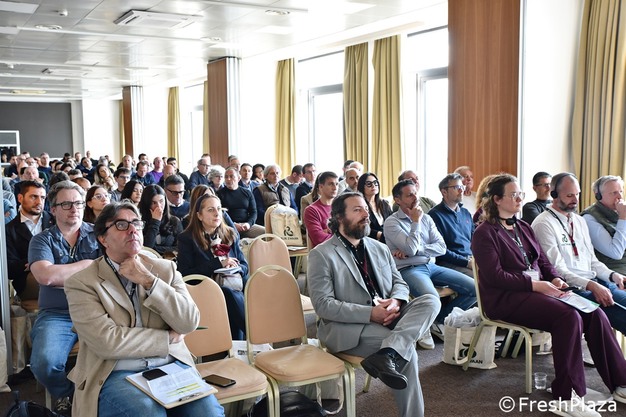
A one-day event that was the kick-off to a series of initiatives concerning spinach. On 18 March 2026, an international conference was organised by Rijk Zwaan Italia at the Royal Continental Hotel in Naples, designed to take an in-depth look at the current situation and the future prospects for the spinach sector. The event, which marked the start of a broader global information campaign, saw Italy as the starting point because of its undisputed continental leadership.
 © Giancarlo Fabbri | FreshPlaza.com
In front of an audience exceeding one hundred industry professionals, the event was opened by Pietro Guidi, Managing Director of Rijk Zwaan Italia, who immediately discussed the pivotal role of Italy's production: "Italy is the country where spinach cultivation is most widespread and most professional. Ours is a leading country for spinach in Europe and, therefore, in the world, and you all represent this excellence. This is also the reason why we chose Italy for a focus on this crop."
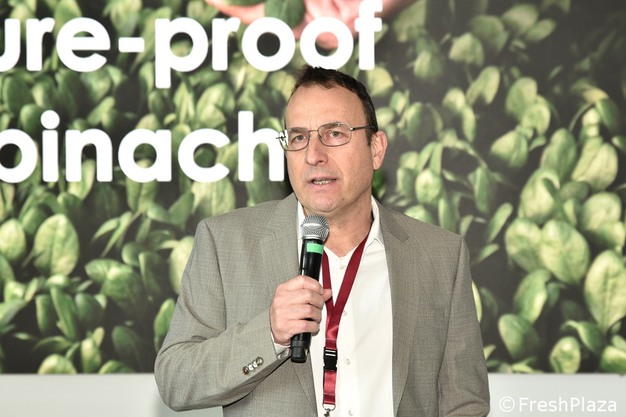 © Giancarlo Fabbri | FreshPlaza.comPietro Guidi, Managing Director of Rijk Zwaan Italy
The meeting provided an objective and data-rich analysis, ranging from a discussion of commercial volumes and consumption habits to the impact of climate change on the soil and the development of new agronomic and genetic responses, outlining a complex picture, yet one rich in opportunities for operators in the sector.
The centrality of Italy for European production and exports
The first technical session provided a detailed mapping of the fresh spinach market by Simona Toloni, Spinach Crop Specialist at Rijk Zwaan Italia. Based on ISTAT, FAO, Nielsen, and other data updated to 2024, it emerged that Italian production exceeded 80,000 tonnes per year, a figure that will remain stable over the three-year period 2022-2024.
 © Giancarlo Fabbri | FreshPlaza.comSimona Toloni, Spinach Crop Specialist at Rijk Zwaan Italy
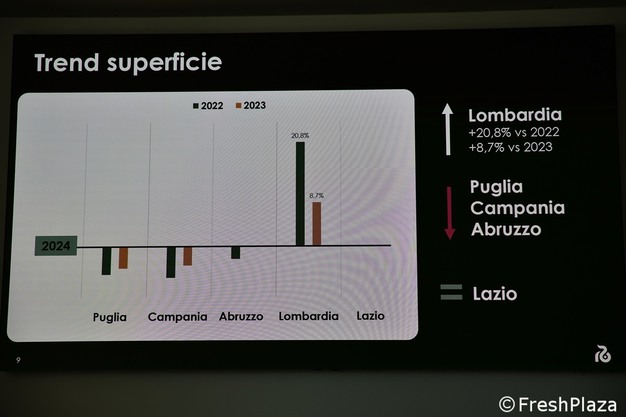
This stability basically rests on five key regions, which alone guarantee 90% of the national supply: Apulia and Abruzzo lead the open field production, Campania and Lombardy dominate the greenhouse segment, while Lazio is characterised by a mixed production. Lombardy is particularly noteworthy as, in the period under review, it is the only region that recorded decisive and significant growth rates in terms of invested areas.
 © Rijk Zwaan Italia
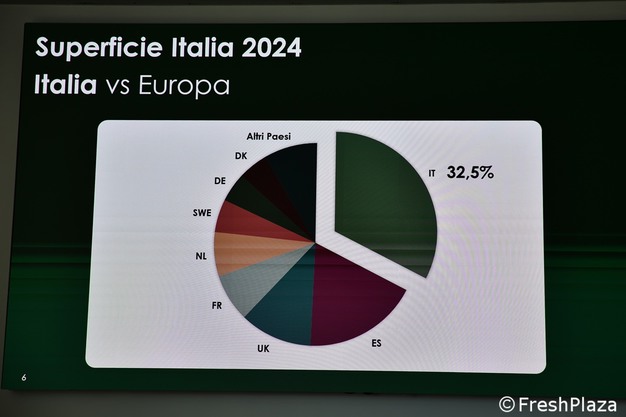
On a continental level, Italy plays a pivotal role, covering 32.5% of the entire European agricultural area dedicated to this crop. Protected crops (greenhouses) cover 46% of the total Italian area.
 © Rijk Zwaan Italia
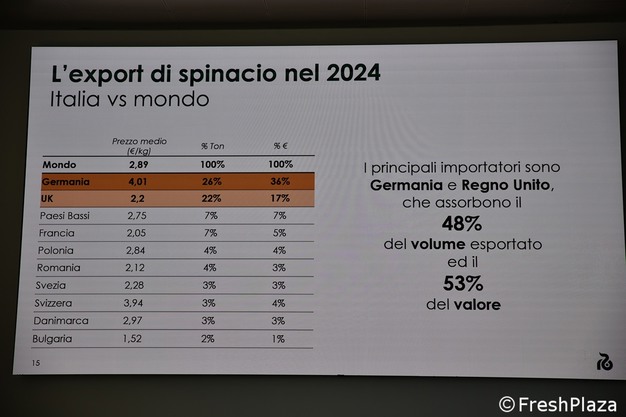
On the commercial side, Italy confirms itself as a leading exporter. As Toloni points out, "Italy is a net exporter of spinach. 47% of the total production is destined to be exported, with a total of 38,000 tonnes exported in 2024." These volumes increased by 5% compared to 2023, generating a total turnover of €110 million (+7% in value), meaning the sector is in excellent health. 70% of exports are directed to European countries, with Germany and the United Kingdom being the main trading partners, as together they absorb 48% of volumes and 53% of the total value exported. At the same time, there is also a growing dynamic on the import front (+52% in 2024 for a total of 3,000 tonnes), necessary to fill the gaps in supply during the summer period. Incoming flows come mainly from Sweden and Poland, which alone account for 55% of imports.
 © Rijk Zwaan Italia
Consumption dynamics and the diversified international markets
The analysis then shifted to product reception. The so-called apparent consumption (=production - + import - export) in Italy in 2024 stood at 45,000 tonnes, translating into a theoretical per capita consumption of about 750 grams per year. The domestic purchase segment absorbs 57% of these volumes, registering constant growth both in terms of quantity (+2.9%) and expenditure (+8%).
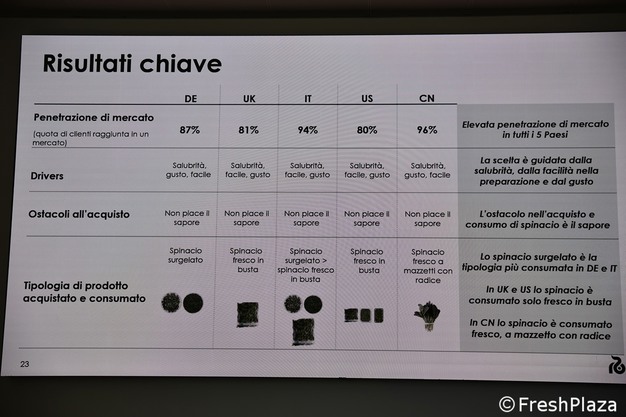
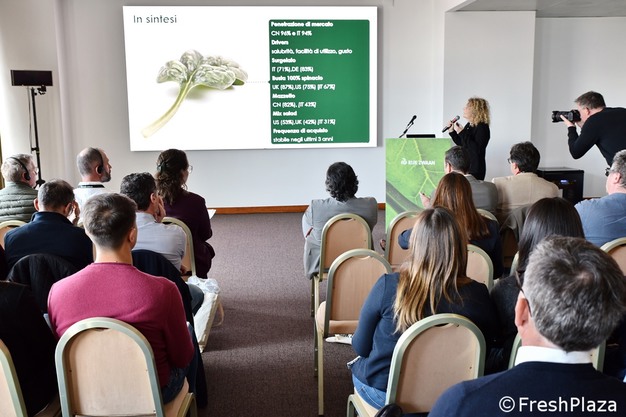
The dynamics of market penetration reveal that consumers are extremely loyal and diversified in their choices. An international survey conducted on the main markets (Italy, Germany, the UK, the USA, and China) shows very high penetration rates: 94% in Italy, 87% in Germany, and 81% in the UK. The driving factors for purchase appear to be uniform on a global level: the perception of wholesomeness, ease of preparation, and taste (which also happens to be the only factor that can discourage purchases).
 © Rijk Zwaan Italia
However, sales formats differ profoundly from country to country. In the Anglo-Saxon markets (USA and UK), fresh spinach is often sold in small bags (100-200 g), while the frozen product prevails in Germany and Italy. Italy, in particular, presents a peculiar scenario: fresh spinach bags are gaining ground (between 500 grams and one kilo), but there is still a market share of 43% linked to traditional spinach sold in bunches with the root, a type of consumption which, on a global scale, finds a parallelism almost exclusively in the Chinese market. Even in fresh.-cut salad mixes (baby leaf and mixed salads), spinach is considered an ingredient with strong added value by 50% of buyers.
 © Giancarlo Fabbri | FreshPlaza.com
The impact of climate change and altered environmental parameters
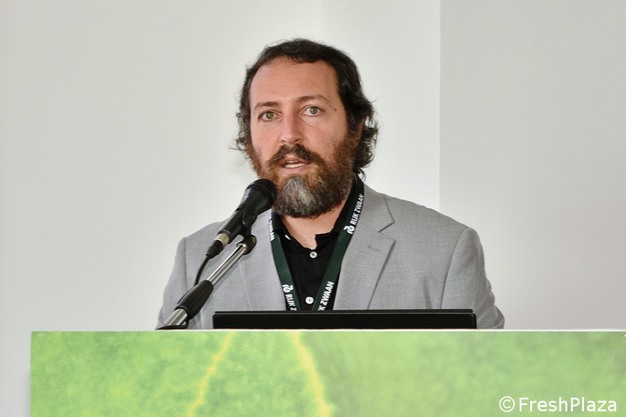
During the Summit, Alessio Ilari, Ph.D., from the Marche Polytechnic University, presented a georeferenced scientific study on the impact of climate change on the suitability of Italian territories.
 © Giancarlo Fabbri | FreshPlaza.comAlessio Ilari, Ph.D., Marche Polytechnic University
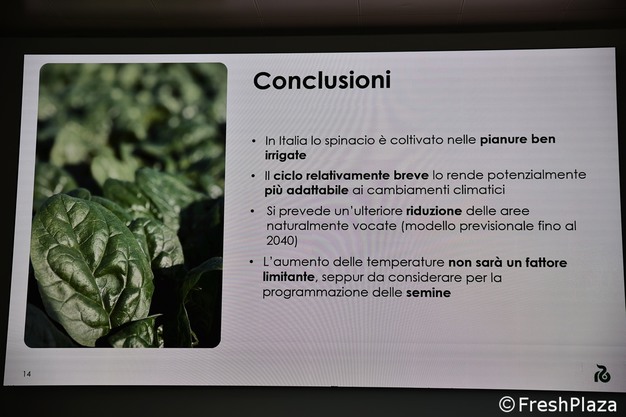
Spinach is a short-cycle crop, with a thermal optimum for growth between 8-10°C and 24°C. Below -7°C, the seedlings suffer lethal damage, while above 24°C, plants are affected by photosynthetic stress. Considering the data from the International Energy Agency, which for Italy certifies a thermal rise of 1.24°C in the recent period (with projections of up to +2°C to 2040), the study modelled the suitability of the main agricultural areas, including Tavoliere delle Puglie, the Po Valley, Agropontino, the Sele Plain, and the Fucino Plain.
The result of the research debunked a widespread belief: heat is not the main enemy of this crop. As Professor Ilari explained, "The increase in temperature does not actually have a negative influence on the adaptability of spinach cultivation. The real limiting factor is rainfall and especially that accumulated during the growing season." The brevity of the growing cycle makes it possible to mitigate excess heat, easily reshaping sowing calendars.
 © Rijk Zwaan Italia
The real danger comes from the secondary effects of climate alteration, first and foremost the rise in sea level and the water deficit, which lead to the salinisation of aquifers. Ilari warned that "Production systems will almost certainly become more and more dependent on irrigation, and this could be a problem especially for areas near the sea due to the potential increase in the saline wedge. Forecast models to 2040 indicate that historic coastal production areas such as the Sele Plain and Agropontino may experience a progressive slide towards marginal status due to these water anomalies. Nevertheless, producers working in synergy with research and varietal development will always be those capable of providing solutions and answers to the critical issues that lie ahead.
Global reflections: testimonies from Spain, Germany, and the United States
The global nature of these abiotic and biotic challenges was confirmed by a series of first-hand accounts from specialists and international operators.
A producer from the Sol de Levante company in Spain illustrated the heavy constraints imposed by soil and water deterioration: "The biggest problems we had this past year were downy mildew and other fungi. Then there is also the management of the type of soil we have, which has an increasing salt content." This condition forces Spanish growers to seek ever faster crop cycles to escape the extreme weather windows and requires the meticulous use of moisture sensors to calibrate irrigation.
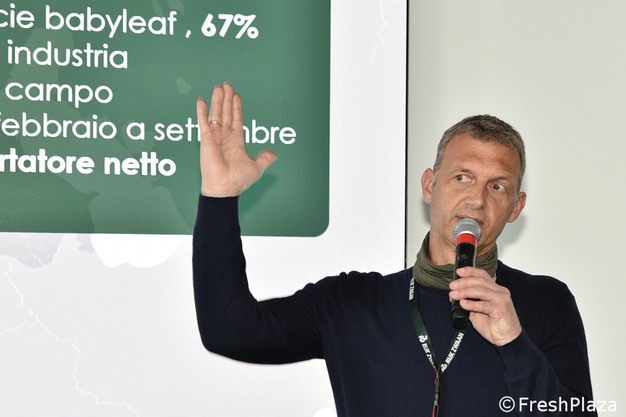
Moving to Northern Europe, Jürgen Parschau, Spinach Crop Specialist at Rijk Zwaan Germany, described a landscape disrupted by rainfall, reporting that the German industry now has to constantly contend with "heavy rain, hail storms and frost damage from April to October." Such conditions call for the selection of varieties with precise phenotypic characteristics, such as distinctly upright leaves to reduce moisture accumulation and the resulting rot.
 © Giancarlo Fabbri | FreshPlaza.comJürgen Parschau, Spinach Crop Specialist at Rijk Zwaan Germany
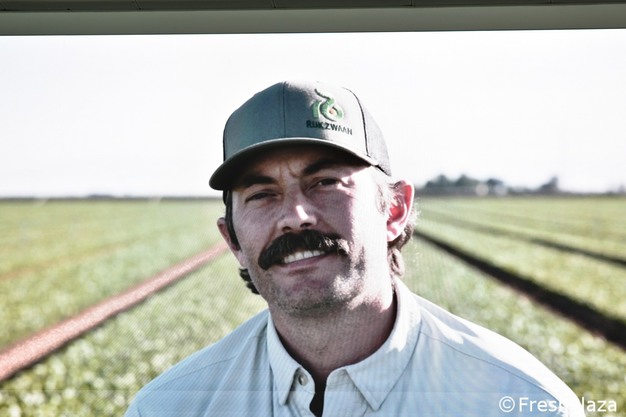
Nick Thorp, Spinach Crop Specialist at Rijk Zwaan U.S., emphasised the exponential aggressiveness of pathogens, accentuated by abnormal winters: "Spinach is a huge crop that evolves quickly. You have to be on the alert all year round. Downy mildew is always a big challenge here in the U.S. because it can wipe out entire crops." Thorp also pointed out how recent high temperatures combined with heavy winter rains have caused Stemphylium to literally explode, forcing the entire North American supply chain to rethink its operational plans.
 © Giancarlo Fabbri | FreshPlaza.comNick Thorp, Spinach Crop Specialist at Rijk Zwaan U.S.
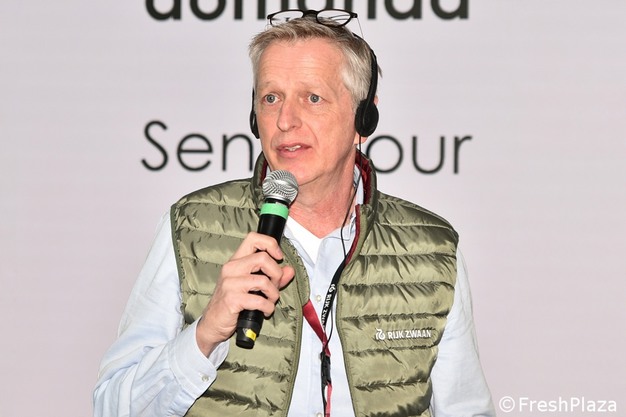
A summary of these dynamics on a global scale was outlined by Wim in 't Groen, Spinach Crop Coordinator at Rijk Zwaan, who recalled the proportions of the global market: 30,000 hectares in the U.S., 60,000 in Europe, and as many as 105,000 in Asia. In 't Groen confirmed that over-evaporation and salt accumulation along coastlines are affecting "Australia, the USA, parts of Portugal, South Africa, and many other countries."
 © Giancarlo Fabbri | FreshPlaza.comWim in 't Groen, Spinach Crop Coordinator at Rijk Zwaan
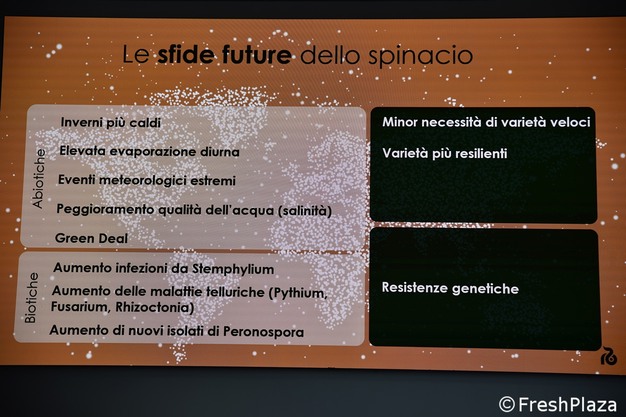
Added to this is the global increase in soil-borne fungal diseases (Pythium, Fusarium, and Rhizoctonia), a phenomenon that causes damping-off and that, especially in Europe, is exacerbated by the phasing out of chemical seed treatment due to the regulatory restrictions of the Green Deal.
 © Rijk Zwaan Italia
Genetic innovation and slow resistance engineering
To cope with a rapidly changing phytopathological framework, seed breeding programmes have become highly specialised. Rijk Zwaan's 'De Focus' diagnostic department, based in De Lier (The Netherlands), employs over 70 specialists dedicated to pathogen analysis, processing around 100 samples a week from fields around the world to ensure early detection of new fungal breeds.
 © Giancarlo Fabbri | FreshPlaza.com
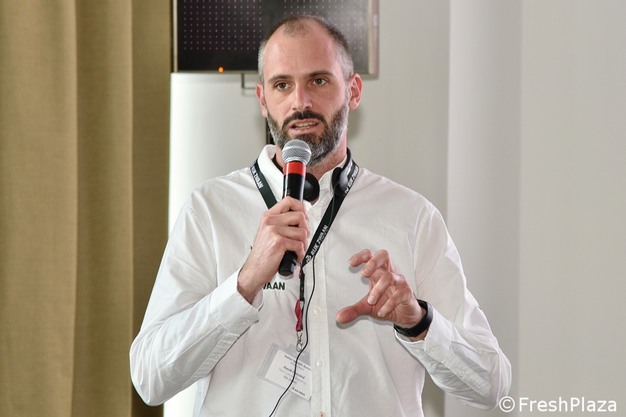
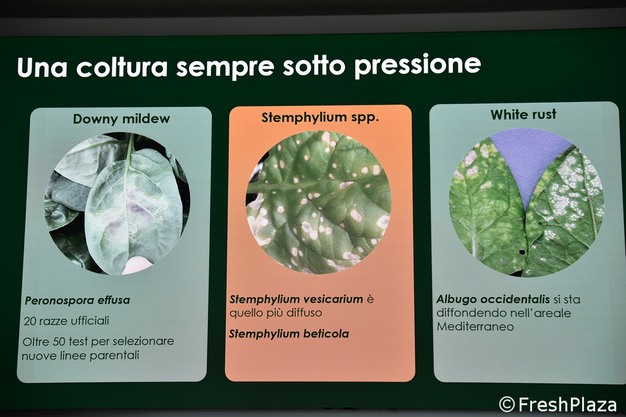
David Courand, Spinach Team Leader Breeding at Rijk Zwaan (pictured above), outlined the main threats and the complex mechanisms by which new varieties are generated. Among the most fearsome pathogens are downy mildew (of which there are now officially 20 breeds in continuous mutation), Stemphylium vesicarium (and to a lesser extent Stemphylium beticola), and the emerging spinach white rust (Albugo occidentalis), a fungus that is spreading along the coasts of the Mediterranean basin.
 © Rijk Zwaan Italia
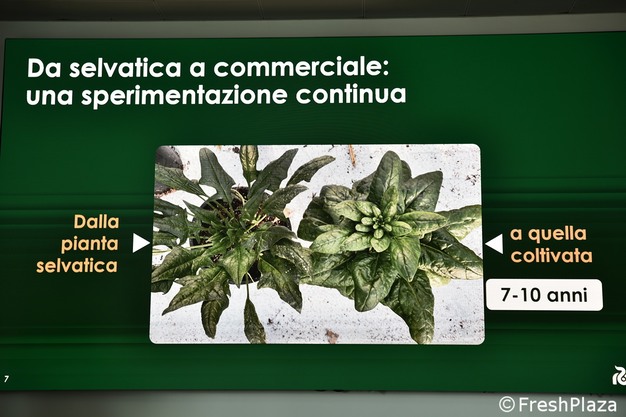
The main limitation in combating these diseases lies in the genetic basis of the commercial crop. Courand explained the process very clearly: "Cultivated spinach has a rather narrow gene pool. So, when we need to find a new resistance, we often have to look in the relative species of wild spinach originating in the Middle East." Geneticists turn to species such as Spinacia turkestanica and Spinacia tetrandra, whose seeds were collected during old botanical expeditions in areas that are difficult to access today.
However, the transfer of a resistance gene from a wild plant to one destined for supermarket shelves is a very time-consuming industrial operation. Wild plants, in fact, have a phenotype that is completely unsuitable for trade: very long stems, pointed and narrow leaves, and high diversity. "Developing high-quality plants from these wild plants takes an average of 7 to 10 years. During this decade, breeders have to perform countless rounds of crossing and screening to purge the morphological defects of the wild species, retaining only the small DNA segment responsible for pathogen resistance, until they obtain oval, fleshy, uniform leaves with structured stems suitable for both mechanical cutting and washing industry processes.
 © Rijk Zwaan Italia
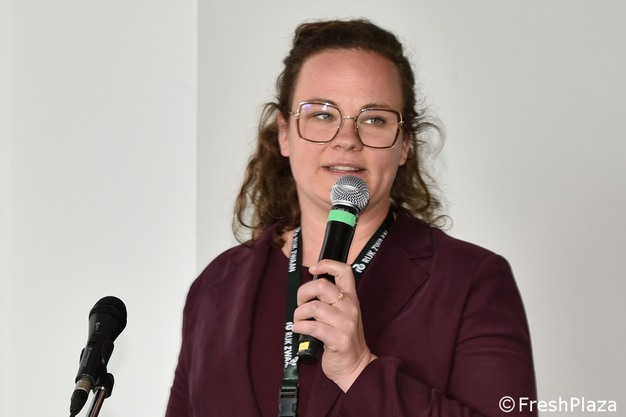
Biotic resistances are complemented by protocols for abiotic resistances. Leonie Bal-Verberckmoes, Spinach Breeder at Rijk Zwaan (pictured below), reiterated how genetics is moving ahead to counteract the advance of the salt wedge highlighted by Professor Ilari: "In the near future, salinity will become a major problem in many agricultural areas in Italy. It will have an impact on yields and also on product quality. We are testing our varieties for extreme conditions to make sure we develop very resilient varieties."
 © Giancarlo Fabbri | FreshPlaza.com
Technical synergy: agronomy, rotations, and economic sustainability
The final session of the event focused on operational responses that producers can implement in the short and medium term. The discussion highlighted how indoor and off-site cultivation - a sector in which Italy holds the record in Europe, followed by France - represents an effective barrier against extreme weather events and physical damage caused by hail or violent rainfall. However, the experts warned that protected environments are not risk-free, tending to favour the accumulation of telluric pathogens such as Fusarium and Pythium, due to the high intensity of cultivation.
With this in mind, the concept of agronomic responsibility emerged strongly. The most advanced genetics risks are being thwarted if not supported by proper soil management. Wim in 't Groen was categorical on this point: "Growing spinach on the same soil every year will eventually destroy it, so you have to think about crop rotation." A call also reiterated by Simona Toloni: "Innovation and technology must be protected with cultivation practices that maintain this resilience. It is a team effort because the challenges are there, but we have all the elements to manage them." In order to help farmers dilute the risks and not rely on one single gene, Rijk Zwaan maintains extremely broad variety portfolios: for Italy alone, around 40 different commercial varieties are offered, while globally the range exceeds 120 type-specific references (baby leaf, teen leaf, oriental, etc).
Digitisation and precision agriculture are indispensable, complementary tools. Professor Ilari mentioned the GIS software (open-source geographic information systems) and sensor monitoring of groundwater salinity as fundamental elements for calibrating irrigation, reducing waste, and lowering electrical conductivity in compromised soils.
 © Giancarlo Fabbri | FreshPlaza.com
Finally, the impact of these changes on the budgets of fruit and vegetable farms was the subject of Pietro Guidi's economic analysis. Responding to a question on the financial sustainability of production in the face of the generalised increase in costs (energy, fertilisers, research), Guidi described the dynamics of value distribution along the supply chain. Energy costs are not discharged in a linear manner, but follow 'step by step' dynamics triggered by international geopolitical shocks. This scenario makes it inevitable for burdens to be transferred along all links of the commercial chain, from genetics to the final shelf price, making it vital for producers to be able to raise the added value of the finished product to absorb macroeconomic fluctuations without eroding their margins.
The morning's proceedings then came to a close, giving operators an overview of a solid, highly technological and strategic sector, in which the combination of decades of genetic research and sophisticated agronomic practices represents the only real insurance policy to guarantee continuity of supply to the world's fruit and vegetable markets.