The Panama Canal is recording an increase in vessel traffic as higher fuel and freight costs, linked to disruptions in the Strait of Hormuz, influence global shipping routes.
According to Deputy Administrator Ilya Espino de Marotta, the canal is seeing a rise in transits. "The latest thing we've seen is an increase — a slight increase in the number of transits," she said. "Let's remember that now, with higher fuel prices, the Panama Canal definitely becomes a more attractive route because it's shorter."
The canal, which connects the Atlantic and Pacific oceans, spans around 50 miles, compared to the 120-mile Suez Canal. The shorter distance is influencing routing decisions as fuel costs increase.
Operating capacity has also improved. "We've been able to accommodate 40 to 41 daily transits, compared to the normal 36," Espino de Marotta said. Higher throughput follows improved water availability after a period of drought linked to El Niño in 2023 and 2024, when daily transits were reduced to 24 due to low water levels in Lake Gatun.
"Forty-one or 42 transits are not sustainable over time," she said, "but we can maintain about 38 consistently, so we are supporting the industry's needs."
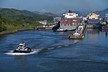
The canal operates through a system of locks that regulate water levels to move vessels between elevations. Water availability remains a factor in determining daily capacity.
Espino de Marotta indicated that some vessels are using the canal as an alternative route, although detailed data on origin markets is not available. "Obviously, they're using us as an alternative route to the one they used before," she said.
Disruptions in the Strait of Hormuz are also affecting global energy trade. Around 20 per cent of global liquefied natural gas shipments typically pass through the strait, according to the U.S. Energy Information Administration. As traffic through the strait is restricted, freight rates for U.S. LNG have increased, and cargo flows are adjusting.
Asia is increasing demand for alternative energy supplies, with some U.S. LNG cargoes being redirected from Europe to Asian markets. The Panama Canal may play a role in these adjusted trade routes.
Espino de Marotta noted that LNG flows are also influenced by broader geopolitical factors. "But we must also remember that right now, Russia is in a situation with Europe," she said. "So it is more profitable for the United States to send LNG from the East Coast of the U.S. to Europe."
The canal authority indicated that it can accommodate further increases in traffic as routing patterns continue to shift.
Source: CNN World