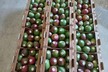
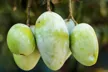
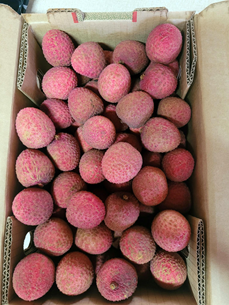
 © Enig BoerderyUnsulphured litchis can't go far – all the more fortunate for lovers of the ephemeral fruit in Gauteng, where Enig Boerdery's biodynamically grown litchis sell out soon after they arrive at the municipal markets of Johannesburg and Pretoria. "The big difference between sulphured and unsulphured litchis lies not in the taste, but in the aroma and perfume of the litchis," says Ben Mouton of Enig Boerdery, Levubu. "Despite worldwide geopolitical strife, good food will always be in demand."
Right: the Mauritius crop varies between 33% and 42% small seed, with a concomitant increase in edible flesh
The price of a 2kg carton of Enig Boerdery litchis labelled choice grade with the tagline "Biodynamic Better Than Organic" attains double that of its XXL competitors, he says. Health stores keenly await the arrival of Enig Boerdery litchis at the market: unfortunately, rain cut short the harvest window this year.
The oldest trees are 57 years old, every single one grafted by Mouton himself. But the owner of Enig Boerdery – the name translates as 'unique', the only of its kind – wasn't always this gratified by the fruit of the labour on Sterkstroom Farm.
For the first half of his farming career (initially only on weekends with a day job as an agricultural engineer), Mouton went about things the way everyone else was doing it. "Chemical-based farming practices were applied for the initial 37 years," he says. "Tree growth, flowering and fruit set proved average."
Applying fruit fly insecticide was an arduous task, and then "grossly ineffective" too when there's frequent summer rain (like this year), with losses due to insect damage as serious as 70%, he says.
A consultant introduced Mouton to the world of micro-organisms: 80 to 90% of plant nutrient acquisition is at some point microbially mediated. He rues that the chapter on micro-organic matter (including the fungal mycorrhizae that existed on earth 50 million years before plants even developed roots) was completely omitted from his university soil science courses. Forty percent of all photosynthesis production is sent to the root zone, he says, and meant for the microbes. A third of photosynthesis sugars go towards the mycorrhizal trade, of which he knew nothing when he started farming.
"I felt like the little boy with his dog at the crossroads, not knowing where to go, waiting for the dog to take him there. To me, Biological Engineering remained the most difficult conundrum. Sometimes, I simply have to make the decision and correct my mistakes as I go along. Whenever possible, I follow the daily habit of walking in the orchards. Trees talk to each other; the roots are their home pigeons. We indeed have much to celebrate in pondering the fungal connection between healthy soil and healthy plants."
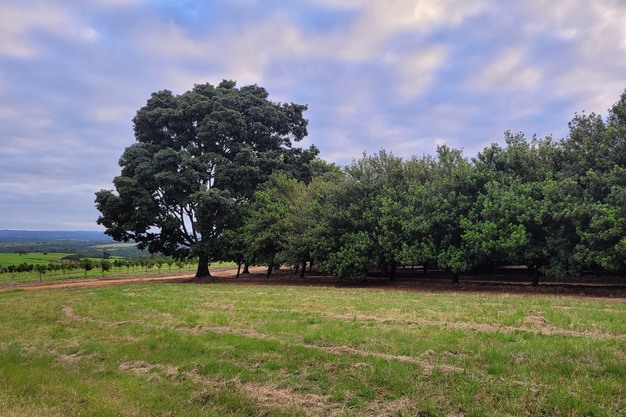 © Enig Boerdery Chinese sugar cane fields (left in the background) provide the organic material that will be spread in the macadamia, avocado, and litchi orchards
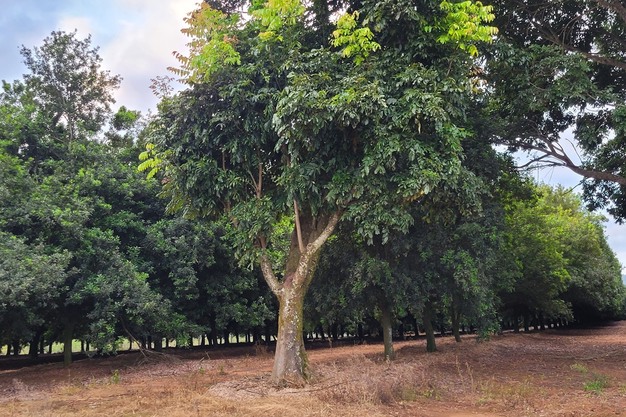
Building rich soil with substantial moisture-holding capacity demands vast masses of organic material to feed microorganisms. One third of the farm is planted with Saccharum sinense, known as Chinese sugar cane, the energy-rich biomass for the mycorrhizae in the soil of the second third, planted with tree crops. The final third of the farm acts as a wildlife refuge with the Levubu River running through it.
Animals, birds and butterflies that they hadn't seen there for years have returned as they've reduced the number of chemical sprays on the farm, says Martelise Mouton, his daughter. She grew up on the farm where visitors often remark on the pleasing earthy perfume of a healthy landscape.
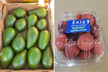
Improvement in avo packouts & mac kernel recovery
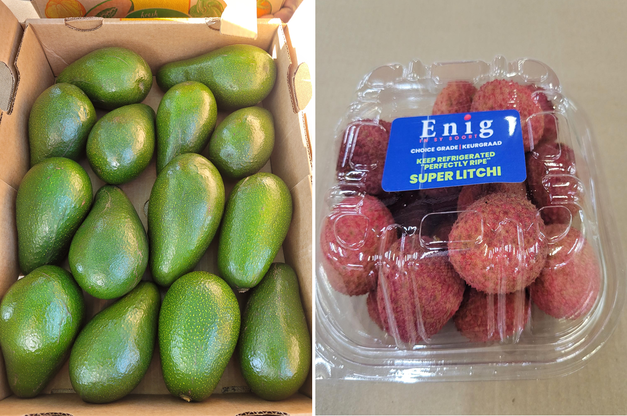
Today, no chemical fertiliser application whatsoever and no external soil inputs (not even kraal manure from another farm) are introduced to their established litchi, avocado and macadamia orchards. Back when they'd ceased chemical insect control, it was a nerve-wracking experience watching the litchis ripen. "The harvest results were amazing – a fourfold increase in edible quality fruit. The Brix sugar content of ripe litchi fruit increased from the 15% index to 17%. Random samples drawn this 2026 season varied between 33% and 42% small seed on cv Mauritius. It implies more edible flesh."
 © Enig Boerdery
Not spraying means they rest assured they're not harming the bee populations, crucial for the following year's crop set and sizing.
In the macadamia orchards (Mouton is one of the founders of Royal Macadamia Processors), average kernel recovery rose from 25% to 40%, where it remains, as long as there is an annual application of organic matter. Beauveria bassiana fungi keep stinkbugs on macadamias in check.
Previously, avocado packouts were dragged down by the prevalence of avocados with crooked shapes or extended necks, deemed "most undesirable" at packhouses, Mouton wryly observes. "In the days of consistent chemical operations on my farm, soluble boron leaf spray on avocado trees became institutional. No reasonable improvement could be attained. The application of boron ceased upon turning to organic farming. The disorder has almost vanished."
In blocks with newly-planted saplings, opportunistic growth rapidly overwhelms new plantings in their subtropical climate, and herbicide is applied, switching between 2-4D and glyphosate, but preferring to mechanically slash when they can. They barely use Paraquat any longer, he says.
The only way, alas, to control the dreaded Cercospora on avocados is by spraying copper oxychloride. The risk of groundwater contamination bothers him, he admits, but its mobility in clay soil is slow.
 © Enig Boerdery
"Farmers who put biology first, recognise different priorities"
If you're looking to increase yields and up the revenue, organic farming will never do that for you, Mouton states. "When you can't guarantee improved yields and higher income, people's interest usually wanes. Farmers who put biology first recognise different priorities. Synthetic fertilisation can produce large plants… but suppresses mycorrhiza formation and thus the myriad benefits of fungal connection. Synthetic fertilisation does nothing to favour beneficial bacteria, or improve soil structure, or increase plant species diversity."
Over 32 years, the dropped leaf layer under his litchi, macadamia and avocado orchards, boosted by continuous applications of effective micro-organisms, has accumulated to a depth of 200mm. "Voilà! Welcome to the land of opportunities – building the organic duff zone, the O-horizon."
It's still, Mouton concludes, too easy to buy and spread fertiliser without paying much attention to organic soil life. He no longer wants to be part of what he perceives to be a flawed system of accreditation, and since he's not exporting, he can get around the tremendous costs in time, money and administrative effort required to be compliant. "I simply wish," he says, "to grow my crop and to get it out to people who appreciate it."
For more information:
Ben Mouton
Enig Boerdery
Email: [email protected]