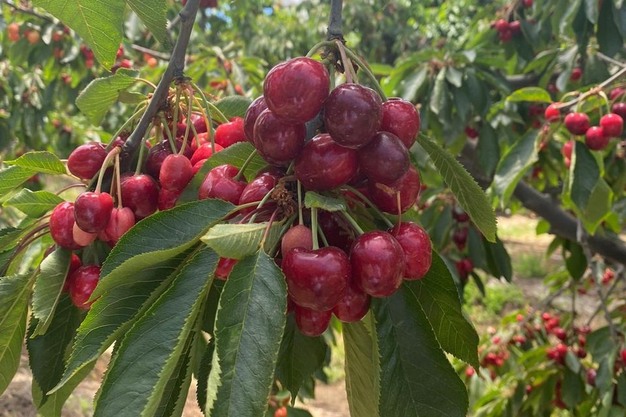
The current Chilean fruit season has seen an overall early harvest, from cherries to pears. Cherries, in particular, faced a notably difficult situation. "It's been an extremely challenging season," states Hans Leibbrandt, general manager of Monfrut.
"This represents a shift in trend; it's not just a single season, but essentially a turning point," he warns. He believes the Chilean cherry industry will need to adapt to a new environment characterized by increased volumes and reduced returns.
 © Monfrut
He explains that the ongoing increase in hectares planted in earlier years suggests multiple seasons of abundant supply. In this context, actions like removing less productive orchards or varieties that no longer meet current demand might be sped up.
"The ongoing planting of new hectares in previous years suggests several seasons of high supply. In this context, the sector should speed up the removal of unproductive orchards or varieties that no longer meet demand," he said.
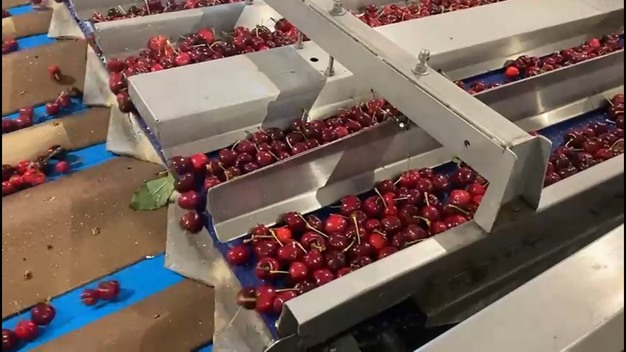
Regarding markets, reliance on China remains significant, though some companies are diversifying. For example, Monfrut directs about 25% of its volume to destinations outside China, including the United States, Korea, Taiwan, and India. Nevertheless, Leibbrandt notes that establishing stable alternative markets requires time and strategic planning.
 © Monfrut
In this situation, efficiency is key. "Growers don't control prices, so they must focus on controlling costs and maintaining quality," he said. He also emphasized the importance of better commercial planning: "It's no longer just about shipping our cherries and hoping for higher prices; having a strong commercial strategy and selling what the client demands is crucial."
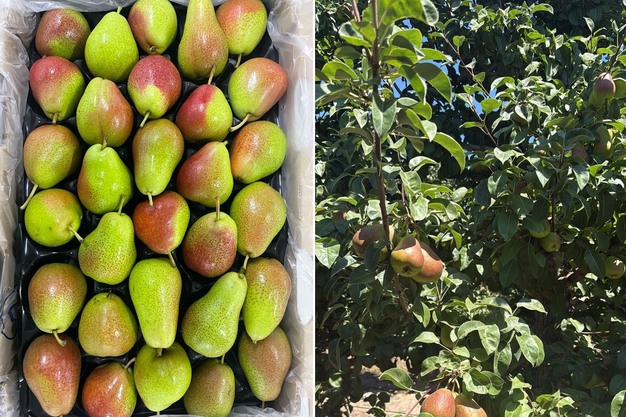
Regarding pears, Monfrut primarily works with the Forelle variety, a niche product known for its more consistent performance. "It is more of a niche variety and has always been in good demand because there is little volume too," he explains.
 © Monfrut
The small calibers are intended for markets such as Ecuador and Colombia; the medium-sized ones are for Central America; and the larger, more colorful ones are for Europe, especially the Netherlands. In Latin America, values are "slightly higher than last year," driven by supply and demand.
Unlike the cherry, the Forelle pear exhibits a more balanced relationship between supply and demand. "There is limited supply, but demand is also modest; it is managed independently and has remained quite stable over the years," he stated.
The executive expects a period of adjustment in the coming years, with greater stability for the Forelle pear niche. "We are facing several years of still high production, which presents a commercial challenge in selling this fruit." In both cases, maintaining cost discipline, ensuring quality, and implementing a clear commercial strategy will be crucial.
 For more information:
Hans Leibbrandt
Monfrut
Chile
Tel: +56 9 6566 9927
[email protected]
www.monfrut.cl