Escalating conflict in the Middle East has resulted in a more volatile security environment across parts of the region, prompting governments and authorities to introduce precautionary measures affecting selected air and sea routes. Logistics providers and ocean carriers are closely monitoring developments, prioritizing safety, cargo integrity, and operational continuity while assessing implications for global supply chains.
In air logistics, the impact is widespread due to temporary airspace closures in countries including the UAE, Qatar, Bahrain, Kuwait, Iraq, and Iran. Numerous airlines have suspended or rerouted flights serving destinations such as Dubai, Abu Dhabi, Doha, Riyadh, Dammam, Tel Aviv, Beirut, Amman, Erbil, Tehran, Jeddah, and others. Several carriers have paused cargo acceptance to affected airports, either until early March or until further notice. In some cases, freighter services continue where routing does not transit restricted airspace. Reduced flight capacity, last-minute schedule changes, and rerouting are expected to result in delays and extended transit times. Ground handling operations at airports and cargo terminals, including cargo acceptance and processing, may also face disruption where local restrictions or staffing limitations apply.
 © Maersk
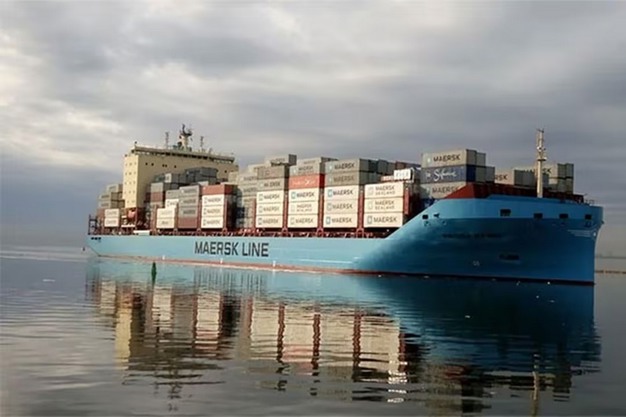
Sea freight is facing structural disruption linked to maritime chokepoints. The Strait of Hormuz has been fully closed to commercial container traffic, preventing direct access to the Arabian Gulf. Major carriers have also halted passage through the Bab el Mandeb Strait, forcing vessels onto longer alternative routes, frequently via the Cape of Good Hope. This is leading to extended voyage durations, congestion at transshipment hubs, irregular sailing schedules, and the potential for equipment shortages as container flows become unbalanced. All major maritime carriers have suspended bookings for sailings into the Persian Gulf, including reefer cargo, and ports in some areas are operating under varying degrees of disruption as they experience drone and missile attacks. If the conflict extends beyond several days, bottlenecks may first emerge in Asia and the Indian subcontinent due to interconnected trade lanes.
Port operations across the region vary. Oman, Saudi Arabia, Iraq, and Jordan report ports operating as usual. In the UAE, some ports are open or partially closed, with Jebel Ali reopening selected terminals. Qatar's port continues operations. Bahrain's port is closed and undergoing damage assessment. Kuwait's ports are operating, including the gradual restart of Shuaiba port. Vessels are being rerouted or temporarily sheltered depending on operational conditions and risk assessments.
Carriers are implementing contingency planning voyage by voyage. Several have suspended acceptance of new bookings to and from the Persian Gulf, including reefer and dangerous cargo in and out of the UAE, Oman, Iraq, Kuwait, Qatar, Bahrain, and Saudi Arabia. Certain trade lanes between the Indian Subcontinent and Upper Gulf markets have also been suspended. Existing bookings are under review on a case-by-case basis, and cargo already in transit remains under active operational management.
Additional cost implications are emerging. Carriers may implement or adjust War Risk Surcharge levels in response to elevated security risks. At least one major carrier has announced an Emergency Conflict Surcharge, with others expected to follow depending on operational impact. The rerouting of vessels around closed straits is likely to increase bunker consumption, contributing to higher Bunker Charge levels as fuel prices react to regional instability. Spot rates may rise as capacity tightens and wartime insurance premiums adjust. Energy market exposure is also increasing. Exports via the Strait of Hormuz account for approximately 20 per cent of global oil flows, with Asia heavily exposed. Any sustained disruption may affect liquefied natural gas production and supply, with knock-on impacts on electricity prices in Europe and other import-dependent regions.
Landside logistics across the GCC remain operational, with cross-border trucking continuing. However, increased inspection protocols, tighter security controls, customs delays, and border congestion may contribute to variable transit times and corridor-specific delays. Local UAE deliveries may experience instability due to port-side congestion.
Cold chain implications are developing globally. In the Middle East, countries that rely on imports routed through the Strait of Hormuz face exposure to shipping interruptions. While some states have alternative port infrastructure, asset repositioning disruptions rather than product shortages are likely to drive volatility. In Asia, elevated energy costs could increase cold chain operating expenses and reduce equipment availability if containers fall out of position. In Europe, longer Asia–Europe routings may extend transit times, raising risks for temperature-sensitive cargo and requiring higher buffer stock levels. In Africa, port congestion and limited reefer plug capacity may intensify when vessels bunch after diversions. In Latin America and Oceania, higher bunker and diesel costs may increase inland refrigerated transport expenses and reduce export competitiveness if global equipment remains tied up on extended voyages. In North America, fuel-driven cost inflation and altered global container positioning could indirectly tighten reefer availability and extend airfreight transit times if flight routings are adjusted.
The International Chamber of Shipping, European Shipowners, and the Asian Shipowners' Association have issued a joint statement expressing concern over attacks on seafarers and the reported loss of life. They described the situation as fast-moving and unpredictable, urging operators to conduct risk assessments and adhere to Best Management Practices maritime security guidelines while relying on verified information from official sources.
For more information:
Kuehne+Nagel