As the 2025-26 season draws to a close, New Zealand's summerfruit industry is reflecting on a harvest marked by variable weather, tighter export volumes, and a renewed focus on quality, while also responding to a new biosecurity alert in Auckland.
Navigating a challenging harvest
This season brought contrasting conditions across the two main growing regions. Hawke's Bay experienced favourable weather, while growers further south faced rain, wind, and a lack of heat. These conditions led to difficult operational decisions, including leaving some blocks unpicked or harvesting only part of the crops to maintain economic viability, particularly for export cherries.
 © Biosecurity New Zealand
The industry adopted a "quality over volume" approach. Final export volumes reached 3,267 tonnes, compared with last year's 5,158-ton record. While this tightened returns, the strategy aimed to protect New Zealand's premium reputation in export markets.
The domestic market performed steadily, supported by consistent quality. Consumers responded positively, and domestic demand provided support where export volumes were lower.
Industry evolution and grower engagement
The Summerfruit Exporters Committee recently held a Special General Meeting where members voted to dissolve the organisation, transferring representation and core functions to Summerfruit NZ. Mid-year grower events are scheduled for May 19 at Black Barn in Havelock North and May 21 at Wooing Tree in Cromwell, with technical and guest speakers confirmed.
Biosecurity response in Auckland
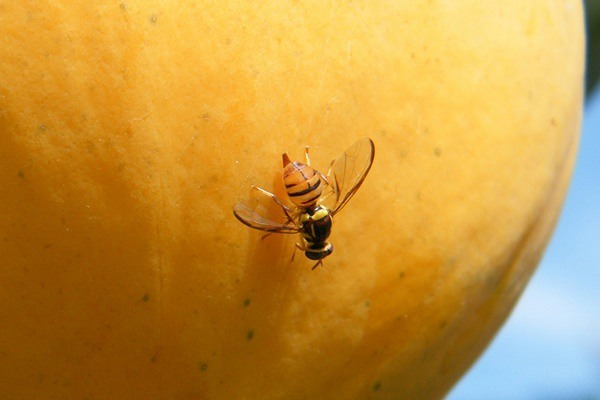
On 25 February 2026, Biosecurity New Zealand announced the discovery of a single male Oriental fruit fly (Bactrocera dorsalis) in a surveillance trap in Papatoetoe. Biosecurity New Zealand has launched a response operation, including increased trapping and inspections, and introduced a Controlled Area Notice restricting the movement of fruit and vegetables from the affected area.
The capture of a single male does not indicate an outbreak, but the community has been asked to remain vigilant and report any sightings. Biosecurity New Zealand has previously eradicated 15 fruit fly incursions in Auckland and Northland.
The controlled area is divided into Zones A and B, with different restrictions on the movement of fruit, vegetables, compost, and garden waste. Kerbside food scrap collections in Zone A have been suspended, and residents are instructed to use designated bins for fruit and vegetable waste. In Zone B, homegrown produce waste and garden waste must be disposed of in Biosecurity New Zealand bins.
The Oriental fruit fly is native to Asia and can infest more than 300 fruit and vegetable crops, including apple, guava, mango, peach, and pear. It poses no human health risk but could result in economic losses if established.
The industry now closes the season focused on export market resilience, domestic performance, and maintaining biosecurity vigilance.
For more information:
Summerfruit NZ
Email: [email protected]
www.summerfruitnz.co.nz
Jo Davidson
Auckland Council 2026
Tel: +64 (0) 21 331 634
Email: [email protected]
www.ourauckland.aucklandcouncil.govt.nz