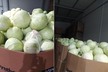
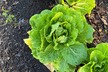
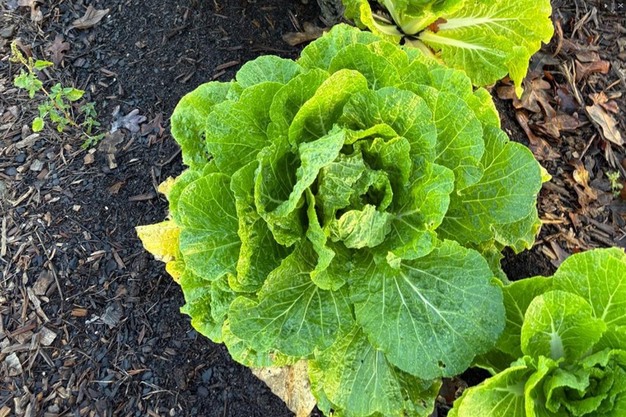
Researchers in the Texas A&M College of Agriculture and Life Sciences Department of Food Science and Technology are assessing how Texas-grown Napa cabbage and other leafy greens perform in kimchi fermentation. The study links fermentation science, food safety, and potential market opportunities for U.S. growers.
Seockmo Ku, Ph.D., assistant professor in the department, leads the project, which evaluates microbial development, processing conditions, and sensory characteristics during fermentation using locally sourced cabbage. The research responds to shifts in kimchi production outside South Korea, where reduced cabbage output and shrinking farmland have tightened domestic supply.
 © Texas A&M AgriLife
"The core of this project is supporting farmers by increasing the value of what they grow," Ku said. "Fermentation allows us to transform crops like napa cabbage into foods with longer shelf life and broader market potential."
Kimchi, traditionally made from napa cabbage, remains a staple in Korea. As global production expands, consumer concerns around quality and safety have increased. The research examines whether kimchi produced in the U.S. can meet established expectations.
"Our research asks whether kimchi made in the United States can match the quality and flavor people expect," Ku said.
Doctoral student Min Ji Jang, previously at the World Institute of Kimchi in South Korea, studies fermentation and food safety systems. "Kimchi was one of the first foods regulated under hazard analysis and critical control point systems in Korea," Jang said. "Food produced in the U.S. also follows strict safety controls, which support consistent and safe fermentation."
The team monitors microbial communities during fermentation under Texas-based conditions and uses pest-free crops sourced from local growers. Data collection focuses on microbiology, processing parameters, and sensory evaluation. "This work requires scientific justification," Ku said. "We need data on microbiology, processing, and sensory quality."
Doctoral student Sehyeon Song examines how microbiome mapping and artificial intelligence may help predict fermentation outcomes. His research evaluates how regional ingredients influence fermentation performance and quality characteristics.
The group collaborates with growers near College Station and in South Texas to source cabbage for lab-scale production and is pursuing additional research, including consumer acceptance studies and assessments of potential health impacts.
Beyond research, the team has also developed math and science modeling activities around kimchi fermentation for middle school students in collaboration with education partners.
For more information:
Laura Muntean
Texas A&M AgriLife
Tel: +1 979 803 1287
Email: [email protected]
www.agrilifetoday.tamu.edu