The lettuce market in Brazil's São Paulo green belt continues to be influenced by rainfall in producing areas. According to growers consulted by Hortifrúti Cepea, weather conditions improved in the second half of the month, with reduced precipitation and higher temperatures allowing planting activities to resume. However, the supply of leafy greens remains affected by earlier disruptions.
Despite the post-Carnival period and the approach of month-end, the adjusted supply has allowed steady product movement. In Mogi das Cruzes, market agents indicated that, if larger volumes were available, absorption might not have been as smooth, as sales remain "stalled" in some channels, particularly open-air markets, and below the pace typically expected for February.
Lower availability has supported ongoing price negotiations, including for products with lower quality standards, which have been easier to commercialize amid tighter supply. At the same time, restricted volumes have limited stronger upward price movements in both regions.
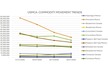
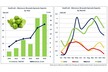
According to partial results for the month through the 20th, curly lettuce averaged R$ xxx per 20-unit box in Ibiúna, representing a change of +xxx percent. In Mogi das Cruzes, curly lettuce closed at R$ xxx per 20-unit box, reflecting a variation of +xx percent.
Market participants continue to monitor weather patterns in Brazil's producing areas, as planting schedules and field conditions remain key variables shaping short-term supply and price formation in the São Paulo region.
Source: HFBrasil