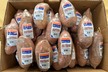
The Philippines' Department of Agriculture has suspended the issuance of sanitary and phytosanitary import clearances for red onions ahead of the domestic harvest peak.
Agriculture Secretary Francisco P. Tiu Laurel, Jr. said the department has not been issuing import permits or SPSIC since the end of January. The red onion harvest in the Philippines typically begins in January and peaks in March. Import clearances are expected to resume around September.
According to the department, most of the red onions previously approved for import have already arrived, with only a few delayed shipments still entering in limited quantities. "Almost all shipments have arrived, and most of them have actually been sold. There are only a few containers arriving now, in insignificant quantities, mainly because they were delayed at transshipment points," Mr. Laurel said.
An industry representative said the suspension came too late to protect growers from price pressure. "It should have started as early as December… If imports are still coming in until February, that becomes a pretext to dump imports during the harvest period to force down farmgate prices and undercut farmers," said Jayson H. Cainglet of the Samahang Industriya ng Agrikultura.
The Philippine Statistics Authority reported that the farmgate price of domestic red onion declined by 28.42% to US$0.79 per kilogram in February, from US$1.11 per kilogram a year earlier.
Mr. Cainglet said the Bureau of Plant Industry should estimate harvest volumes by July to determine appropriate import levels. The Department of Agriculture has stated that imported volumes are not sufficient to depress prices. "The numbers show that current stocks from imports are not overwhelming the market but merely plugging a supply gap," Mr. Laurel said.
The Bureau of Plant Industry estimates that remaining imported stocks will likely last only until March 6, aligning with the domestic harvest peak.
The department has indicated it will examine the continued decline in farmgate prices despite the limited imported supply. Industry representatives also highlighted structural challenges, including post-harvest capacity, intermediary margins between farmgate and retail, and logistics costs.
"Onions should actually be the easiest to monitor because they are harvested only once a year and the major production hubs are already identified," Mr. Cainglet said.
Source: BusinessWorld