Chile's cherry industry is navigating the 2026 season with high export volumes, falling prices, and weaker demand in China, its main market. After several years of export growth, market participants report signs of adjustment.
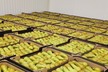
According to Frutas de Chile, shipments reached 113.8 million boxes, equivalent to about 590,000 tons, surpassing initial projections of 110 million boxes. Weather conditions advanced the harvest, concentrating volumes in early January and bringing shipments to China ahead of the Lunar New Year.
Exporters report that fruit quality remained stable, but the concentration of supply weighed on the market. China's share of Chile's cherry exports declined to 87% from 92%. "Both producers and exporters did a good job. The biggest challenge has to do with the concentration of supply. From the start of the season through Jan. 20, more fruit reached China than last year," said Frutas de Chile President Ivan Marambio, according to La Tercera.
The sector is also recovering from the prior season, when elevated shipments reduced prices, and millions of boxes were lost after the Maersk Saltoro cargo ship was stranded at sea.
Consumption trends add further pressure. "There is lower purchasing power in China, which has become evident over the past year, and returns will be quite tight," said Victor Catan, president of Fedefruta. He added that the current season is likely to be more complex than the previous one, which "was already difficult," according to TheClinic.cl.
Prices have adjusted downward. They previously ranged between US$1.36 and US$2.72 per pound. Current levels range between US$0.68 and US$1.13 per pound. Converted to metric terms, this represents a shift from approximately US$2.99 to US$5.99 per kilogram to US$1.50 to US$2.49 per kilogram.
Patricio Bravo, general manager of Agrícola Don Fortunato, stated that the industry's "super cycle" has ended and that historically high prices are unlikely to return. He noted that tighter margins may require some growers, particularly those producing less than about 10 to 12 tons per hectare, to reassess long-term viability.
Source: UPI