Following the passage of Storm Nils, French farms are still assessing the extent of the losses. The French Apple Pear Association (ANPP) has already reported losses in several orchards.
"The assessment is still ongoing"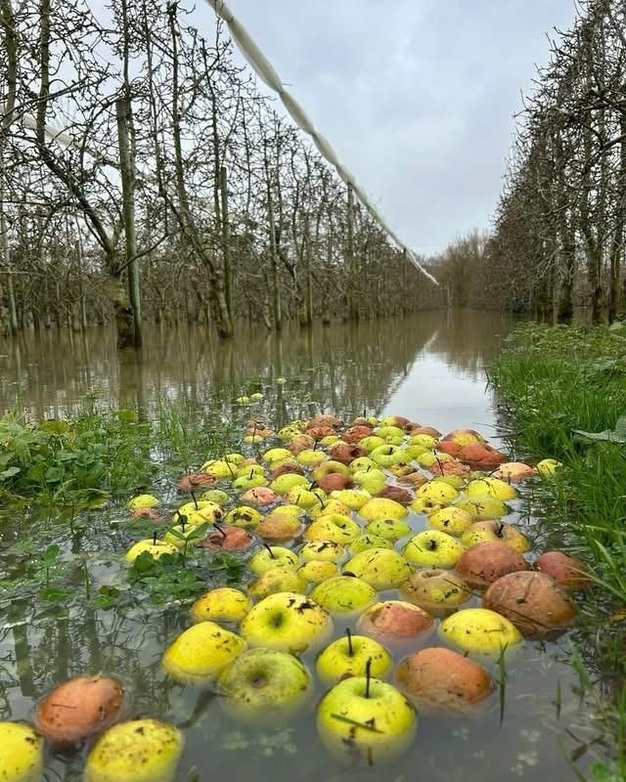 © ANPP
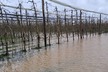
"The assessment is still ongoing," explains Sandrine Gaborieau of ANPP. "For the moment, we have observed damage in the Lot-et-Garonne, Tarn-et-Garonne, Charente, and Deux-Sèvres departments. It is still too early to accurately measure the storm's overall impact, especially as the floodwaters have not started receding yet." The Gironde and Lot-et-Garonne departments are still under red alert for risk of flooding. Vigicrues has forecast that levels will rise again as a result of further rainfall. "Some trees are down as their roots can no longer hold in the water. It is currently impossible to plant without the risk of suffocating the roots. Several fruit stations are also flooded." Problems with scab could also arise as a result of the damp.
"Securing agricultural water and enabling the creation of reserves to prepare French orchards for climate change"
Because "the water does not always fall in the right place, at the right time, or with the right intensity to be useful for crops and regions," ANPP is calling for the creation of water reserves as an adaptation tool, following the example of some other countries. "Climate change does not mean less rain, but more variable rainfall that is more difficult to use, with more intense episodes and longer periods when water is lacking while crops need it," explains ANPP. The association is calling for this measure to be included in the emergency agricultural law, with "simplified procedures that are legally secure, reduced instruction times, the possibility of developing storage facilities (reservoirs, replacement reserves, regional solutions) where studies show they are relevant. Our request is simple: to prepare French orchards for the future."