After nearly two years of exceptional drought and strict water rationing, which reduced irrigated areas by up to 50 percent compared with the previous year and affected horticulture, new plantings, and livestock, Sardinia and much of central and southern Italy are now facing the opposite extreme.
In southern Sardinia, particularly in the area between Samassi, Serramanna, and Villacidro, the agricultural situation has become critical following an uninterrupted series of extreme weather events. The latest wave of bad weather has caused widespread damage, leaving crops compromised and some farms temporarily isolated. Coldiretti Cagliari summarizes the emergency: "Persistent rain, strong winds, and flooding are simultaneously affecting production, farm structures, and overall profitability."
 © Coldiretti Cagliari
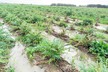
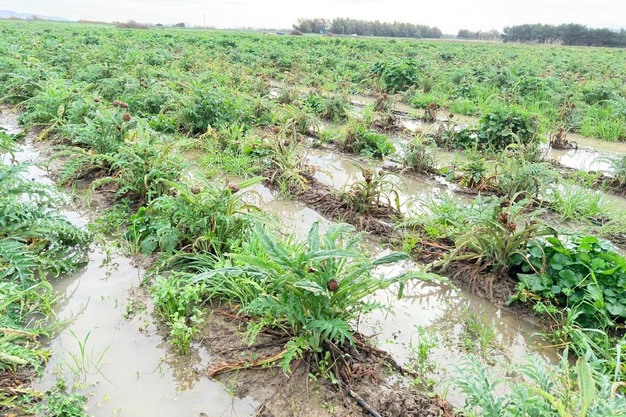
A real emergency is unfolding in the Middle Campidano area. The Samassi area has been severely devastated by flooding, which has submerged open-field horticulture and flooded fields. Artichokes have been destroyed. Sowing has been blocked, and entire crops are rotting before reaching the market. This is a huge blow to farms and to one of Sardinia's specialty productions.
Andrea Manca and Filippo Frongia, partners at Agro Mediterranea Distribuzione, a company that supplies artichokes and tomatoes, among other produce, to large-scale organized distribution, termed the situation a tragedy. About 15 days ago, Frongia recounted how adverse weather conditions had already severely impacted artichoke production.
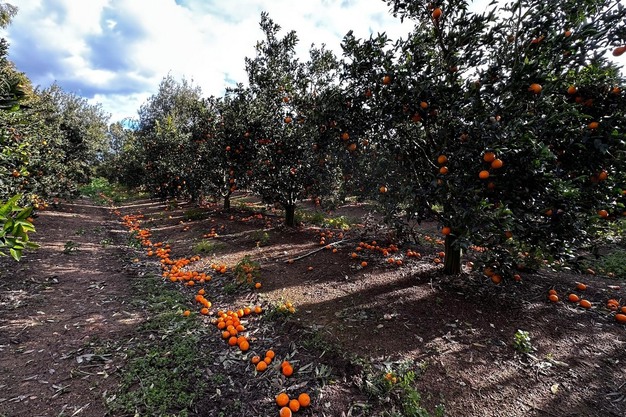
"In the Sarrabus region, the wind bent the citrus groves. Hundreds of kilos of oranges and other citrus fruits ended up on the ground. Rows were destroyed, and windbreaks were uprooted. In Villaputzu, Muravera, San Vito, and Castiadas, the citrus fruit sector has been devastated by damage to infrastructure, blackouts, impassable roads, and isolated farms," according to a report by Coldiretti Cagliari.
 © Coldiretti Cagliari
"It has been raining nonstop for more than a month," explained agronomist Orazio Casalino. In some areas, up to 600 millimeters of rain fell during this time, equivalent to several months' worth concentrated into a few weeks. Cyclone Harry hit at the end of January, making matters worse with gusts of up to 130 km/h, sea storms, localized hailstorms, and tornadoes that ripped through greenhouses and roofs. Another wave of bad weather is now upon us. "While the regional dams have returned to 70-75% capacity, ensuring water reserves for the current year, the fields are impassable. Alternating sunny spells and disturbances prevent agricultural vehicles from entering, which hinders sowing, treatments, and cultivation practices. Water-saturated soils often turn into temporary reservoirs, which slow down or block operations and create the risk of structural delays throughout the 2026 campaign.
"The consequences are evident in horticultural crops, for example. When artichoke fields flood, it leads to prolonged stagnation, root asphyxia, yellowing, and increased pressure from fungal pathogens such as Botrytis and downy mildew. Micro-lesions on leaves caused by intense winds encourage further infection. Harvesting operations become extremely burdensome amidst muddy, sagging soils, slowing teams down and increasing costs. The situation is similar for fennel, broccoli, and cauliflower, which often remain submerged for days. The same is true for greenhouse crops, where rising water tables and saturated soils exacerbate root asphyxia," Casalino pointed out.
Despite being designed for drainage, the excess water and strong winds in citrus groves cause the fruit to drop early. "There are huge amounts of citrus fruit on the ground," the agronomist explains. He adds that the water and mechanical stress have triggered necrosis of the peduncles, resulting in direct production losses.
 © Luigi Marras
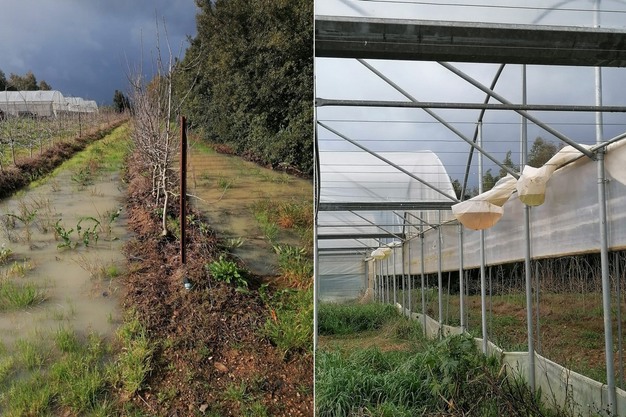
Luigi Marras's 15-hectare farm consists of citrus and fruit trees, as well as an experimental site with around 2,500 Fuji apple plants. It is located in the southern part of Sardinia, between Samassi and Serramanna. This area is one of the most fertile and intensively cultivated regions on the island. The latest wave of bad weather caused significant structural and agronomic damage here.
The tarpaulins of the tunnels intended for spring processing were torn away, which makes it impossible to prepare the land in advance in a protected environment. The surfaces are now completely saturated with water and impassable, even on foot. Any digging would cause the water level to rise due to the saturated soils. "The persistent rains, with no respite for more than a few hours, have compromised the internal road system and farm operations, delaying pruning and phytosanitary treatments," says Marras. In the experimental apple orchard, strong winds uprooted some rows, and submerged plants are at risk of loss due to root asphyxia. At the same time, the artichoke orchards have been damaged. In addition to the immediate loss of production, the quality of the bulbs to be replanted next season is uncertain."
The most critical problems are in fruit growing. The inability to enter the fields with tractors and sprayers impedes the application of preventive treatments for peach blister disease and other fungal diseases. "Treatments in the vegetative phase are ineffective," Marras explained. "Without prevention, the entire production is at risk." Using drones for treatment would be a decisive solution, but current regulations prohibit it, leaving operators with no alternative. Additionally, the company experienced three consecutive days of power outages, and the Enel cabin has not yet been restored. This situation, coupled with goods in cold storage, could have resulted in additional economic losses. Fortunately, this was not the case.
The opening of the drainage consortium floodgates and the overflow of the water collection canals have worsened flooding in the fields. Additionally, maintenance of the hydraulic infrastructure is inadequate. Marras, which lost 8,000 peach trees in a serious flood in 2018, denounces institutional practices that conflict with the company's management. "Refunds arrive years late, while new plantations risk dying due to an increasingly unstable climate," Marras concludes. "In a context where costs now exceed revenues, the inability to plan agronomic interventions and ensure production continuity undermines the economic resilience of companies in the area."