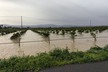
Just over three weeks after the passage of Cyclone Harry, with the territory still counting the damage, a new wave of bad weather hit southern Italy once again on Thursday, 12 and Friday, 13 February, affecting the entire region with intense and persistent rainfall. According to Coldiretti Calabria, 3,000 hectares were devastated, with 900 remaining underwater in the Sibaritide area. What made the situation even more critical were the gusts of wind, which exceeded 100 km/h, thereby also fuelling a significant increase in wave motion along the Tyrrhenian coast, where there were widespread sea storms that caused problems for both the population and the road network.
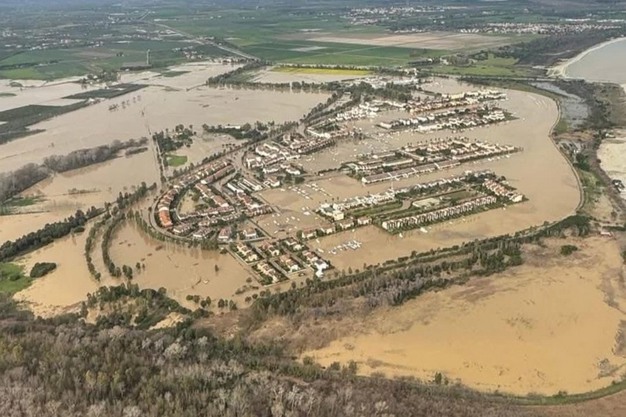 © Aero Club Sibari Fly
Laghi di Sibari: a tourist-residential complex located in the municipality of Cassano allo Ionio. The area, which has about 2,500 homes, was completely flooded.
Damage assessment is still in progress, but citrus, kiwifruit, fennel, and onion crops, to name a few, are submerged. The situation remains to be monitored when it comes to stone fruit.
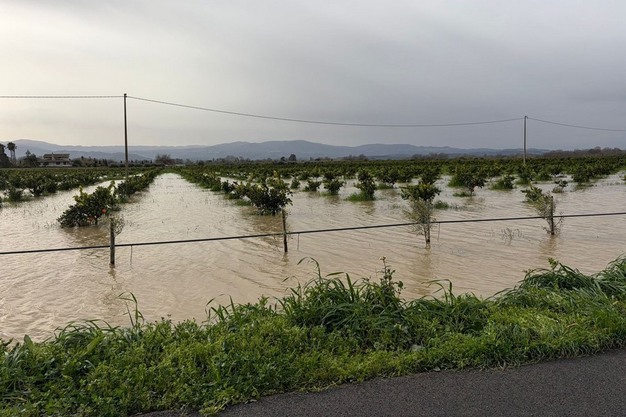 © Nicola Cilento
Flooded citrus grove in the Sibari Plain
On the morning of Saturday 14 February, Alberto Statti (president of Confagricoltura Calabria), Francesco Cosentini (director of Coldiretti Calabria), and some operators and technicians from several Calabrian provinces outlined the current situation.
"The combination of sea storms, torrential rain, and strong winds has indiscriminately hit both sides of the region, particularly the Sibari Plain and the Crotone area,'' reported Alberto Statti, president of Confagricoltura Calabria. ''The main damage includes the destruction of tree plantations (olive and citrus trees), the flooding of horticultural crops, and the compromising of farm and electrical infrastructures. The inability to access the fields for over thirty days has paralysed harvesting, pest control and sowing activities, foreshadowing a long-term economic impact on the entire regional fruit and vegetable sector."
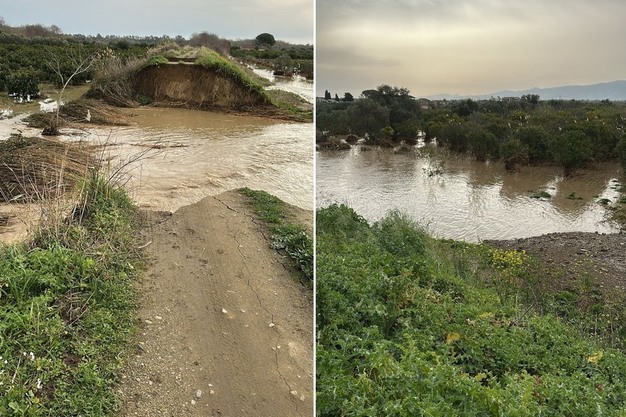 © Nicola CilentoBroken embankment and flooded field
In particular, around 120 mm of rain was recorded in the areas surrounding Cosenza over a 30-36 hour period. "The impact of the weather events is proving to be highly diversified according to the type of cultivation and phenological stage of the plants. Olive groves have suffered the destruction of young plants, the felling of centuries-old trees, and the breaking of main branches due to the violent gusts of wind. Citrus groves have, in many cases, been submerged by flood waters, with entire areas completely flooded in the Sibari Plain. Stone fruit trees have also been affected by felling, and structural damage was caused by both the wind and excess water. The kiwifruit production appears instead largely safe thanks to the fact that harvesting operations had already been completed before the most destructive events, although the unknown factor remains of possible long-term damage linked to pathogens favoured by the humidity."
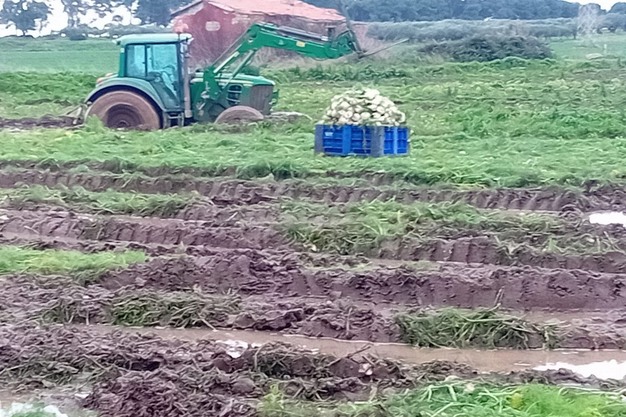
"As for the horticultural crops, onions have been severely damaged by the infiltration of saline water into the sandy soils, and open field vegetables such as fennel and lettuce are suffering from the total impossibility of carrying out harvesting operations. The prolonged stay in the mud and the absence of treatments for more than a month are compromising the quality and survival of the product."
 © Consorzio del Finocchio di Isola Capo Rizzuto IGP
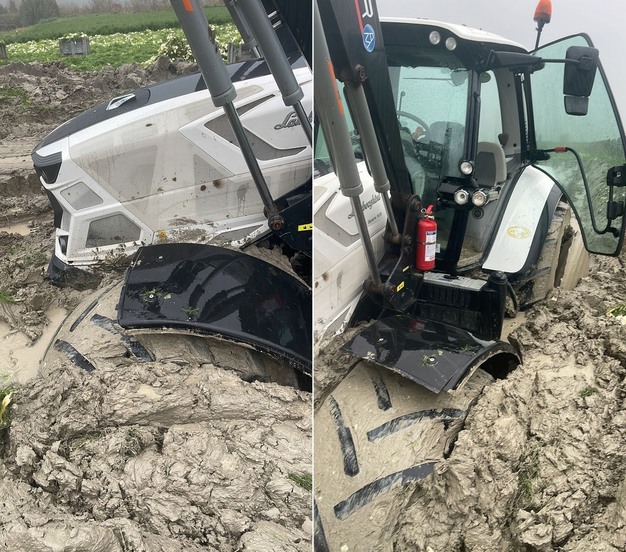
"The heavy and persistent rainfall is putting us to the test, as it is preventing us from entering the fields with vehicles and it is compromising part of the harvest of our precious fennel," said Aldo Luciano, president of the Consorzio del Finocchio di Isola Capo Rizzuto IGP. "We hope that the rains will cease as soon as possible, otherwise we will have to deal with a total loss of production."
The president also emphasises the extraordinary efforts that have been made: "We have been trying to pull the fennel out of the fields with enormous sacrifice on the part of the staff, and when it comes to the use of the vehicles, which in most cases cause further damage, weighing heavily on the budget. That is why we are pleading with the distribution world: we are asking economic recognition as an exception to the agreed price for the economic sustainability of the companies affected."
 © Consorzio del Finocchio di Isola Capo Rizzuto IGP
The situation is critical in the Gioia Tauro Plain as well, as the heavy rain and strong winds have caused widespread flooding, fruit falling from trees, and heavy operational inconvenience for farms. The wind further aggravated the situation, causing much of the fruit still on the trees to fall. Initial estimates speak of a product loss of at least 50%.
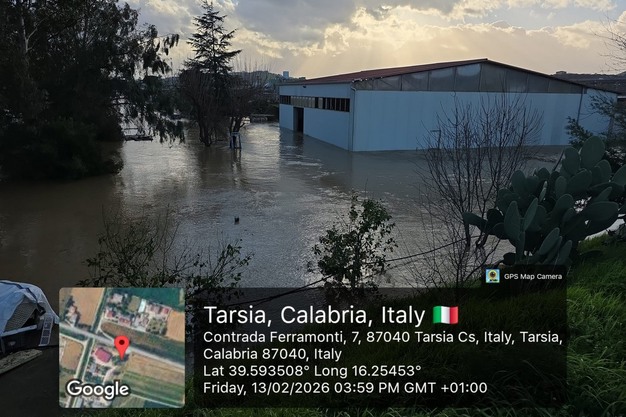
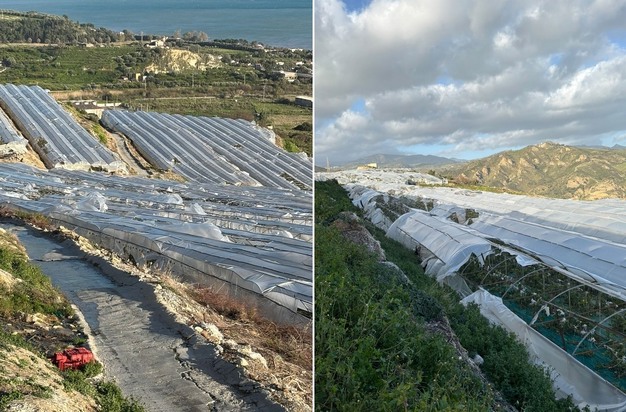
The current situation not only affects the primary production, but also the entire logistical and structural apparatus of the farms. "Protected structures are among the hardest hit: the windy and heavy rain have seriously damaged or even destroyed greenhouses and roofs, compromising production cycles that had already begun. Inter-pasture roads have also been largely compromised, with access roads to the land rendered impassable by the mud and landslides, a situation that makes it impossible to reach some farms and hinders the transport of goods. On the essential services front, the fall of large trees has severed several power lines, with Enel now trying to restore them. Finally, there have been numerous floods of company sheds and warehouses used for the storage and processing of products, further aggravating the damage and slowing down the resumption of activities."
 © Francesco Cosentini - Coldiretti Calabria
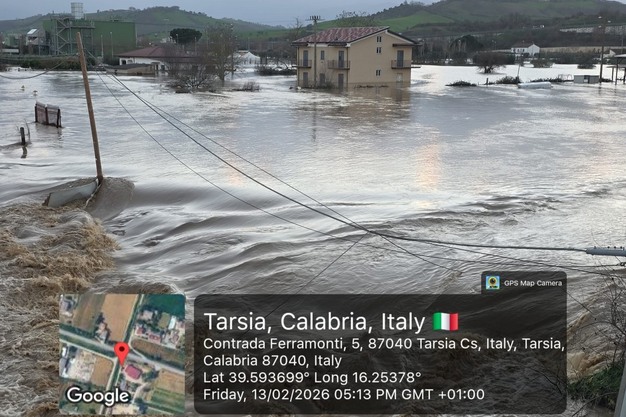
Francesco Cosentini, director of Coldiretti Calabria, said that: "The banks have collapsed in several places, with entire hectares of farmland literally 'devoured' by the rivers. In the industrial area of Tarsia and Santa Sofia d'Epiro, in particular, the situation is very difficult with the land and company premises invaded by water and mud - those involved include small fruit and vegetable processing companies, companies dealing with juice extraction, and fruit processing businesses. Even though it hasn't rained in the Cosenza area since yesterday afternoon (read Friday 13 February 2026, ed.), river levels remain under constant monitoring, and the ground remains saturated. Despite the lull of the last few hours, the risk of root asphyxia remains very high due to the saturation of the soils and the difficulty of water runoff towards a sea that is still very rough."
 © Francesco Cosentini - Coldiretti Calabria
"The floods have hit the sector hard, affecting a wide range of productions and infrastructure. Numerous stone fruit and kiwi plants are currently flooded, while, for citrus fruits - particularly in the areas of Cosenza, Reggio Calabria, and Lametino - there has been a massive fall of fruit in plots where harvesting operations had not yet been completed, especially for the Washington and Valencia varieties."
 © Vincenzo Sorace - Op Monte
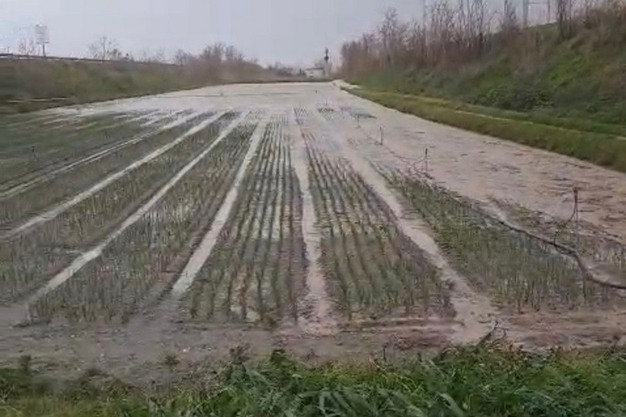
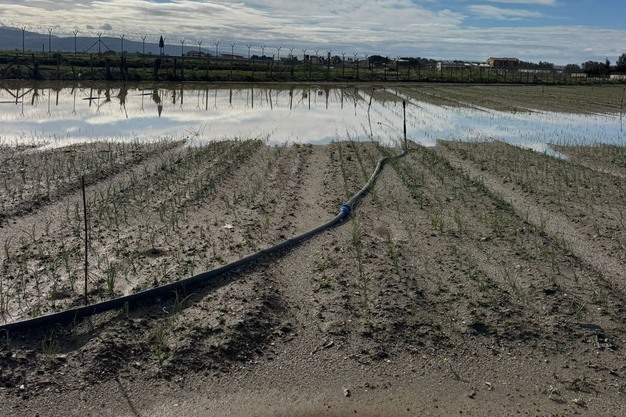
The situation is also critical for onions in the Lametino and Tropea areas: "The situation on the Tyrrhenian coast is particularly difficult, as the sea storms have broken through the natural barriers, turning the onion fields into 'salt lakes'. Large plots of land are completely flooded, and the survival of the harvest will depend on the draining capacity of the soil in the coming days."
The situation is confirmed by Vincenzo Sorace of Op Monte, who said that "Several onion plots show extensive waterlogging. This is in addition to the damage to the production planted between October and early January caused by salt and strong winds that caused leaf breakage, as well as hail."
 © Vincenzo Sorace
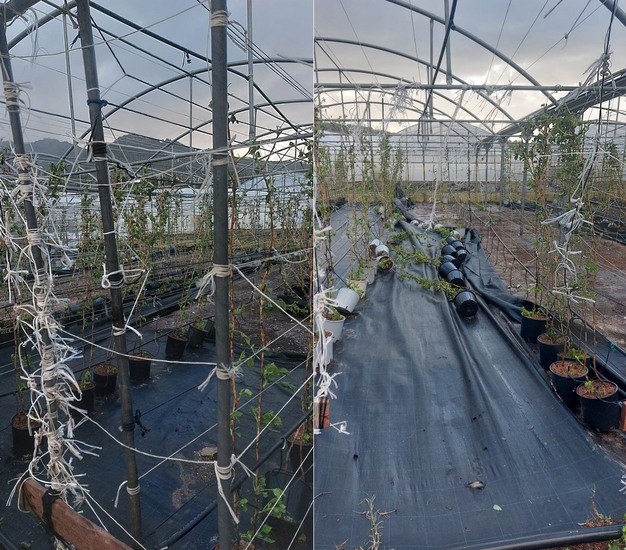
Herbaceous crops were not spared either, with large areas of arable land severely affected. Cosentini reported that "On the structural front, greenhouse roofs were in many cases damaged in their entirety while, in citrus groves, centuries-old trees and modern plants were broken or knocked down by the force of the wind, further aggravating the situation."
 © Francesco Cosentini - Coldiretti Calabria
From the Lametino area, a nursery operator reported that "Everything is fine at the moment, with just some wind damage to the roofs. But we live in constant anxiety and, above all, with the anger that nothing is being done in terms of land maintenance and cleaning of the waterways." This last aspect was reported by other Calabrian entrepreneurs: "The survey carried out reveals a severe criticality in the management of the territory, identifying the absence of ordinary and extraordinary maintenance as the root of the problem. The rivers, in fact, no longer have free beds as they are filled with sediment, soil, and debris accumulated over time. Added to this is the presence of trees, which have grown within the watercourses over the last 40 to 60 years, acting as real physical barriers to the runoff."
Direct testimonies also point to an absence of riverbed cleaning operations for at least three decades, both at the regional and national levels, further aggravating the situation. Into this already compromised picture comes the increase in the frequency of the so-called cloudbursts linked to climate change, which accentuates structural criticalities and makes the territory increasingly vulnerable.
 © Francesco Cosentini - Coldiretti Calabria
When it rains, it pours
"Absolutely." Cosentini agreed that the new wave of bad weather arrived when the situation was already compromised. "Before this latest cyclone, which mainly hit the Tyrrhenian side, the Jonian coast had also been hit by very strong gusts of wind that caused structural damage and felled trees."
Despite the violence of the latest event and the well-known fragility of the territory, Cosentini stressed, however, that the region had so far "held up well" and that, in light of the premises and the intensity of the phenomenon, "an even worse scenario was expected."
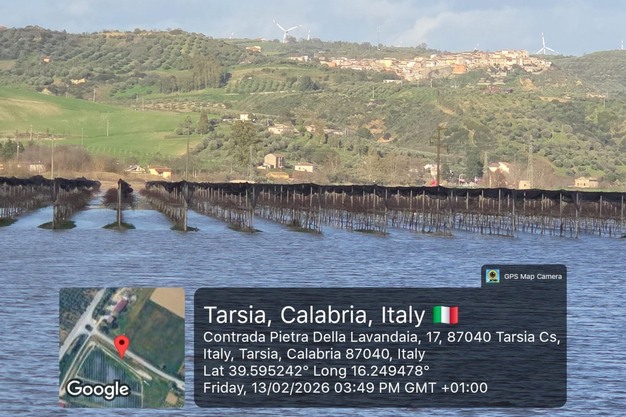 © Francesco Cosentini - Coldiretti Calabria
The least negative note so far
"There are no major problems for stone fruit at the moment, as only a couple of varieties are flowering. However, rain has been falling repeatedly for a couple of weeks now, so the season will depend on the next few days," commented Francesco Guarino, Agrintesa technical manager in the Sibari Plain (Cosenza), as he discussed the wave of bad weather in the last period.
"The rain of the past two days has only exacerbated a situation that had been going on for a fortnight. Our good fortune lies in the fact that we still do not have any flowering varieties, except for a couple of very precocious hectares. We therefore cannot speak of substantial damage. What worries us, however, is the weather pattern for the next few days: if the rain persists in conjunction with the flowering of peaches, nectarines, and Saturn peaches, then we could face problems with setting. Even though apricot trees are not yet in bloom, they are expected to be soon under normal weather conditions. In the Sibari Plain, Agrintesa has a few hundred members for over a thousand hectares."
Article by Maria Luigia Brusco and Cristiano Riciputi