The 2025-2026 season has been unfavorable for yellow onion exports from Peru. After a 2024-2025 year where producers generally recovered their investments, the current cycle has seen reduced returns and even losses, according to Fernando Gómez, general manager of Semiagro.
 © Semiagro
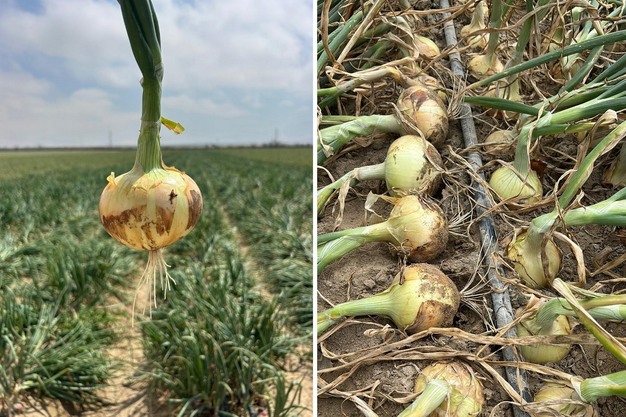
In the country, sweet yellow onion harvests, primarily of the Granex variety for export, start in June and can continue until February or March of the following year, depending on market conditions. Recently, the harvest period has been extended thanks to new markets opening, though economic performance remains inconsistent.
The weather has been a key factor. "During 2024 and 2025, mild to normal La Niña conditions prevailed, supporting stable production and strong volumes not only in Peru but across other countries in the continent. This created an international oversupply, leading to regular to low prices," Gómez explained.
 © Semiagro
Although weather conditions supported good harvests, the average yield per hectare has been decreasing. "If some years ago it was possible to reach potentials close to 100 tonnes per hectare on the Peruvian coast, nowadays the averages are closer to 70 tons. This reduction has a direct impact on the costs per kilo produced," he said.
The rising labor costs in Peru further impact the crop's competitiveness, particularly when compared to sectors like blueberries, grapes, or avocados, which can accommodate higher wages.
 © Semiagro
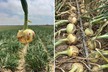
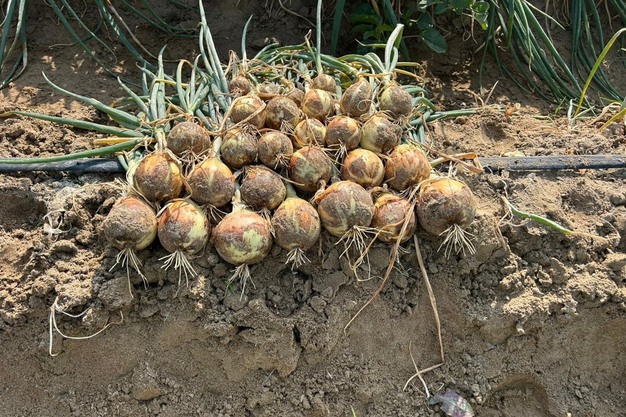
Additionally, phytosanitary challenges associated with monoculture pose significant issues. "Problems such as Fusarium (soil fungus), Stemphylium (leaf fungus), and thrips impact yields and lead growers to seek new varieties with greater tolerance. In this context, the replacement of varieties has increased in order to restore productivity and stability," he emphasized.
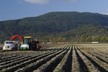
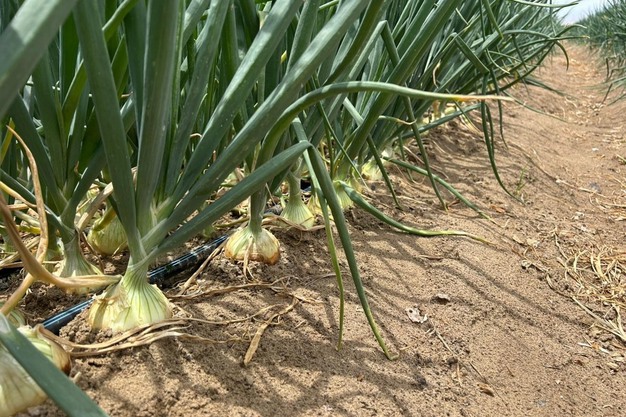
Yellow onion production for export is mainly focused in the southern part of the country. About 85% of the cultivated area is in the Ica region, with Arequipa coming next. In recent years, the planted area has grown from around 2,500 to 3,200 hectares, showing steady growth up to the current season.
 © Semiagro
"However, growers are feeling discouraged about the 2026-2027 season, which might lead to a decrease in the area they plant. If this happens, supply could decrease, and prices could recover," he stated.
 © Semiagro
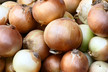
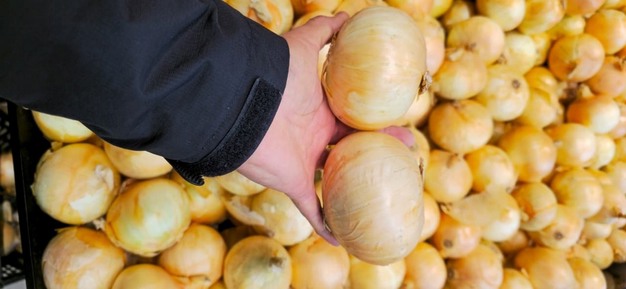
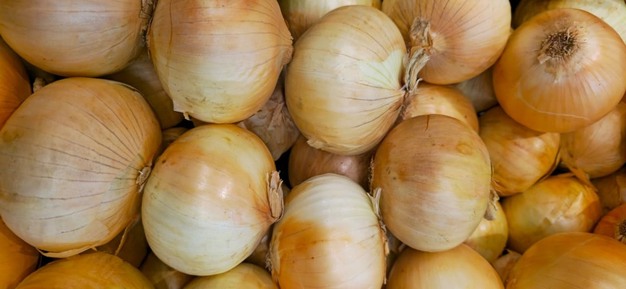
"The United States remains the primary market for Peruvian yellow onions. Meanwhile, Europe is experiencing rising demand. Notably, there is a shift in size preference: medium-sized onions, which were previously common for pre-packing, are now being replaced by a growing interest in larger onions, which could indicate lower availability at the source," he concluded.
 For more information:
Fernando Gómez
Semiagro
Peru
Tel: +51 940 323 159
Email: [email protected]
www.semiagro.com.pe