There are some shifts happening in the onion supply across North America at the moment. "There are plenty of onions domestically. The growing conditions were quite favorable and there were some additional acres planted this year between all the storage areas," says John Harris of Paradigm Fresh, noting that given that some commodities have been depressed this year, some grain growers in the Pacific Northwest for example opted to plant onions instead this season.
That said, there are quality concerns on onions coming out of the Pacific Northwest. "The temperatures were so warm up until January for buildings that didn't have cold storage and that has created issues throughout the region," says Harris. That includes higher than normal shrink which in turn will lead to supply finishing earlier than normal this season. "It's also tough to have a real high quality pack with this level of shrink, especially as we get further into the storage–it'll get worse not better."
In addition, there is also some neck rot and internal decays throughout all the growing regions, which could be indicative of issues with the seed supply this year.
 © Paradigm Fresh
Early Texas crop
Meanwhile, the Texas onion crop is a month early this year. Volume should arrive within a couple of weeks which is highly unusual–volume on onions usually comes on from the state from March 15 throughout the start of April. While Texas had seen good growing conditions this year for onions, it's possible growers also planted earlier this year.
Mexico is also shipping onions at the moment to the U.S, though the numbers are pretty typical. "As of this weekend last year, we got 475 loads shipped across from Mexico. This year we have 560. Some of the Mexican onions are competing in the sweet onion market too," Harris says.
That said, overall there may be slightly less onions from Mexico this season. "This may be because when growers were planting product typically slated for the U.S., there were a lot of tariff question marks. Not knowing if there were going to be tariffs, perhaps some chose not to plant. This may also have something to do with some Texas growers planting earlier because they wouldn't have the Mexican supply that they normally count on for this time of year," he says, adding that the quality on Mexican onions is good.
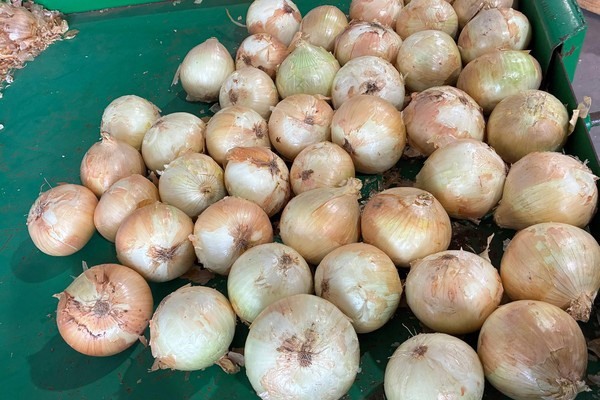
From Mexico, white and yellow onions are steadily arriving while red onions are expected to start crossing by the middle to end of this week.
 © Paradigm Fresh
Other growing regions
Also shipping onions daily right now is Peru though those are largely flat sweet onions and Canada also continues to ship onions and will do so until May-June. "It's not a lot from Canada though–average imports from Canada are 10-15 loads a day," Harris says.
Amidst all of this, demand has been pretty normal for onions since the start of the year and the pull ahead of the Super Bowl was also good. However it is inconsistent with one to two days of busy shipments followed by a day or two of quiet on orders.
More recently, the cold temperatures and the snow in the Northeast have also impacted demand from the region and affected transit availability going in and out of the Northeast, though that's not just onions. "That being said, when they thaw out, the buying will increase and make up for that. It equalizes itself," says Harris.
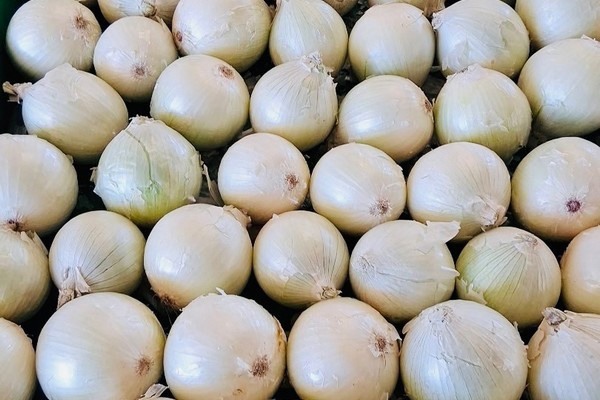
So where is all of this leaving pricing? On yellows, it's low and below the cost of production while the red onion market is stable, steady though also probably at break even or a little under the cost of production. "The white market is better," says Harris. "It's profitable and it's up and down because there's some lesser quality white onions out there and then some very nice white onions out there. There's a big gap between the low and the high on white onions just due to quality."
 For more information:
John Harris
Paradigm Fresh
Tel: +1 (970) 775.2049
www.paradigmfresh.com