The Namibia Investment Promotion and Development Board has identified the Namibia Berries blueberry project as part of efforts to diversify agriculture, expand production in rural areas, and increase employment in the Kavango East Region.
The project is located in Divundu and is being developed by Loxworth Capital, with facilitation by the Namibia Investment Promotion and Development Board in cooperation with several government ministries, including the Ministry of Urban and Rural Development. It is the largest blueberry farming investment currently under development in Namibia.
Investment to date is approximately N$400 million, equivalent to about US$22 million. Total planned capital expenditure is estimated at N$1.5 billion, or roughly US$81 million, over a seven-year period. The project targets long-term production growth and increased participation in export markets for high-value fruit.
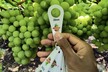
Current production covers about 115 hectares under cultivation. The operation employs 120 permanent workers and around 700 temporary workers during peak periods, contributing to employment in the surrounding area.
The first phase was established on land allocated by the Divundu Village Council, which provided 240 hectares to the project. Phase one covers 50 hectares and has created more than 80 permanent jobs and 250 temporary positions. Additional land is under consideration as part of the planned expansion.
Namibia Berries aims to increase the planted area to 250 hectares. According to project plans, the expansion could result in close to 1,000 permanent jobs and up to 5,000 seasonal positions during harvest periods.
Blueberries from the farm have already entered export channels. During the 2024 and 2025 harvest seasons, shipments were sent to Europe, Asia, and the Middle East, positioning Namibia as a supplier in the global blueberry trade.
Beyond production, the project has introduced community-related activities. These include community crop production initiatives, agricultural skills training, and the installation of water points and boreholes to improve access to clean water. Additional measures include upgrades to local preschools and the installation of solar-powered streetlights in nearby communities.
The Namibia Investment Promotion and Development Board stated that the project illustrates how agricultural investment can support economic diversification and rural development objectives.
Approximately N$400 million, or about US$22 million, has already been invested in the Namibia Berries blueberry project, with total planned capital expenditure estimated at N$1.5 billion, or around US$81 million, over seven years.
Source: Windhoek Observer