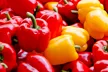
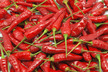
Nigeria's pepper production is expected to increase steadily over the coming years, with industry projections indicating output could rise from the current baseline of 757,000–770,000 metric tons to as much as 800,000 metric tons by 2030. On this trajectory, the country would remain Africa's largest pepper producer.
Growth is projected at an annual rate of 0.3–0.5 per cent, according to analysts. Peppers account for around 40 per cent of vegetable consumption, supporting sustained domestic demand. Production estimates suggest output of approximately 767,110 metric tons this year, increasing to between 775,000 and 800,000 metric tons by the end of the decade.
Production currently covers around 104,000 hectares, concentrated mainly in northern states such as Kano and Kaduna. Average yields range between 7 and 8 tons per hectare, with Scotch Bonnet the dominant variety. Domestic demand is projected at 65,000 metric tons this year.
Dr. Victor Iyama, Chairman of the Board of Trustees of the Federation of Agricultural Commodity Association of Nigeria (FACAN), commented on market dynamics. "Pepper is in greater demand both for local consumption and exports." He said pepper cultivation is increasingly viewed as an economic activity within a growing market.
Sector observers note that faster expansion would require addressing ongoing constraints. Pest pressure and climate variability continue to affect yields, while seasonal production patterns limit output in the absence of controlled-environment cultivation systems.
In Europe, demand patterns differ. According to the Centre for the Promotion of Imports from Developing Countries (CBI), demand for peppers is spread across the year rather than being seasonal. The organisation stated: "Demand for peppers is set to rise, thanks to the cooking preferences of various ethnic groups and some European communities."
While Nigeria leads African production ahead of Egypt and Algeria, it faces strong competition internationally. India remains the dominant global producer, with about 1.9 million metric tons of pepper output in 2023. This compares with Nigeria's production of around 330,000 metric tons of dry peppers that year, according to FAO FAOSTAT data. India produced 1.874 million metric tons of dry chili and peppers in 2022, equal to 38.2 per cent of global output, while Nigeria supplied about 65,000 metric tons. India's scale reflects differences in production systems, processing capacity, and export orientation. Nigerian dried chili exports account for about 1.11 per cent of the global market.
Egypt produces an estimated 200,000–300,000 metric tons of chili annually, with expansion constrained by water availability. Morocco continues to expand sweet pepper exports. According to EastFruit, exports reached 189.2 thousand metric tons in MY 2024/25, generating US$240 million in revenue, with sweet peppers remaining one of the country's main vegetable export categories after tomatoes.
Source: The Nation