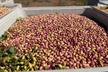
The popularity of Dubai-style chewy cookies, known in South Korea as "dujjonku," is affecting prices of several imported ingredients, according to market data and retailer feedback.
Dujjonku is produced by combining pistachio cream with kadaif, a threadlike pastry made from flour, cornstarch, and salt. The mixture is formed into rounds and coated in melted marshmallow mixed with cocoa powder, resulting in a dense, chewy texture.
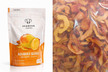
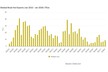
Price tracking data from Fallcent, a mobile application that monitors listings on Coupang, shows sharp increases in pistachio products in recent months. A 1-kilogram bag of unshelled pistachios that sold for around 20,000 won, or approximately US$13.61, in early December had risen to about 80,000 won, or US$54.44, as of Thursday. The price of 500 grams of kadaif nearly doubled over the same period to around 30,000 won, or US$20.42.
Retailers and small food businesses report that ingredient cost increases are being passed through to end products. The price of a single piece of dujjonku has traditionally ranged from 4,000 won to 10,000 won, equivalent to roughly US$2.72 to US$6.81. Recent listings on food delivery platforms show prices reaching 12,000 won per piece, or about US$8.17.
 © TikTok
"Importers keep raising kataifi prices. I'm selling each piece for 6,500 won right now, but I'll probably have to charge more," one user wrote on Apnikka Sajangida, an online community for self-employed business owners. The stated price of 6,500 won is approximately US$4.42.
Some consumers have responded to higher prices by using alternative ingredients for home preparation. A YouTube video showing dujjonku made with soybean noodles instead of kadaif has surpassed 4 million views. According to the video, the noodles are broken into small pieces and cooked in butter to create a similar texture and flavor profile, while costing under 3,000 won for a 500-gram package, equivalent to about US$2.04.
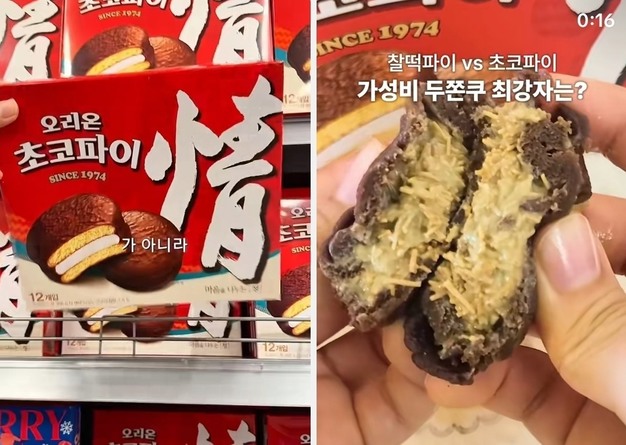
Others have modified the recipe using widely available snacks. On TikTok, users have shared videos featuring Orion Choco Pie, a chocolate and marshmallow snack. In these videos, the product is sliced open, spread with pistachio cream, frozen, and then consumed.
Source: The Korea Herald