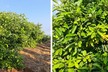
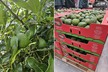
California is home to a rich avocado industry with the large majority of fruit grown in the southern coastal region of the state. However, more recently, avocados have been growing further north, in the Sacramento Delta region. Last year, the second commercial harvest in the region took place and the timing appeared to be excellent. In January 2025, a combination of weather and reduced USDA inspections during the holiday season caused a shortage of avocados from Mexico coming in. "We were harvesting at that time and decided to strip pick the fruit while the market was strong," says Justin Bloss, Sales and Marketing Manager at Rivermaid Trading. "It was an anomaly in terms of market price," he added.
Early harvest window
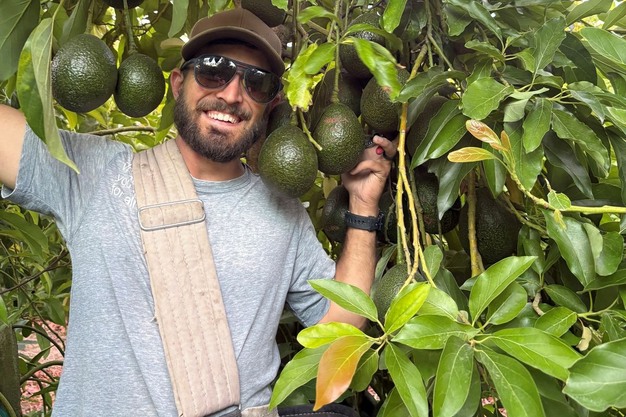
Harvest timing in the Sacramento Delta region is about two to three weeks ahead of the southern growing region and last year, Rivermaid was able to take advantage of that early window. "When we started growing avocados, intuitively we thought our harvest would be behind the southern region." However, the dry matter in the Sacramento Delta region appears to develop earlier, which is a combination of daylight hours, summer temperatures, and various other factors. Inland temperatures are higher compared to the southern coastal temperatures, which likely contributes to a faster development of dry matter. "This has opened up the California window by a couple of weeks," commented Bloss. The season starts in January with high quality from the north, then transitions to the south and finishes on the coast up in Morro Bay.
 © Rivermaid Trading Company
Different market conditions this year
This year, however, the market is quite the opposite from last year with Mexico expecting a record three-billion-pound crop. Currently, shipments from Mexico are extremely high due to the upcoming Super Bowl event. As a result, market prices are low and Rivermaid decided to hold off harvesting for a couple of weeks. "Dry matter was ready earlier than normal, at the beginning of January," Bloss said. "However, we've been waiting and plan to start harvest in the coming weeks in hopes of better market conditions."
Acreage increase
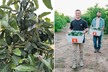
The expectation is for avocado acreage in the Sacramento Delta region to increase in the coming years. "Since we started, there has been interest from outside growers to start growing avocados as well." Heading into 2027, Rivermaid plans to triple the production volume under their management.
What is driving the shift to avocados in the Sacramento Delta region where cherries and pears are some of the main fruits? "We've been growing, packing, and shipping pears (and cherries) for many decades, but marketing California pears has become increasingly challenging," shared Bloss. This is mostly the result of imports from Argentina overlapping with California's season. "It's not sustainable for California growers to compete on price, as production costs are much higher domestically. Additionally, entering a market that's flush with imports limits our already limited marketing window." Industrywide, about 500 acres of pears have come out in the past two years. "I know of at least one development where pears are being replaced by avocados," he added.
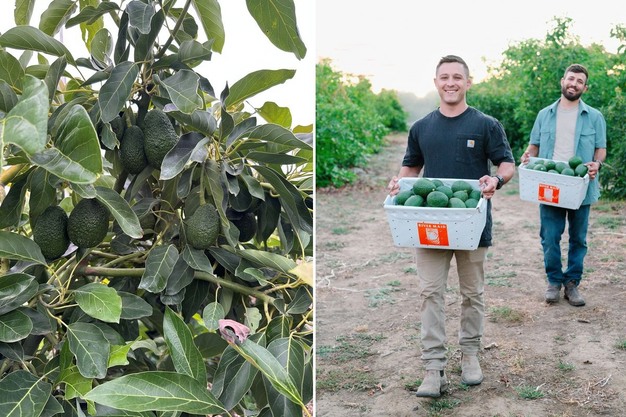 © Rivermaid Trading Company
One-stop shop
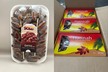
In addition to growing avocados, it's Rivermaid's ambition to pack and bring them to market as well. For the past few years, Rivermaid Trading has been partnering with a packing company in Southern California, bringing their fruit to market. "However, it is our goal to do everything ourselves and we are refining that process now."
 For more information:
Justin Bloss
Rivermaid Trading
Tel: (+1) 209-210-6829
[email protected]
www.rivermaid.com