The new year has started, and in the top fruit market, this means that we are moving into the second half of the season. A season in which there is generally a tendency for the second half to bring some improvement to the market. So does Wolfcarius Fruit: "The season is generally going satisfactorily. However, we do see that pricing is at a very different level than in previous years, but I suspect we will see improvement in the second half of the season," says Yves Wolfcarius of the Deinze-based growing and trading company.
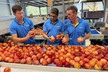
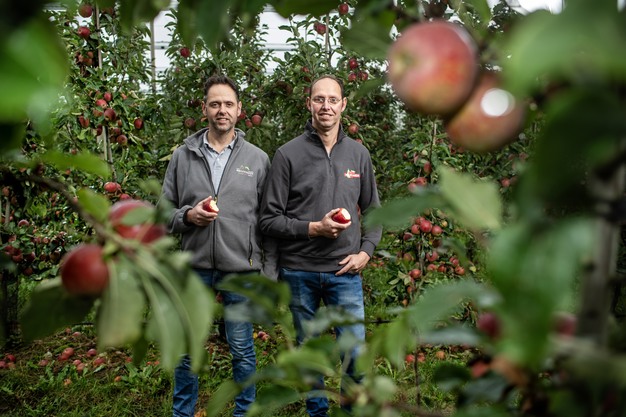 © Wolfcarius FruitYves and Stephan Wolfcarius
Indeed, the company, which grows varieties such as Conference and Doyenné du Comice in pears and Jonagold, Boskoop, Gala, Coryphée, and Magic Star in apples, has seen that despite an overall satisfactory season, prices still leave something to be desired. "This is obviously due to the very high production last season, both in apples and pears," explains Yves. "In addition, quality problems played a role in several places, which initially led to high sales volumes and pressure on the market. I suspect that now, particularly with pears, we are heading into the second sales phase of the season. This is, of course, an estimate, but I hope we will start to see improvement, because the lots that had to be sold on an accelerated basis are now largely gone."
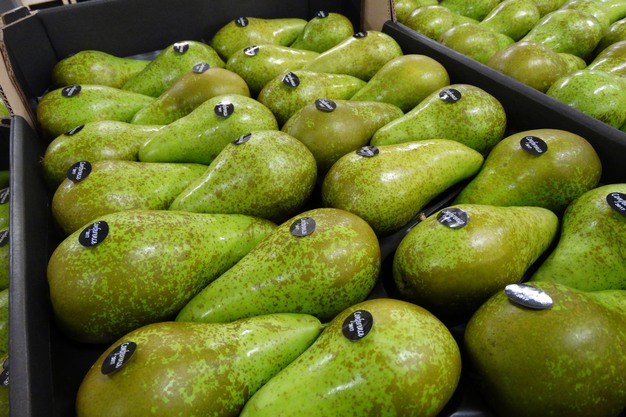
So these had to be cleared first. "The quality of the cells that are opening now is clearly better. That also translates at the table. The volumes and demand are there; sales are smooth and strong. For pears, I therefore expect some further improvement in the coming months, possibly from February or March, but we are already seeing cautiously positive signs. For pears, our supply consists mainly of Conference, with a fair share of Doyenné du Comice as well. Sales of that will probably continue until early March, after which the season will continue with Conference."
 © Wolfcarius Fruit
Apple more difficult, but hopeful about Magic Star
For apples, the entrepreneur explains, the situation is slightly different from pears. "If we look at the classic varieties, improvement will probably take longer. If there is a price rise at all, it will be more towards late spring or summer, depending on the available supply. With apples, it is important in any case to have your own marketing channels, or multiple channels, in order to extract some margin from the market. We notice that the market is under strong pressure, both towards processing and in the fresh trade. Industry prices are very low and, due to ideal growing conditions and high production, you see that the sorting is sometimes smaller. For lots with many small sizes, it then becomes difficult."
In addition, Wolfcarius Fruit grows some exclusive varieties for the Colruyt Group in Belgium, including flagship varieties Magic Star and Coryphée. "In years when pricing for regular varieties is difficult, we see that protected varieties with shielded sales are slightly more resilient in the market. There are fewer major price fluctuations. The advantage of exceptionally high prices in some years is somewhat smoothed out, but over several years, these varieties do provide more stability within the company. Magic Star is sold in Belgium from the beginning of November until almost the following new harvest in September."
 © Wolfcarius Fruit
Only possible with sales security
Is this also a reason for the company to increasingly look at exclusive, resistant varieties instead of classic varieties such as Jonagold or Conference? "In recent years, at the request of our customers, we have consciously started working more with new varieties, specifically looking at disease resistance. Both Coryphée and Magic Star are more resistant to certain fungal diseases than, for example, Gala or Jonagold. That is certainly a key focus. At the same time, it is crucial that new varieties come with sufficient certainty regarding sales and returns. New varieties are constantly entering the market, and the investments are considerable. Within the Magic Star project with Colruyt, sales were largely guaranteed, and shelf space was provided, because Colruyt itself was a partner in the project. That significantly reduces the risks. Without these assurances, it is very difficult to commit to such a new variety."
"Incidentally, we do see that pricing is becoming an increasingly important issue," Yves stresses. "Costs on farms, including labour and crop protection, continue to rise. Cost control and profitability, therefore, remain major challenges. There is continuous pressure on farms, especially as our sector requires a lot of labour, particularly during the harvest period. It remains uncertain whether we will be able to find enough people and whether we can remain attractive enough as a sector. Remuneration plays an important role in this. Those costs ultimately have to be recovered through revenues and market prices, and that is more difficult again this year, which makes it all the more important to keep this issue in focus."
 © Wolfcarius Fruit
So could robotisation be a solution? "Tricky," Yves thinks. "When it comes to automation, such as picking robots, I think that is more something for the future, perhaps even the distant future. Research has been ongoing for a long time, and it is important that it continues, because something will have to emerge at some point. In pruning, certain steps towards automation have already been taken, and we are certainly following those developments, but truly concrete, widely deployable solutions for picking are not something I see at the moment."
For more information:
Yves Wolfcarius
Wolfcarius Fruit
Varingstraat 6A
9800 Gottem (Deinze)
+31 (0) 51 63 40 91
[email protected]
www.wolfcariusfruit.be