Take Root Bio Technologies (TRB) outlined a set of program milestones and partnerships as it advances its modular biosphere approach to controlled environment agriculture. "Designing food systems for space removes all margin for error, and applying those rules on Earth builds resilience," says Kirk Siderman-Wolter, Co-Founder and Director at TRB.
Spiderman-Wolter points to acceptance into the UK Space Agency's Geo Accelerator, participation in the European Innovation Council's AI Challenges, a poster showcase at EIT Food's Next Bite, and ongoing work as an EIT Food Delivery Partner. He also highlights collaboration with the University of Guelph under the UK Space Agency International Bilateral Fund.
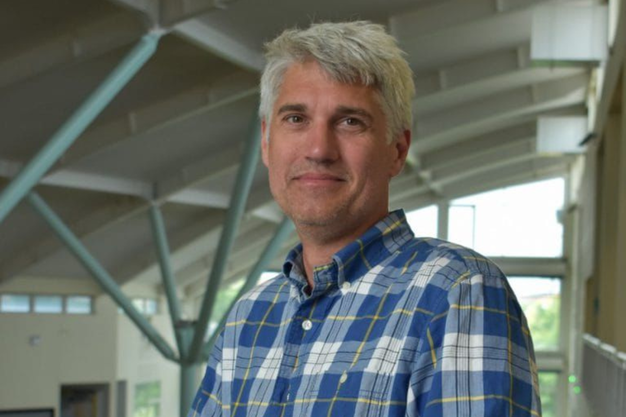 © Take Root Bio
Kirk Siderman-Wolter
From space constraints to urban deployments
The approach is framed as translating space-grade biosphere and CEA thinking into deployable urban systems. Siderman-Wolter describes modules installed in either standard containers or retrofitted buildings.
"These feature continuous sensing, closed-loop water and nutrient recirculation, AI-assisted decision support, and designs that prioritize reliable operation," he says. "AI should help people understand biology, not override it."
On-farm pilots and university collaborations
A UK-based on-farm collaboration with Natural Synergies is testing how biosphere logic can close loops on working farms. "The project aims to extract sterilized water from slurry, convert the remaining material into a dry, biosecure product, and trial that output as a peat replacement for controlled-environment growing inside existing farm buildings," Siderman-Wolter says. "Biosphere thinking turns agricultural constraints into system assets."
TRB's space-to-Earth pathway includes a UK-Canada collaboration with the University of Guelph, funded by the UKSA International Bilateral Fund. The focus is translating space-linked crop and CEA insights into urban-ready modules and into the company's digital twin development for operator training and scenario planning. "Guelph brings decades of space agriculture insight, and our role is translating it into real-world infrastructure."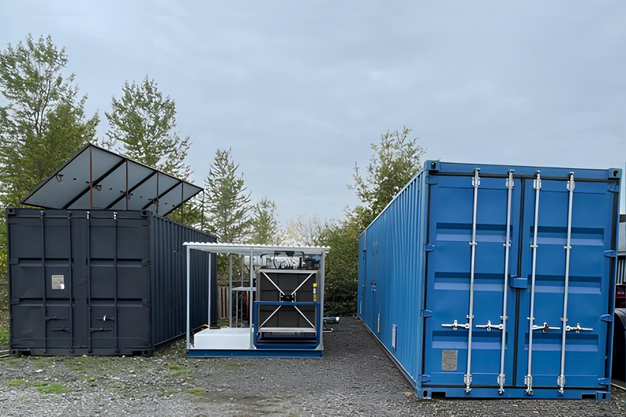 © Take Root Bio
On-farm pilot of Natural Synergies' NS Sonek system with TRB's BioContainer, in County Durham, England. Sponsored by the Innovate UK ADOPT Programme
Education, AI, and digital twins
TRB's learning layer uses AI tools and digital twins. "We aim to help new operators understand system behavior, monitor crops, troubleshoot, and simulate planting cycles in advance. The goal is to support local teams in different languages, climates, and cultural contexts."
Siderman-Wolter describes a "complete diet" framing that broadens crops beyond leafy greens to contribute to local food diversity. He also links urban production to potential land-use benefits, suggesting local production can shorten supply chains and free conventional farmland for cereals, regenerative practices, or biodiversity.
For more information:
Take Root Bio Technologies
Kirk Siderman-Wolter, Co-Founder and Director
[email protected]
www.takeroot.bio