The winter 2026 edition of the Maersk Global Market Update outlines developments expected to influence global and European supply chains during the year, with attention on maritime routing, port congestion, regulatory changes, and inventory management.
Suez Canal
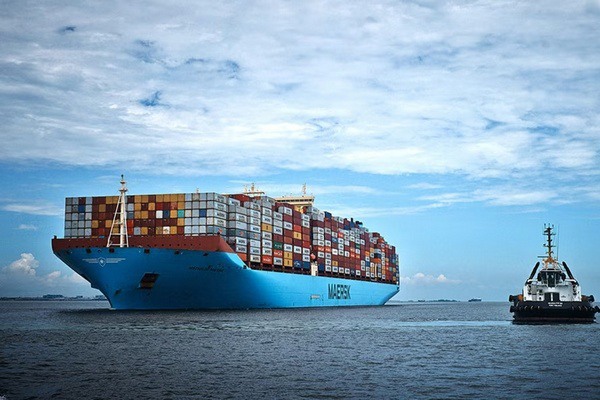
Discussion within the logistics sector continues to focus on a possible return to Red Sea routing and the Suez Canal. On 19 December 2025, a Maersk vessel on the MECL service completed a transit through the Bab el-Mandeb Strait and Red Sea under enhanced security. Maersk stated that this represented a step toward a potential transition, although broader use of the trans-Suez corridor remains at the planning stage and depends on safe operating conditions.
Maersk notes that if vessels using the Suez Canal and those routed via the Cape of Good Hope arrive in Europe at similar times, importers could experience compressed delivery schedules. This may result in short-term inventory accumulation, particularly as Euro Area inventory-to-sales ratios are already above early 2020 levels. The company advises shippers to anticipate volatility and review ordering patterns.
 © Maersk
Europe
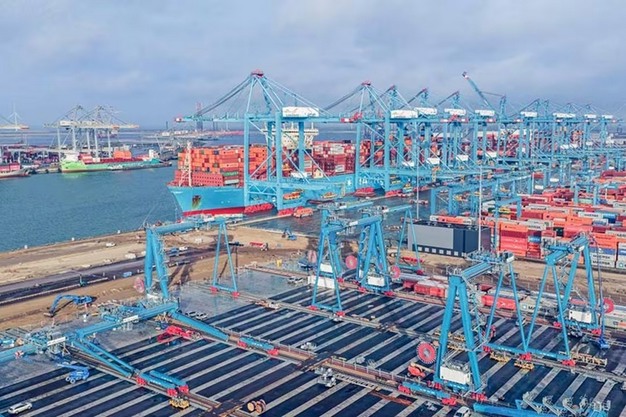
Port utilisation across Europe remains elevated. According to Drewry data, terminals in Rotterdam, Hamburg, and Algeciras operated at around 80% capacity during summer 2025, with utilisation remaining high since then. Maersk notes that a simultaneous influx of vessels could move utilisation toward levels where buffers narrow and congestion risks increase. In early January, severe winter weather temporarily slowed operations in Hamburg, Rotterdam, and Antwerp.
In Antwerp, selected terminals are operating close to 90% yard utilisation, while in Rotterdam, some large container vessels are facing waiting times of 24 to 48 hours. Refrigerated container plug capacity is under pressure at certain locations. Customers are advised to plan for longer dwell times and earlier container collection.
From a regulatory perspective, the European Union will end the de minimis customs duty exemption for low-value imports of up to 150 EUR. From 1 July 2026, low-value parcels entering the EU will incur a flat charge of 3 EUR per item type. Maersk indicates this may affect inventory positioning and trade flows, with some e-commerce operators expected to store inventory closer to European consumers.
 © Maersk
Global
Globally, Maersk highlights potential knock-on effects from network adjustments. A concentration of containers in Europe could result in equipment imbalances elsewhere, affecting export capacity in markets reliant on timely container availability, including agricultural and seasonal goods.
Beyond Europe, several trade policy changes are scheduled for 2026, including reviews of trade agreements and tariff regimes in North America and Mexico. At the same time, changes to customs processes such as the EU Carbon Border Adjustment Mechanism and Import Control System 2 will add compliance requirements for certain importers.
Maersk advises shippers to monitor these developments closely and factor extended lead times, regulatory adjustments, and routing flexibility into supply chain planning for 2026.
 For more information:
Mikkel Linnet
Maersk
Tel: +45 24821196
Email: [email protected]
www.maersk.com