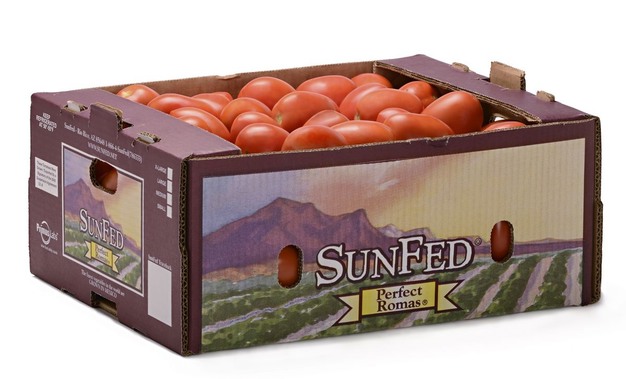
The tomato season out of Mexico has been going for about three weeks now for SunFed and volumes are still relatively small at the start of the deal. "In the next month, we expect volumes to really pick up," says Matt Mandel, CEO of SunFed Produce. In the past few months, the market didn't reach the pricing levels it normally does in the fall and in view of the terminated tomato suspension agreement, this is particularly surprising.
Since the agreement ended mid-July, tomatoes from Mexico have been subject to a 17.09 percent tariff. This tariff was expected to result in an increase in price, but this fall, the market did not quite react the way everyone had expected it to. Historically, there has always been a nice jump in pricing around late September, early October when volumes out of Mexico tend to decline as summer production transitions to fall and winter. However, that price increase didn't occur this year.
 © Sunfed
Right: Matt Mandel.
Demand dynamics
For some reason, it wasn't until a few weeks ago that the market showed any signs of life. "It could probably be attributed to demand dynamics," said Mandel. Inflation has been a constant pressure on the economy for a while now, affecting the average American family. People are beginning to pare back their spending and unfortunately, fresh fruits and vegetables have the perception of being expensive while processed foods are relatively cheap. "I don't have any data to back up my thoughts, but after having talked to several people in the industry, we are all witnessing the same trend of reduced consumer spend," he shared.
Reduced acreage
Tomatoes are about to get into the heavy Sinaloa season where plantings in general are reportedly down anywhere from 18 to 25 percent. This is expected to cause some changes in supply, which will likely result in higher prices. "Once we get into the thick of the Sinaloa season, we will really know how much of an effect reduced acreage will have on market pricing," Mandel commented. If demand continues to lag, pricing may remain stable. However, if demand picks back up to the previous levels, it is safe to say there will be pricing spikes going forward. At least, the last couple of weeks have been more active than they've been this year.
 © Sunfed
Uncertainty
All in all, there is a lot of uncertainty in the tomato market, which has driven Mexican growers to reduce their acreage. Actually, growers haven't just cut back on tomato plantings, but on plantings in general. There is a general sense that production has outstripped demand, resulting in negative consequences for everyone involved. It is a tricky situation as these large-scale operations in Mexico deal with a relatively high amount of fixed costs. Let's hope pricing will be sufficient for growers to offset the difference in fewer acres and fewer packages coming in. "We do know that the economic signals in the U.S. do not paint a rosy picture. This, coupled with the possibility of lower demand and higher pricing, just doesn't provide a great outlook."
 For more information:
Matt Mandel
SunFed
Tel: (+1) 520-761-6813
[email protected]
www.sunfed.net