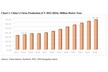
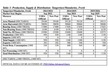
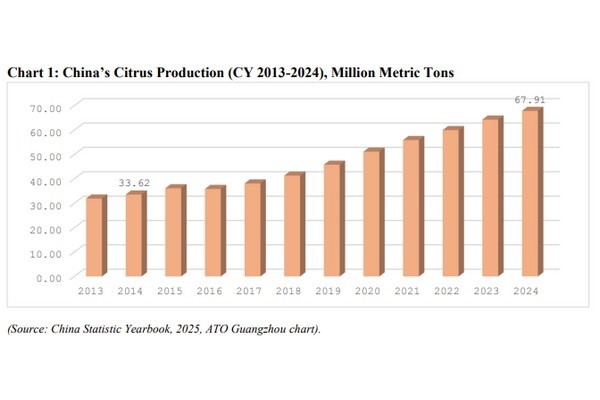
China's production of citrus fruit will grow modestly in marketing year (MY) 2025/26 as consumer demand continues to drive investment in the sector and weather conditions have been generally favorable. Production of mandarins/tangerines were robust in southern China due to good weather. Orange and pomelo production are both relatively flat, but with improved quality over MY 2024/25 which may improve China's export competitiveness. Due to a shortage of Brazilian frozen orange juice concentrate in MY 2024/25, China increased its processing of domestic oranges for juice, a trend which is forecast to persist in 2025/26 despite lower global export prices.
China is one of the world's largest producers of citrus fruits. The sector is relatively fragmented by region, province, and type of fruit produced. Citrus is grown across much of the southern third of China.
 © USDA
For this report, FAS China has divided China's citrus growing provinces into the southern, central, and western regions. China's southern region the country's core citrus-producing belt, accounting for more than half of total national output. Guangxi and Guangdong continue to hold the largest planted areas and dominate production of major mandarin and tangerine varieties such as Wogan, Shatangju, and Huangdigan.
Fujian contributes roughly one-tenth of national citrus production and features a diversified varietal mix, including pomelos, mandarins, and tangerines. Guangdong's Meizhou and Fujian's Pinghe counties are the leading production centers for pomelos and grapefruits. Yunnan and Guizhou have emerged as expanding citrus regions and now account for over six percent of annual output. Yunnan, benefiting from favorable climate and soils, primarily produces Bingtang oranges and Wogan tangerines and is also the origin of the well-known "Chu" orange brand.