For the Cartonpack Group, 2025 was a year of consolidation and acceleration. Massimiliano Persico of the Group's Marketing Department outlines the results achieved and the future outlook, retraces the key milestones of a path focused on innovation and service, and discusses the strengthening of the Group's international presence.
 © Maria Luigia Brusco | FreshPlaza.com
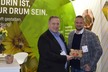
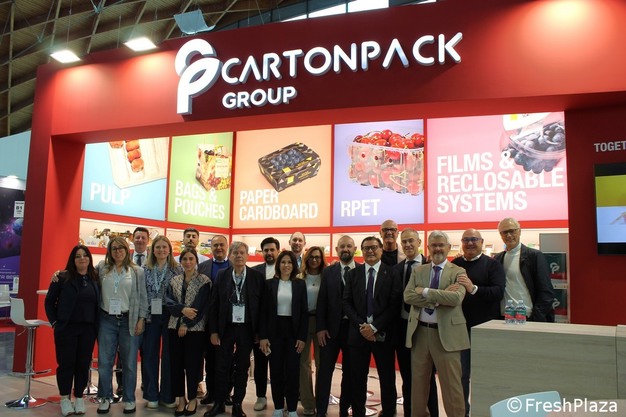
Cartonpack Group at Macfrut 2025
"2025 has been a year of consolidation and acceleration," Persico explains. "The most notable results include strengthening production capacity by combining the technologies of various Group companies (Cartotecnica S.r.l., Ondapack Sud S.p.A., Dacapulpl S.l., Smilesys S.p.A., Clifton Packaging Ltd., and Fimat S.p.A.), expanding our range of innovative cardboard packaging solutions, and achieving significant growth in foreign markets." Persico emphasizes that these elements "reflect a coherent path focused on innovation and service, which has allowed us to support our customers in a more reliable and strategic way."
 © CARTONPACK GROUP
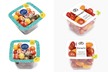
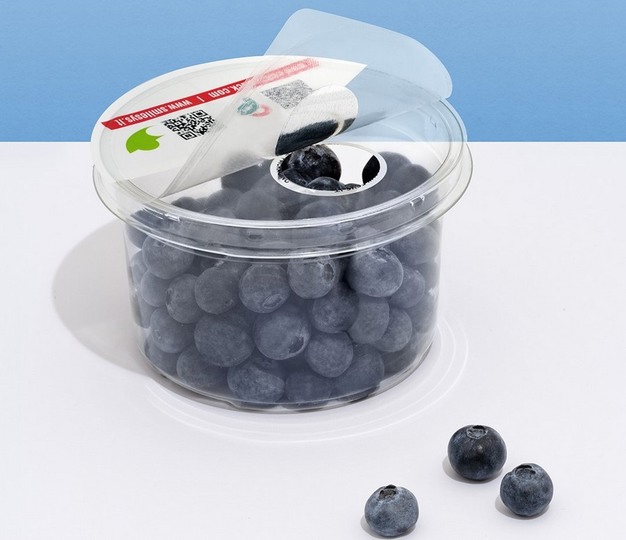
BK1, a bucket with an open-and-close system
Over the course of the year, the demand from customers in the fresh produce industry has also evolved. "Demand has shifted toward increasingly functional and sustainable solutions," notes Persico. "Customers are looking for packaging that optimizes logistics, enhances shelf presentation, and reduces environmental impact." In this context, certain types of packaging have experienced significant growth. These include automatic and semi-automatic packaging, customized solutions for modern retail, and mono-material cardboard packaging designed to simplify end-of-life management.
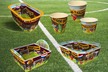
The bucket, for example, is a solution developed to meet the growing need for snacking through a mono-material container. The BK1 is a bucket equipped with an open-and-close system designed to capture the well-established snacking trend, which involves not only younger consumers. The product has already received significant market feedback and has been adopted by major companies such as Orsero and Frutti di Gil. Internationally, Edeka was the first to introduce the BK1 in Europe within large-scale retail. Thus, the bucket stands as a concrete example of mono-material packaging that is fully recyclable and compatible with plastic recycling streams. It aligns with the most recent environmental sustainability requirements.
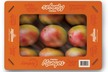
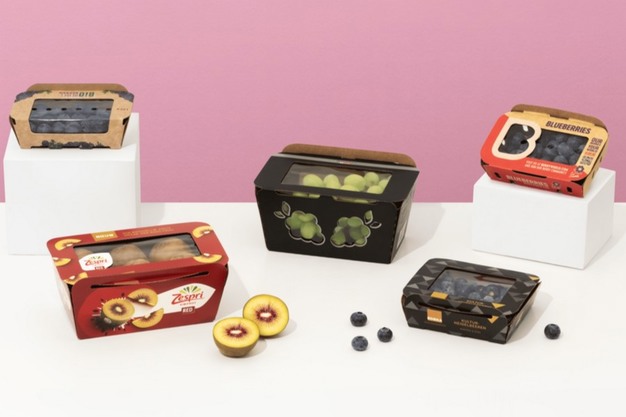
In the paper and cardboard sector, the company offers various solutions, including Carton Shell®, which is designed to package products such as berries, kiwifruit, and grapes. Within the Papersys line, cardboard is combined with cellulose, a technical choice that enables the creation of mono-material packaging. "The entire structure is cellulosic and can be disposed of with paper. The cellulose component accounts for less than 5% of the total weight of the packaging, thus ensuring full recyclability in accordance with collection standards," Persico explains. "Mono-materiality is a true corporate mantra. The goal is clear: to progressively eliminate any combination of materials, simplify packaging end-of-life, and respond to the growing sustainability demands of the fresh produce market."

Packaging innovations introduced in 2025
This year has seen the introduction of new solutions offering tangible benefits for producers and distributors. "We have introduced solutions that combine structural strength, improved functionality during packing operations, and optimized use of raw materials by choosing mono-materiality as a strategic driver."
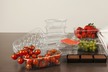
The focus has been on advanced structural designs, such as the CartonShell for larger formats; technical improvements that enhance product preservation, such as the Airbag bottom that eliminates the need for pads or bubble wrap; and faster packaging systems, such as the microflute basket with an rPET lid for use with automatic lines. According to Persico, these innovations enable producers to reduce operating costs and distributors to improve efficiency throughout the entire supply chain.
 © CARTONPACK GROUP
Packaging for organic products
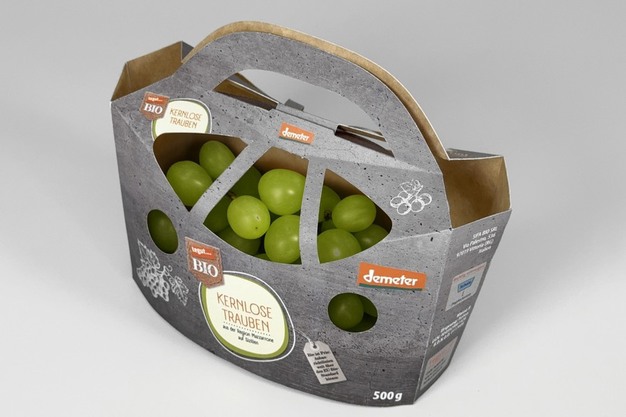
Over time, the difference between conventional and organic products has narrowed, at least in terms of packaging. The difference lies in economic willingness: organic products are positioned in a higher price segment and are perceived as premium. This characteristic opens the door to packaging solutions that are slightly more expensive but consistent with the product's positioning. For instance, while the conventional grape market primarily demands bulk packaging or top-seal packaging - such as a PET basket with PET film produced on automatic lines - the organic segment experiments with different solutions.
"In this context, Carton Shell or cardboard trays find their place -choices that involve a higher unit cost compared to plastic, but that help enhance organic products as premium offerings. It's not just a different packaging philosophy; it's a strategic positioning choice supported by greater consumer willingness to purchase," Persico continues. "It's largely a matter of perception. Paper and cardboard packaging, often printed, is the most appreciated because it strengthens communication and makes the value of organic products immediately recognizable. Although communication can also be conveyed through plastic film, the identity of organic products is strongly associated with paper and cardboard."
 © CARTONPACK GROUP
Export is increasingly central to strategy
The importance of foreign markets continues to grow steadily. "Exports represent an increasingly central component of our strategy," Persico states. "European markets remain a priority, particularly those where sustainability and packaging innovation are more highly valued, such as Northern Europe."
Alongside Europe, new opportunities are emerging. "We have received positive signals from some non-European Mediterranean countries, particularly in North Africa, where interest in innovative, reliable, and customizable solutions is growing. These countries are developing their packaging infrastructure rapidly, introducing automatic lines and adopting paper and cardboard solutions that were virtually nonexistent a few years ago. In the past, shipments to countries such as Egypt or Morocco consisted almost exclusively of plastic baskets and films. Today, cardboard has become a stable part of the packaging mix," Persico explains.
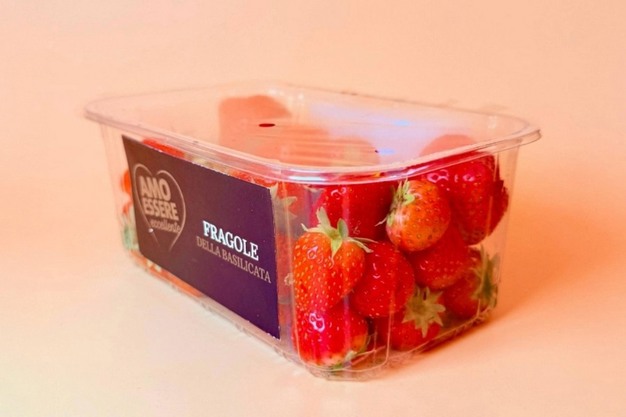
"This change is linked to North Africàs increasingly strategic role as a packaging hub for the European market, including third-party operations. Many European retail chains rely on agencies and operators with packaging centers in the area because of the excellent quality of the products now being produced there. Over the years, the region has progressively aligned with European quality and food safety standards. Today, countries such as Morocco and Egypt must comply with European protocols if they intend to export products such as grapes, strawberries, or blueberries to the European Union."
 © CARTONPACK GROUP
Trade fairs and international events
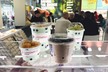
Participating in international trade fairs and events has presented important opportunities for dialogue. "Trade fairs have highlighted a clear demand for standardized yet customizable packaging that is compatible with automatic lines and features a strong certified sustainability component," explains Persico.
In 2025, in addition to well-established events such as Fruit Logistica and Fruit Attraction, the company participated in expoSe, Macfrut, professional meetings in Perpignan, and the Morocco Berry Conference, among others. "Fruit Attraction confirmed itself as the most interesting event in terms of contact quality overall. The 2025 edition 'flexed its muscles,' further strengthening visitor profiles and the level of professional relationships. This success is also linked to its strategic position in the calendar. October is the ideal time to engage with stakeholders about the 2026 campaigns. This does not diminish the value of Fruit Logistica, which remains the industry's absolute benchmark in terms of size and visibility. However, its timing in February is less favorable because some campaigns have already been defined, and the logistics in Berlin do not always facilitate travel. The Morocco Berry Conference has also grown significantly, establishing itself as a key meeting point for the berry sector," notes Persico.
In a context where "you have to be there" is no longer enough, the real challenge for companies is to carefully select events that can generate tangible returns. "Trade fairs represent a significant investment, requiring increasingly strategic evaluations in terms of effectiveness, positioning, and real business opportunities. The focus is thus shifting from the quantity to the quality of visitors."
 © Cartonpack Group
A more collaborative relationship with the fresh produce supply chain
The relationship between packaging manufacturers and fresh produce operators has become closer, more structured, and increasingly collaborative. "Today, we are not just suppliers, but project partners. We work closely with producers and distributors to develop solutions tailored to their production, logistics, and environmental needs." While sustainability is central, it is not the only focus: "We must not overlook the essential focus on cost containment and the efficient use of existing resources because the dialogue takes place among professionals with extensive experience who are fully aware of the needs, challenges, and operational foundations of the entire supply chain."
One example of shared innovation across the supply chain is the bucket developed for Edeka and included in the Herzstücke line, which has been on the market for about a year. "The project originated from direct dialogue with the German retailer's management, who were looking for a premium, contemporary blueberry snacking solution," explains Persico. "The idea took shape at the Berry Congress 2023, where the concept was identified and subsequently developed through a process involving all stakeholders in the value chain - from the brand to the producer and packaging technology partners." The result is a bucket with a Smilesys open-and-close system designed to meet marketing and production needs. One of the distinctive elements requested by Edeka was the inclusion of a heart-shaped hole, which required extensive testing and validation phases to ensure full compatibility with automatic packaging lines and is a direct reference to the Herzstücke line's visual identity.
Priorities for 2026
Looking ahead to next year, the direction is clear. "Our priorities for 2026 will include continued investment in product and process innovation, strengthening our international presence, and developing more sustainable and efficient solutions," Persico concludes. "Our focus will remain on quality, flexibility, and service as we support the fresh produce supply chain in an increasingly competitive and rapidly evolving market environment."
For more information:
[email protected]
www.cartonpack.com