Protected and soilless cultivation systems continue to gain traction, with Italian nurseries widely recognised among the best in the world. These operations require different lighting solutions depending on the growth stage of the plants. It is within this context that C-Led, a company based in Imola (Bologna) and part of the Cefla Group, has positioned itself. The company is in continuous expansion and has grown to more than 35 employees over the past year alone.
"We have hired new technicians," explains Raffaello Montanari, Commercial Manager at C-Led, "also because we design and manufacture our lighting systems in-house. We don't simply rebrand imported products; we develop tailor-made solutions. This approach has allowed us to successfully expand our presence abroad as well, from the Balkan countries to the Iberian Peninsula, and further afield to Greece and South Africa."
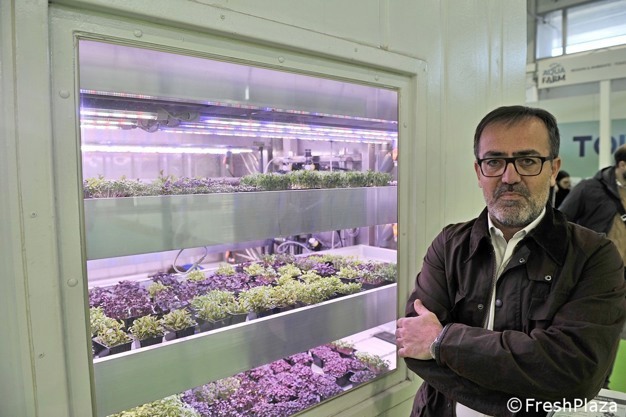 © Cristiano Riciputi | FreshPlaza.comRaffaello Montanari
"Our way of working," Montanari continues, "starts with assessing each customer's specific needs in order to propose the most suitable lighting solution. It is a fully customised design process that changes from one client to another, depending on their type of activity. That's why we work not only with nurseries and protected or soilless crop producers, but also with public and private research institutions and university laboratories."
In addition to new installations, a significant share of the company's activity also involves upgrading systems that have become outdated.
 © Cristiano Riciputi | FreshPlaza.com
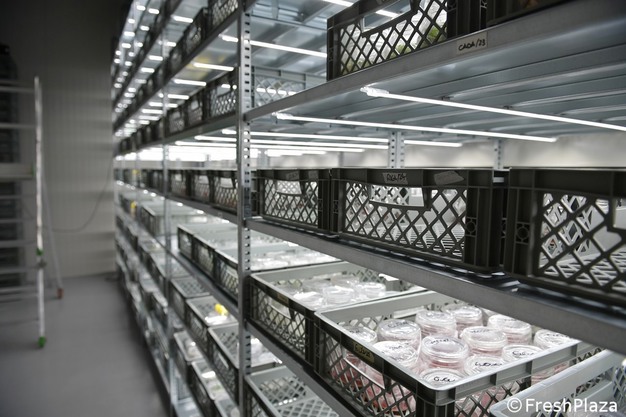
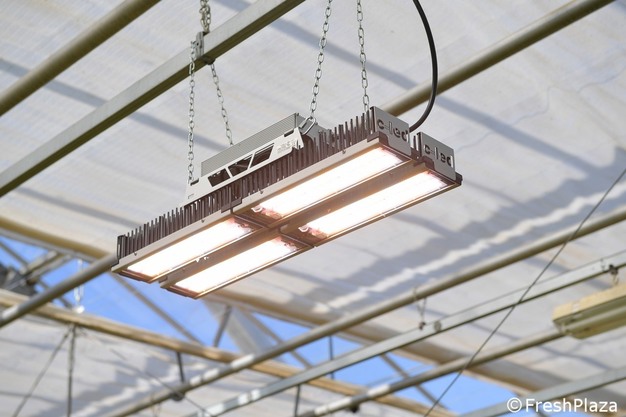
"Very often," notes Cristian D'Elia, Technical Specialist at C-Led, "we are involved in relamping projects for greenhouses or research laboratories. The lamps are specified following a dedicated lighting design tailored to the customer, with the aim of maximizing plant growth and vigor to support scientific research. In experimental centres, our work allows researchers to define, through analysis and measurements, the characteristics and strengths of their plant lines. The best-performing ones will become new varieties that are later commercialized. In many cases, this means installing LED lamps to supplement natural light with specific wavelengths for photosynthesis and to optimize the photoperiod during the autumn–winter season."
 © Cristiano Riciputi | FreshPlaza.com
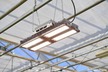
The result is significantly better performance compared to traditional HPS lighting, while at the same time reducing energy consumption, a key factor in controlling costs and improving the overall environmental footprint.
"Finally, in recent years we have seen growing demand for applications involving UV (ultraviolet) lamps," Montanari adds. "This is not limited to industrial uses such as sanitization, resin curing or pest control, but also extends to grow lights. For this reason, we have designed and launched new products featuring these specific wavelengths to meet market demand. The use of LED lamps, integrated into a project custom-designed for each client, allows for energy savings of up to 45%."
For more information:
C-LED
Via Gambellara, 34
40026 Imola (BO) - Italy
+39 0542 654980
[email protected]
www.c-led.it