Avocado cultivation in India is picking up fast and the sector is set to shift from scattered plantations to organized commercial production over the next 5-10 years, says Narendra Mohan from Bihar's Department of Agriculture. "India is one of the fastest growing avocado markets globally, and the crop promises high returns of USD 6500 to 13000 per acre for farmers switching from traditional options."
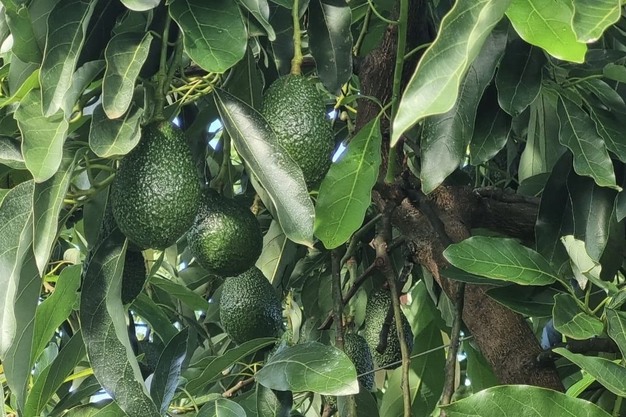
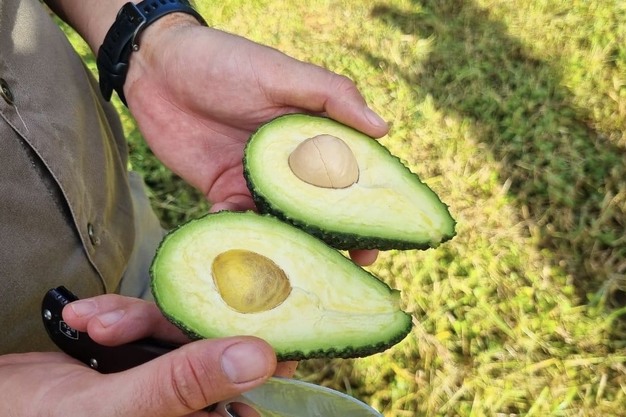
According to Mohan, current cultivation spans 1,400 hectares across southern and northeastern states. "Most trees are seed-grown in states like Kerala, Tamil Nadu, Karnataka, Maharashtra, Sikkim and Arunachal Pradesh, leading to inconsistent quality and yields." He adds that Indian varieties lag behind imported ones like Hass, Lamb Hass, Maluma Hass and Pinkerton. "Indian avocados have around 12% oil content, firmer flesh, a nuttier taste, smaller sizes and shorter shelf life, while popular imported varieties offer over 18% oil, rich buttery taste, medium-to-large sizes and longer shelf life due to thicker skin."
 © Dept. of Agriculture, Bihar
Indian growers face high setup costs, limited pest-resistant rootstocks and stringent import quarantine rules, slowing access to superior planting material. "At this juncture, the Indian avocado industry needs good international breeders, technology providers and investors," Mohan states. "Government support includes the Mission for Integrated Development of Horticulture (MIDH), funding nurseries, drip-irrigated orchards, protected structures, cold chains and market links. The state of Bihar offers USD 20,000 grants for avocado nurseries under the National Edible Oil-Oilseeds Mission."
 © Dept. of Agriculture, Bihar
ICAR-IIHR in Chettalli have released two high-yield varieties called Arka Supreme, which produces 175 to 200 kg per mature tree with 20% fat, and Arka Coorg Ravi, which yields 150 to 200 kg per tree with 12-14% fat. "Private firms including Deccan Exotics, Haskelberg Nurseries and Westfalia are providing training, saplings and market linkages. The adoption of modern techniques like grafting, cloning and tissue culture with superior varieties like Hass, Lamb Hass, Maluma Hass and Pinkerton will ensure genetically uniform, high-yielding plants that bear fruit faster in 3 to 4 years."
Mohan expects India to shift from being an import-dependent consumer to a significant producer of avocados in the next decade. "Climate models suggest improved suitability here even as traditional global regions face challenges. Consumption is projected to rise from 10,000 tonnes in 2024 to 40,000 tonnes by 2026-27. It is the right time for international breeders, technology providers and investors to join the Indian avocado value-chain."
For more information:
Narendra Mohan
Department of Agriculture, Gov. of Bihar
Tel: +91 9771466764
Email: [email protected]