Brussels is currently reviewing the list of "priority" plant pests and diseases under Regulation 2019/1702. The economic, social, and environmental impact studies for the 46 main pathogens or agents already classified as quarantine pests, conducted by the Joint Research Centre (JRC) and the European Food Safety Agency (EFSA), were completed in March. The new ranking, which will replace the existing top 20, has not yet been determined.
Expanding this macro-analysis to include a broader range of forest and agroforestry pests and revisiting the estimated damages for those assessed in 2019 suggests the list of "priority" pests could change. This regulation is essential for maintaining plant health in the EU: designating a pest as a "priority pest" imposes responsibilities on all member states, requiring them to monitor their territories for early detection of these insects, fungi, viruses, or bacteria, develop contingency plans for eradication or containment, and conduct drills in case of outbreaks.
 © CGC Trees in Florida (USA) are covered to prevent D. citriattack—photo provided by the IVIA.
In 2023 and 2024, European funds allocated to co-finance such initiatives barely exceeded 8 million euros across all 27 member states. Inmaculada Sanfeliu, president of the CGC, criticizes this as "a mockery,' especially considering that the European Commission's estimated damages across the entire EU for the four main pests affecting citrus—X. fastidiosa, HLB (Candidatus liberibacter), false moth (T. leucotreta), and black spot (P. citricarpa)—total 7,057 million, 3,400 million, 2,717 million, and 2,490 million euros, respectively.
Six of the eight pests and diseases that can harm citrus and are among the top 20 are present in EU territory or in countries bordering the Mediterranean. The official declaration of the presence of any of these serious phytosanitary issues in the short term would not only require immediate, costly quarantine measures to eradicate them, including the uprooting of all affected plants, but also impose export restrictions.
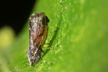
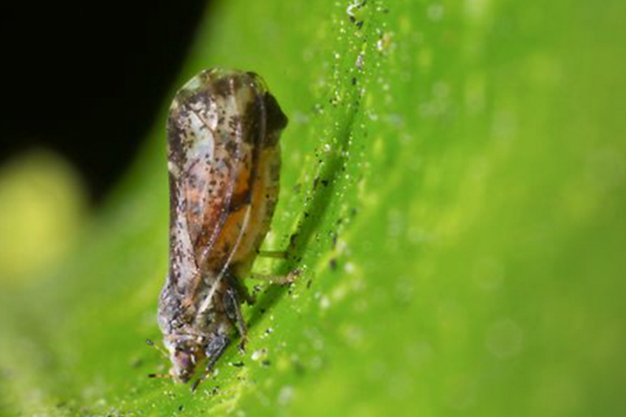 © CGC Diaphorina citri, the most aggressive and effective vector of the HLB disease.
To start, it would be mandatory to apply new phytosanitary treatments or, in other cases, implement cold treatment as an alternative for all shipments to the EU. Limitations should be added to those that could be unilaterally ordered by certain third countries that are the destination of such fruit. "The detection of HLB in some citrus-growing areas would provoke scenes similar to those already experienced with Xylella," Sanfeliu stated.
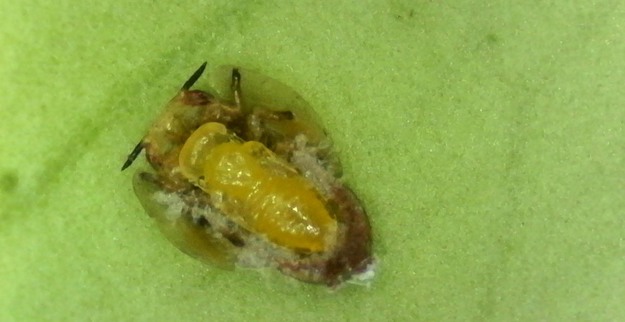 © CGC The pupa of Tamarixia citricola, a new parasitoid discovered by the IVIA in Cyprus, feeds on the main vector of HLB (D. citri). It could play a crucial role in the biological control of this severe disease.
A recent Italian-Spanish study involving IVIA and the University of Valencia found that the countries most affected by incursions were Italy, Spain, and France, in that order. The same researchers later confirmed that southern European countries are the most vulnerable.
The CGC urges Brussels to expand the list of pests designated as 'priority' from at least 20 to 30 to ensure no major agricultural or forestry pests are overlooked. Specifically for citrus, it recommends including the bacterium Xanthomonas citri, which causes citrus canker—a serious disease not previously included in the top 20. Additionally, it requests a substantial increase in funding for early detection programs targeting these pests and diseases. A dedicated budget line is also proposed to co-finance these initiatives in high-risk countries like Italy, Spain, and France.
 For more information:
GCC
www.citricos.org