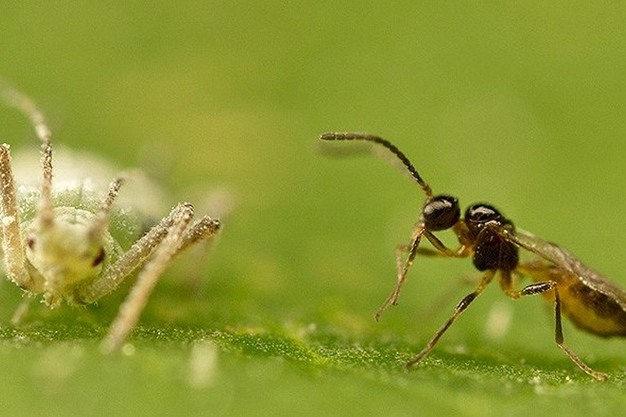
Aphid control by means of useful insects has been discussed several times in relation to the difficulty of containing infestations due to the quick and high capacity to reproduce of the insects, especially in favourable environmental conditions. In order to achieve satisfactory aphid containment, it is necessary to intervene early with the preventive introductions of antagonists, to be repeated throughout the season during the periods considered most at risk.
 © Bioplanet Srl
"Over the course of 2024 and in the spring of 2025, several experiments were carried out combining the use of several 'auxiliary' species, released at different stages depending on the time of release and the situation in the fields. In particular, really interesting results were obtained on cucurbits for the control of one of the most invasive aphids in agriculture, i.e., Aphis gossypii," reads a Biogard - Bioplanet note.
The positive results obtained have stimulated late summer/early autumn applications that are particularly important for courgettes in Sicily in September, October, and November 2025 transplants.
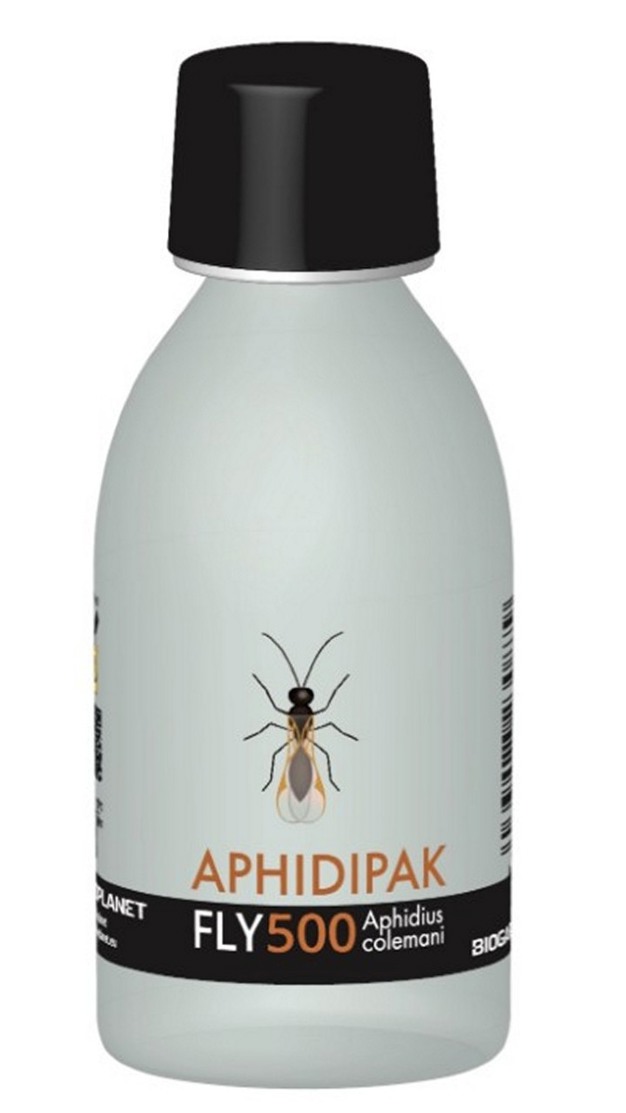 © Bioplanet Srl"The technique is based on the combined use of the parasitoid Aphidius colemani (AphidiPAK) and the predator Aphidoletes aphydimiza (MizaPAK), released into the crops starting from the very first post-transplant phases, with staggered and repeated releases in the following weeks. Both antagonists were released as 'mummies', with eclosion occurring in stages in the days following the release, and with repeated releases over several weeks allowing prolonged 'coverage', thereby ensuring continuity of action during periods of possible infestation," explains contact person Stefano Foschi.
At the same time, great help is provided by a quota of Aphidius colemani that has already eclosed (adult), introduced using the new product recently added to the Biogard catalogue under the name AphidiPAK FLY.
"The addition of females already fertilised and ready for action makes it possible in the first releases to have insects that are immediately capable of finding and blocking any aphid outbreaks that are developing or not yet detected."
Subsequently, the 'adult' product is recommended throughout the season for targeted releases in the proximity of colonies, allowing localised and concentrated interventions where nost needed.
"To conclude, there is no doubt that AphidiPAK FLY represents an improvement of the technique, just as the predatory dipteran Aphidoletes aphydimiza, as already witnessed in other European countries, is also proving useful in our growing conditions. For more information, please contact the Biogard - Bioplanet staff," concludes Foschi.
For more information:
CBC (Europe) S.r.l. Div BIOGARD
via Zanica, 25
24050 Grassobbio (BG) - Italy
+39 (0) 35 335313
[email protected]