South African litchis have made a wonderful recovery since last year. At the end of 2024, the Laughing Waters brand had one of the worst crops in a quarter-century; a year during which Bekfontein Farm in the Onderberg of Mpumalanga Province was heavily influenced by various climatic changes and external factors. Farmer and owner André Schoeman calls it a devastating time for him and the extended community.
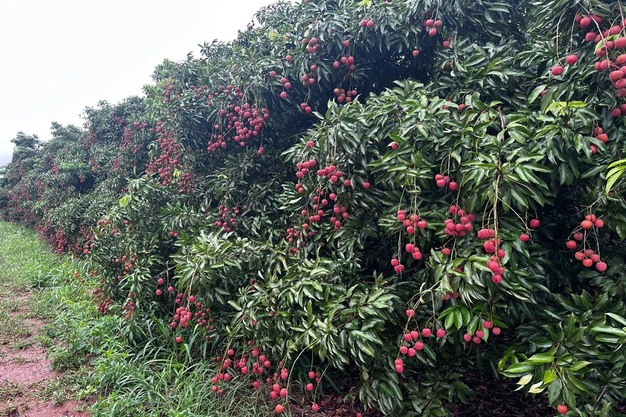
However, with some deliberate, regenerative practices like the use of biochar to sustain healthy soil, the farm has made "a huge comeback" and has delivered, he says, exceptional litchis this year to the local and international markets. "The weather was kind to us," he remarks, commenting: "We are now in our final block. It's a big block with some large, handsome fruit. Really super-sized litchis. We have a lot more litchis than in other years, with a very clear differentiated size from before."
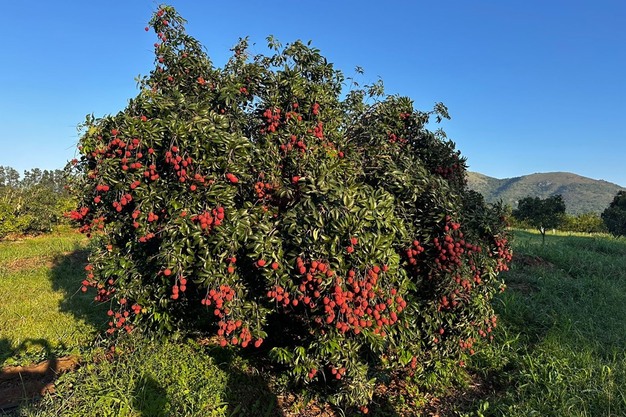 © Laughing Waters Super-sized litchis: the crop of 2025 in the Mpumalanga Onderberg
Schoeman established the Laughing Waters litchi brand when he started farming litchis at Bekfontein Farm, the only crop it has known for decades. The oldest litchi tree was planted in 1982, making it 43 years old. He observes that the older trees still produce some of the tastiest and largest litchis on the farm.
In September, Laughing Waters was amongst the first to supply litchis in South Africa, with the last fruit aimed to be packed towards the end of December. Thus, he says, delivering fruit for three months in comparison to the six-week cycle usually expected by consumers.
The season has proven to be a success up to this point, but it hasn't been without bumps along the way. Unfortunately, Table Bay, where the fruit is loaded for the United States and Europe, experienced less favourable weather, and he also had containers stuck in and around the windbound port of Cape Town during the past month, which caused delays and, he says, some stressful moments.
It has been an unusually tempestuous early summer across the summer rainfall area. Recently, a severe storm accompanied by hail caused significant damage to litchis, mangoes, and buildings to a well-known farmer in the area. "The whole community was truly devastated by this tragedy," he observes.
 © Laughing Waters
USA programme grows every year
The litchi industry was relieved at the news that the United States decided to lift its 30% tariff on exotic fruit. They've worked long at developing that market, and it was a non-negotiable to keep pursuing that avenue. "In fact," he says, "the programme grows every year. It's a very good programme, which has really showcased South African produce. We are proud of our offering."
Schoeman remarks that the South African litchi producer base is also growing, and he credits the South African Litchi Growers' Association for their technical support, thus enabling growers to adapt to the best practices for this era. The South African Litchi Growers Association provides farmers with a myriad of guidance through a knowledgeable network, which is a necessity with such a specialised crop."
 For more information:
André Schoeman
Laughing Waters
Tel: +27 83 627 6926
Email: [email protected]