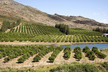
In Chile's Maipo River basin, irrigation management projects are combining field advice, satellite data and AI-based monitoring to guide farm-level water use decisions. The projects are led by Kilimo, a water stewardship platform operating in seven countries in the Americas, working with growers in drought-affected regions supplying export-oriented fruit production.
On almond and cherry farms in the Maipo basin, agronomists assess soil moisture in the field and adjust irrigation schedules based on measured conditions. Recommendations are logged in a digital platform that integrates satellite imagery, weather forecasts, soil data and evapotranspiration estimates. Weekly irrigation volumes are calculated, while plots are monitored to verify water use against historical baselines.
"The aim is to put more thought into the orchard, precision agriculture," said farm manager Felipe Pereira, who runs Agricola San José at the foothills of the Andes.
According to Kilimo, a three-year irrigation management project involving Pereira's farm and 10 others saved 60 million cubic feet of water. A separate drip irrigation initiative saved a further 14 million cubic feet, bringing total savings to 74 million cubic feet, which Kilimo says is equivalent to the annual water use of 10,000 households in Santiago.
Kilimo states that farmers receive incentives once water savings are verified against a baseline using historical irrigation data adjusted for rainfall. Pereira's farm received US$5,000 last year for measured reductions. Kilimo CEO Jairo Trad said, "Water for agriculture is essentially free. The challenge was to give value to water."
Monitoring, reporting and verification are managed through systems running on Microsoft Azure. Kilimo has developed a centralized reporting environment using Microsoft Foundry, integrating AI models and specialized agents for project tracking, balance reporting and contract management. The system is currently used internally, with plans to provide access to financing partners.
In the Maipo basin, agronomists also work directly with growers to support adoption. Kilimo collects land samples, satellite images every 60 hours and short-term meteorological data to calculate evapotranspiration. Irrigation recommendations aim to keep soil moisture above defined thresholds depending on crop type. Kilimo reports average water use reductions of 15% to 20% among users.
Farmers submit irrigation records that are checked through field visits. On nearby walnut, lemon, grape and plum farms, growers reported reductions in water use per hectare following adoption of the system, supported in some cases by new drip irrigation equipment and automated flow meters.
Chile exports most of its fresh fruit during the northern hemisphere winter and sold about US$7.5 billion in fresh fruit globally in 2024, according to government data. In the Maipo basin, which supplies 80% of Santiago's water, projects are focused on managing irrigation under ongoing drought conditions.
"Exporting fruit is basically exporting water, and we must value each drop," said Rosario Gumucio, Kilimo's project manager in the Maipo.
Source: Microsoft News