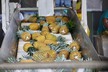
Nigeria produces 1.54 million tons of pineapple per year, yet much of this volume is lost to post-harvest waste. According to Okekunle Akintunde, Chairman of the Board of Trustees of the National Pineapple Growers, Processors and Marketers Association of Nigeria, the country is missing out on opportunities in the global pineapple market, valued at US$27.08 billion, because it exports mostly raw fruit.
Akintunde says growers lack the infrastructure needed to preserve and process fruit, noting that "what Nigeria loses annually to post-harvest waste in the pineapple subsector can significantly boost gross domestic product (GDP) if properly managed." He adds that the highest profits lie in processed, value-added products and that at certain market levels it is more profitable to sell juice-grade fruit to processors than to the fresh export market.
The processed fruit market in the Middle East is projected to grow at a Compound Annual Growth Rate of 5.3 percent through 2026, with countries such as the UAE and Saudi Arabia already importing large volumes of fruit and juice. Akintunde says Nigeria should position itself as a supplier to these markets.
He explains that pineapple offers high returns relative to input costs. "You bury a sucker worth N200 in the ground and get N2000 at harvest." At the current exchange rate, this equals US$0.13 invested for a return of US$1.31. He adds that Smooth Cayenne suckers costing N150 to N200 (US$0.10 to US$0.13) can produce fruit selling for N1000 to N1500 (US$0.66 to US$0.98), and sometimes N2000 (US$1.31), depending on the location.
Akintunde notes that crowns take up to three years to bear fruit, while suckers produce fruit in under two years. "If you plant suckers within two years, before exactly two years, it must bear fruit," he says.
He also points out that pineapple can serve as a natural barrier against cattle due to its thorny structure. "One of the benefits of pineapple is that cows don't enter such plantations," he explains.
Akintunde highlights the investment needed to compete in juice processing. "The machine to produce raw juice, no concentrate, no additive, was around N180 million when I saw it in the UK in 2019," equal to about US$118,000 today. He says no one in Nigeria is producing raw pineapple juice.
He concludes that reducing waste, expanding cold-chain systems, and developing processing capacity will be necessary for Nigeria to capture more value from its pineapple production.
Source: The Nation