Turkey, the world's leading supplier of hazelnuts, is experiencing a sharp downturn this year. Production is estimated at less than 500,000 tons in 2025, which is 100,000 to 200,000 tons less than in a normal year. This drop can be attributed to the spring frosts that affected the country, as well as Eastern Europe. As a result, the average price of 11/13 mm size jumped to around $18/kg in October, more than double that of last year, according to José Gutierrez Fernandez, an analyst at S&P Global Energy.
The perceived poor quality of part of the crop is making premium lots even more expensive. The whole world market is affected, as the country normally provides almost two-thirds of the world's supply.
Faced with this tension, some Turkish operators have been tempted to mix new hazelnuts with old stocks, a practice that is prohibited. The situation has also led to a tug-of-war with Ferrero, the world's biggest buyer, which has asserted its ability to draw on its stocks and turn to other origins. Inflation and high interest rates in Turkey finally forced sales, leading to better prices at the end of November, but the levels still remain historically high.
Chile and the United States on the rise
To offset the Turkish deficit, Chile is doing well. Its 2025 harvest, estimated at 120,000 tons (25,000 to 30,000 tons more than initially forecast), is benefiting from good yields. Chile, like Australia, has received support from Ferrero to develop its orchards, and is becoming a strategic supplier thanks to its complementary production schedule.
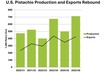
In the United States, production is up by 20% this year, as it is in Georgia, Italy, and Azerbaijan. These additional volumes are enabling manufacturers, including Ferrero, to reduce their purchases from Turkey and are contributing to a slight easing in prices, without fully offsetting the surge caused by the drop in Turkish production.
Source: rfi.fr/fr