The Polish mushroom industry has undergone very dynamic growth in recent years, both in terms of production volume and the professionalization of the entire supply chain. The importance of modern technologies, automation, and quality standards is increasing, and these are now essential conditions for successfully competing in demanding European markets. According to estimates by IERiGŻ (the Institute of Agricultural and Food Economics – National Research Institute), total mushroom production in Poland in 2025 is expected to reach around 365,000 tonnes, compared with 360,000 tonnes in 2024 and 355,000 tonnes in 2023.
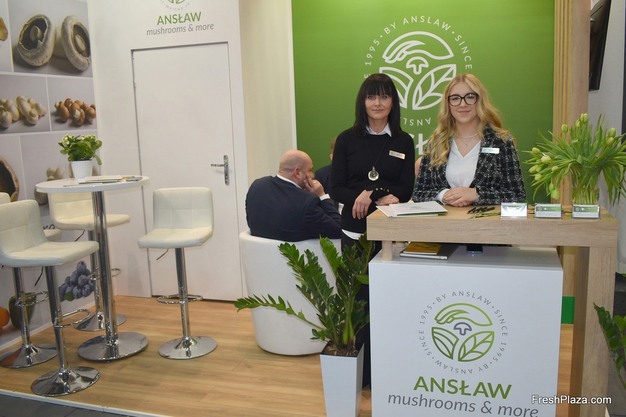
"Poland is among the leading mushroom producers in Europe," emphasizes Ansław sp. z o.o. President Emil Jajczyk. "On the one hand, production volumes are growing, and on the other, competition is becoming stronger. Today, success is driven by quality, reliability of supply, and the credibility of the supplier. For us as a producer and exporter, this means a constant need to invest in technology, automation, and environmentally friendly solutions in order to maintain our competitive advantage."
 © Nick Peters | FreshPlaza.com
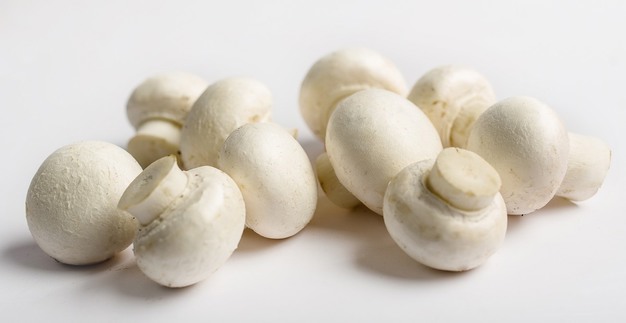
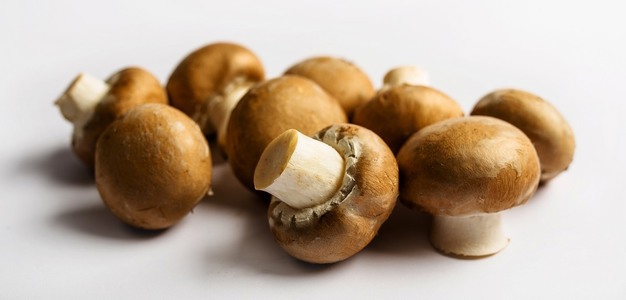
"The core of Polish production continues to be traditional white mushrooms, which also account for the largest share of exports. At the same time, brown mushrooms are gaining importance, especially in foodservice and the premium retail segment, valued for their more intense flavour and attractive appearance," Jajczyk adds. "According to preliminary IERiGŻ data for the first quarter of 2025, exports of fresh mushrooms from Poland reached around 123,000 tonnes. White button mushrooms still dominate in export consignments, but the growing share of brown mushrooms is a clear sign of a changing product mix."
"We're seeing a gradual increase in interest in a more diversified assortment; brown mushrooms, products in specific calibers for gastronomy, and packaging tailored to the retail market," Ansław technical manager Dorota Ozga explains. "Customers expect consistent quality, longer shelf life, and very high hygiene standards in production. For us, this is an absolute foundation of our operations, not an advantage, but a standard. Demand for fresh mushrooms remains stable, although there are naturally seasonal fluctuations and differences between individual markets. The trend toward plant-based foods is becoming increasingly important, as is the search for products that can partially replace meat."
 © Ansław sp. z o.o.
According to Jajczyk, consumers are paying more and more attention to plant-based products, nutritional value, and the possibility of reducing meat consumption. "Mushrooms fit perfectly into this trend; they are natural, low in calories, and extremely versatile in the kitchen. However, demand is also influenced by macroeconomic factors: inflation, energy prices, and the overall economic situation. On the one hand, producers face enormous cost pressure; on the other, retailers and consumers are very price-sensitive. Our task is to optimize processes so that, despite rising costs, we can maintain a competitive offer while keeping product quality consistently high."
As an exporter, the company focuses primarily on European markets, where short delivery times and consistency of quality are crucial. "Mushrooms, both white and brown, are supplied mainly to retail chains, processing companies, and distributors serving the HoReCa sector. We're also analyzing opportunities to enter new markets, especially where consumption of fresh vegetables and plant-based products is growing," Jajczyk notes. "In such cases, it is very important for us to build long-term relationships based on transparency and reliable supply, rather than on short-term price advantages."
 © Ansław sp. z o.o.
Recently, the company has consistently invested in solutions that both increase production efficiency and reduce environmental impact. A particularly important project is the new refrigeration installation, Ozga explains:
"Our new refrigeration system is, in a sense, the 'command centre' for the freshness of our mushrooms. We have used a refrigerant with a significantly lower Global Warming Potential (GWP). This not only helps us protect the product better by ensuring more stable temperature and humidity conditions, but at the same time, it genuinely reduces the climate impact of the installation. The solution combines very practical business benefits – lower product losses, higher quality, and greater security of supply – with a measurable reduction in greenhouse gas emissions in Scope 1 and 2. For us, it is an investment that proves high quality and environmental responsibility can go hand in hand."
The holiday season traditionally brings an increase in demand for mushrooms, especially in markets where they are a regular ingredient in Christmas and New Year dishes. "For us, this means very precise planning of harvesting, logistics, and cooperation with retail chains," Jajczyk states. "Prices in this period tend to be more volatile: on the one hand, we see higher demand, and on the other, strong competition and long-term contracts with buyers. The key is to maintain continuity of supply and consistently high quality, even with significantly higher shipment volumes."
Looking ahead to the coming months, the management views the market with cautious optimism. "We expect demand to remain stable, while cost pressure will continue, particularly in the areas of energy, labour, and logistics. In such conditions, the advantage will be held by companies that are well organised and invest in efficiency and technologies that reduce operating costs," Jajczyk concludes.
For more information:
Dorota Ozga
Ansław sp. z o.o.
Tel: +48 609 344 713
Email: [email protected]
www.anslaw.com.pl