When Robin Vincent started Canobi AgTech more than a decade ago, he wasn't trying to build another hardware company. "We position ourselves as farm intelligence," he says. "If you think about the farm as the body, we're the nervous system."
From its base in Canada, Canobi has evolved from a software-as-a-service platform into a fully integrated provider of hardware, automation, and modular growing environments designed to make CEA smarter and more resilient.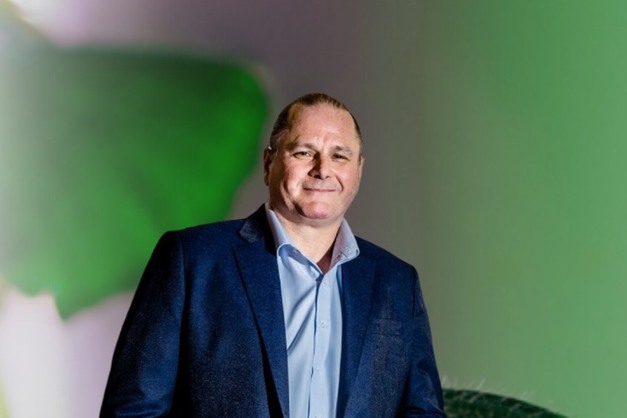 © Canobi AgTech
From software to full-stack farming
Canobi began in 2014 as a data-driven monitoring and control platform for growers. Over time, the company started supplying sensors, dosing systems, and environmental controllers to complement its software. Vincent and his team also established a research farm in Canada to test and refine every element of the platform.
After experimenting with various vertical systems, Vincent discovered Christer Tilk's GrowPipes technology. "We built our own system around the GrowPipe. It didn't leak, it was easy to maintain, and the plant density was strong once we adjusted the layout," he says. That success led Canobi to become GrowPipes' North American distributor.
By 2023, Canobi launched its own hardware line. "We decided to commercialize what we'd built," says Vincent. "We now have two systems: one that fits into existing buildings and our modular Drop-n-Gro product, which includes the building itself."
The intelligence layer
Vincent describes Canobi's approach as a full-stack ecosystem centered on intelligence rather than automation. "There's a difference between doing something and being intelligent about that interaction. Automation reacts. Intelligence anticipates."
Every Canobi module connects to a unified platform that integrates environmental control with enterprise resource planning (ERP) tools covering finances, staffing, harvest data, and production analytics. Farmers can manage an entire operation from a single interface.
When Freight Farms closed earlier this year, Canobi used that same flexibility to develop a lifeboat kit for stranded growers. "Even if you own a Freight Farm, we can retrofit it so you're not reinventing the wheel," Vincent says. "Our goal is to keep farmers farming."
Designing for resilience, not lock-in
The collapse of proprietary systems has made data ownership a central issue in CEA. "We built everything with business continuity and disaster recovery in mind. Every monitoring bundle has redundant sensors. Every dashboard can be exported to Excel. Growers own their data."
Canobi's architecture runs on more than 100 servers, but Vincent wanted to ensure that, even if the company disappeared, growers would still have access to their information. "You can back up everything at any time," he says. "I don't want to keep people through insecurity; I want them to stay because the tools keep getting better."
That philosophy also shaped Canobi's financing model. "We didn't take on large VC funding," Vincent explains. "We wanted to build a sustainable business that could survive by serving farmers well."
Lessons from a young industry
Vincent believes many of vertical farming's early missteps came from overconfidence. "People thought growing indoors would be easy," he says. "It's not. Cultivation is only one piece. You have pre- and post-processing, logistics, and training. It's like balancing balls on top of each other."
He compares modern growers to firefighters rather than fire chiefs. "Once you scale, you're managing complexity beyond human manual capabilities. You need intelligence and automation working together."
The industry, he argues, spent years building farms instead of farmers. "You can't train someone for three days and expect them to run a high-tech farm," Vincent says. "That's why we created the Canobi Academy."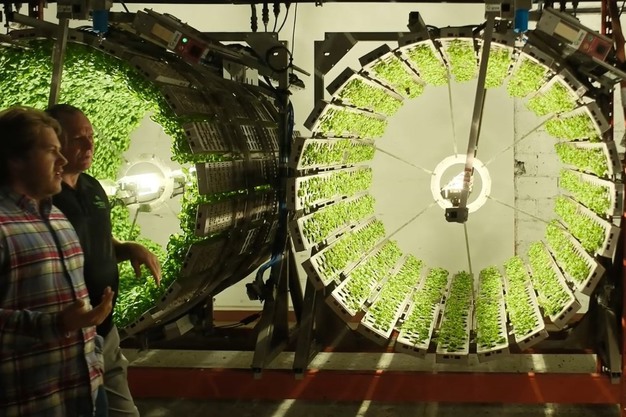 © Canobi AgTech
Robin Vincent at Marseni Farm, a client that uses the Canobi platform
A business built on continuity
Vincent sees recurring success with clients as the clearest proof of concept. "Since 2023, every customer who bought a system has spent more with us later. That tells me they're growing and that our approach of starting small, proving it, then expanding, works."
He contrasts this with companies chasing large one-off sales. "Selling a $250,000 farm once doesn't make an industry," he says. "Helping a farmer thrive, expand, and keep innovating does."
After 35 years in software and data-center management, Vincent believes the key is humility and openness. "We have to remember who's paying for innovation. The farmers," he says. "If we build systems that grow with them, the industry will survive its growing pains."
For more information:
Canobi AgTech
Robin Vincent, CEO
[email protected]
www.canobi.tech