Beekeepers in New South Wales report increasing pressure from varroa mite infestations, raising concerns for crop sectors reliant on pollination. NSW Apiarists Association president Matthew Skinner said rising treatment and labour costs are affecting beekeeping operations. "I'm expecting an increase of probably $30,000 to $40,000 in labour and treatments — most people would be in the tens of thousands out of pocket, easy," he said. Some commercial operators manage more than 10,000 hives. "There have been some people who have already sold out; they didn't want to deal with the varroa mite," he added.
Mr Skinner highlighted the downstream effects on pollination-dependent crops. "All your food that is reliant on bees for pollination, it could go up in price, one in every three mouthfuls relies on bees," he said.
Pollination demand remains high across permanent crop sectors. Almond Board of Australia CEO Tim Jackson said pollination costs have increased. "It used to be about $30 a hive; we're now seeing that at $200 a hive," he said. He added that 66,000 hectares of almonds require about 300,000 hives each year. Growers are evaluating self-fertile varieties, though long orchard life cycles limit rapid changes.
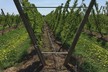
Apple growers have also reported poor fruit set. Blue Mountains producer John Galbraith said only 5 per cent of his apple crop fruited this season. "It's fairly disheartening to drive up and down your rows and see trees that should be laden with apples, and they've got nothing on them," he said. He reported plum and pear yields at about 10 per cent of normal and linked the reductions to reduced feral bee activity and hive bees foraging on flowering eucalypts.
The NSW Apiarists Association is calling for state support to help cover hive treatment costs. "If they can't afford treatments, then it has roll-on effects on neighbouring beekeepers," Mr Skinner said. A Department of Primary Industries and Regional Development spokesperson said the current focus is on management rather than eradication, and no grants are available for growers affected by pollination shortages.
The department is working with growers and agronomists to determine the cause of reduced fruit set in Bilpin. "If we can determine the causal factor, then growers will be able to adjust management practices for next season," the spokesperson said. Mr Skinner warned that rising operating costs may continue to reduce hive availability. "There will be more people who will be just pushed to the edge, and they'll have to make that decision and sell out or downsize," he said.
Source: ABC News