Spanish garlic has had several months of quiet sales in a European market in which the supply from third countries continues to increase. Spanish garlic is thus increasingly being displaced by other countries with lower production costs and lower prices.
"For the last two or three months, the market has been almost at a standstill. Sales are very quiet and only covering orders from regular clients with closed contracts," says Luis Fernando Rubio, Director of the Association of Garlic Producers and Traders (ANPCA).
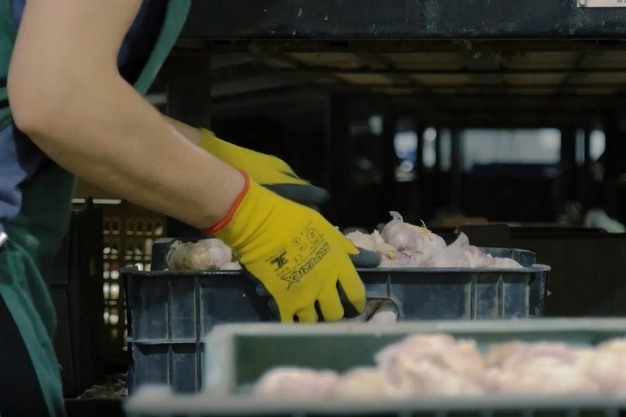 © Anpca
Prices at the source are high, and so are market prices, although the volumes sold are smaller. Despite the garlic acreage having remained similar to last season's, this year's total production has been reduced by around 15%. The drop has been much greater in the case of purple garlic, with around 30%, a result of the impact of heat waves, viruses, and fungi. Also, production costs have risen by around 30% in the last two years.
"In a context of high prices for Spanish garlic, the growth of lower-priced imports from third countries has been staggering, especially for those from Egypt, which is currently Europe's leading supplier. Imports from Turkey are also growing significantly, and new suppliers are appearing, which previously didn't export, and which hardly produce garlic at all, but are actually importing it, even from China," says Luis Fernando Rubio.
"The constant increase in garlic imports from third countries is having a major impact on Spanish producers. It is impossible to compete in terms of prices with the productions from these countries with substantially lower costs," says the ANPCA Director. "The maximum quota for imports from countries outside the EU has been covered for the first time since it was imposed."
"Spanish garlic is losing market share to these countries," says Rubio. "Either urgent measures are taken, or Europe's production will disappear. The increase in costs is also linked to a reduction in crop yields due to the impact of pests and diseases; a consequence of the use of ineffective active ingredients to combat them, due to restrictions imposed by the European Commission, whose aim is to protect the health of European consumers. However, the import of products that do not comply with these regulations and which undergo no controls of any kind is allowed," says the director of the ANPCA.
Luis Fernando Rubio argues that the dissuasive tariff of €1.20 per kilo established in 2001 as a "shield" for European production should be updated. "The dissuasive tariff is totally out of date, if we take into account current production costs. Just taking into account the cost of the CPI, the tariff should be no lower than €2.04.
 For more information:
Luis Fernando Rubio
ANPCA
Plaza Arrabal del Coso, s/n. Aptdo. 66
16660 Las Pedroñeras, Cuenca. Spain
www.anpca.es
[email protected]