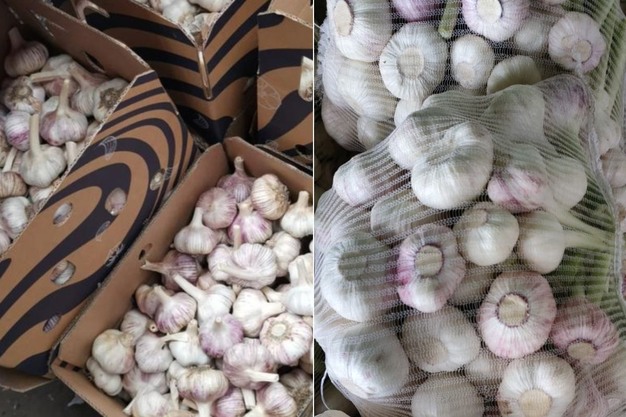
After yet another successful season last year, Egypt's thriving garlic industry continues to attract more and more growers. This will result in a significant increase in acreage and volumes this season, according to Ralph Nakhal of Tomna for Agricultural Investment.
Traditionally, the acreage and volumes of garlic grown in Egypt are cyclical, with a strong year followed by a weak year. However, the industry has maintained its momentum in recent seasons, with a steady increase in acreage and volumes, thanks to sustained international demand. Nakhal says, "The acreage has increased much more this year than last year. This is mainly due to the good season Egypt had last year. Many farmers decided to convert their land to garlic cultivation."
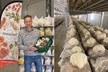
 © Tomna
Nakhal adds, "Last year was very successful for Egyptian garlic due to many factors in various competing origins. At Tomna, for example, we were able to open up new markets and export to Portugal, Bulgaria, Greece, and France for the first time, as well as gain a larger customer base in our established markets. Next year will be a little quieter, but that's the normal cycle."
This rapid growth will certainly pose challenges in terms of seed supply, according to the grower. He adds: "While overall production volumes are expected to increase significantly next season, it remains to be seen what the exportable volumes will be. Several factors come into play, such as the development of seeds, overall quality, but also weather conditions."
The climate factor is still to be watched and could pose challenges for the next season, according to Nakhal. He explains: "The weather is still hot in Egypt, which is not a good sign for garlic quality. I hope we'll have cold days soon." "
The producer sees the growth of the industry in Egypt in a positive light. He concludes: "Recent developments are very important and will enable Egypt to become one of the world's leading garlic-producing countries."
The fresh garlic season in Egypt usually starts in January, while the drying phase for the dry and semi-dry garlic season begins in March.
For more information:
Ralph Nakhal
Tomna for Agricultural Investment
Tel: +20 100 2717 275
Email: [email protected]
www.tomna.farm