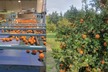
Since its establishment in 1949, the UNECE Working Party on Agricultural Quality Standards (WP.7) has developed more than 120 commercial quality standards for fresh fruit and vegetables, dried fruit and nuts, and seed potatoes. These standards form a common trading language that allows producers and traders to operate consistently across borders.
During its recent session, the Working Party adopted revised standards for seed potatoes, table grapes, peas, pears, citrus fruit, in-shell walnuts, and prunes.
Revised seed potato standard adopted
A central outcome of the meeting was the adoption of the revised UNECE Standard for Seed Potatoes (S-1). Seed potatoes are tubers produced under controlled conditions to maintain varietal identity and prevent the spread of pests and diseases. Their quality has a direct impact on yield, crop health, and productivity. In 2023, global seed potato exports totalled USD 1.1 billion and reached 1.7 million tons.
The revision process took three years and was led by Finland with input from experts in Australia, France, Germany, the Netherlands, Spain, South Africa, the United Kingdom, the United States, and Euroseeds. Originally adopted in 1961, S-1 remains the only international framework covering all key elements of seed potato certification, including terminology, traceability, disease control, pest prevention, and labelling.
The revised standard includes updates to certification procedures, strengthened disease and pest control protocols, enhanced traceability and labelling, and alignment with European and North American trade frameworks.
According to Hanna Kortemaa, Chair of the Specialized Section on Standardization of Seed Potatoes, "This revised standard is a crucial tool for global trade in seed potatoes. By providing clear and consistent certification rules, we are helping producers, certifying agencies, and traders ensure quality seed potatoes."
Updated fruit, vegetable, and nut standards
The Working Party also adopted revisions to UNECE standards for table grapes, peas, pears, citrus fruit, in-shell walnuts, and prunes. The updates reflect shifts in market requirements and, for table grapes and citrus fruit, include changes intended to improve clarity in labelling and reduce food loss.
Cyril Julius, Chair of the Specialized Section on Standardization of Fresh Fruit and Vegetables, noted that "Table grapes are an important export product for South Africa. By allowing more small bunches in sales packages, the revisions to the standard will assist in reducing food loss and waste in pack-houses and increase grower sustainability."
In 2023, fruit and vegetables represented 20 percent of the value of global food exports. Europe remained a net importer of fruit and vegetables (−USD 36.1 billion), while Africa remained a net exporter, according to FAO data.
For the full set of adopted standards and session documentation, visit the Eightieth session of the Working Party on Agricultural Quality Standards (WP.7).
For more information:
United Nations Economic Commission for Europe
Tel: +41 (0) 22 917 12 34
Email: [email protected]
www.unece.org