Following last week's announcement by U.S. president Donald Trump that the administration had made trade deals with Guatemala, El Salvador, Ecuador and Argentina and thus lower prices on products from those countries, headlines reported lower prices on a number of items including bananas and citrus. So how do importers of those items into the U.S. feel about this announcement?
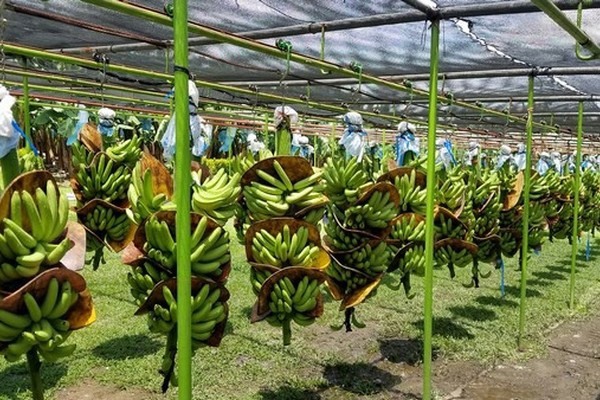
In the world of bananas, it's a bit of a mixed reaction. "A lot of retailers had already upped their price for bananas all over the country. I don't know if prices will go down because now that retailers know they can charge a certain amount for bananas, it's very unlikely that they'll lower the price, even if now they're now paying 10 or 15 percent less for bananas," says Andy Thomas-Stivalet of Kavidac Produce. For the company, the news is a double-edged sword given that while it sources a bit of fruit from Guatemala, it also sources from Mexico and has been doing well with bananas from there. "We hadn't raised our prices at all because we knew something like this was going to happen."
It may be that retailers keep banana pricing at the same level given the tariff action only applies to a few countries–Costa Rica, Colombia and Honduras, all banana exporting countries, were not on the list. "We'll see if it actually changes anything on the price side. My gut says no and that the price increase is here to stay and who is going to get that money is the stores," says Thomas-Stivalet.
 © Kavidac Produce
Regional benefits
He does note that for growers, this development is good and will allow them to be more competitive in the United States. "It's much better for Guatemala than it is for Ecuador because Ecuador had already shifted a lot of its sourcing to Europe and have their feet in Russia and Asia," says Thomas-Stivalet, noting that many Guatemalan companies had been exploring non-U.S. markets to send fruit and that pressure will now be off. "Even with lowering tariffs, I don't know if that fruit is coming to a North American market. For Guatemala it's very good because their natural market is the U.S."
Indeed, Daniella Velazquez De Leon of Organics Unlimited also notes the development of growers shifting focus to other export markets, with Asia being a region that seemed more favorable and predictable. "This wasn't good news for American businesses or consumers since it strained supply and pricing. The reality is that many of the fruits and vegetables we enjoy in the U.S. have limited or no domestic production capacity, and tariffs added pressure to this already delicate supply chain," she says.
She adds that the removal of tariffs on key produce items is an important development for U.S. businesses that provide American consumers with foods that can't be grown in the U.S. "Still, it's important not to interpret this as a signal that these products should be cheap. As the banana industry has been saying for months: banana supply remains tight and it's expected to continue into next year," she says. "Ecuador, one of the largest exporters of bananas, is seeing significant price increases going into next year due to colder than usual weather and the continued threat of TR4. So, while tariff relief helps, it's important not to lose sight of the larger cost realities the industry is facing."
 © Organics Unlimited
Timing and contracts
Thomas-Stivalet also adds that this move will help the transnational companies too given the four countries on the list are some of their main sourcing countries. "This is also happening in the middle contract season. Contracts are kind of finalized, but they hadn't been finalized. So that might shake things up," says Thomas-Stivalet.
Meanwhile at Seald Sweet, GT Parris says it received word early Saturday morning that several produce items are being removed from the tariff list. "At this stage, we're still approaching the news with caution until we fully understand what it means in practical terms," says Parris. "It's also unclear why certain items were removed while others were not, so we'll need to wait and see whether additional adjustments are coming or if this is specific to certain countries of origin."
That said, he notes that this development does bring a sense of relief for both growers and the broader market. "Ultimately, reduced tariffs should translate into benefits for consumers as well. We're hopeful that more items will be removed in the near future, as this would be positive for the entire industry from top to bottom," he says.
Velazquez De Leon echoes that relief. "For family-owned American importers like us, this brings some much-needed stability and predictability. With so many variables that companies in our industry constantly have to juggle, climate, disease risk, labor, etc., removing one major policy uncertainty is a meaningful win for the entire supply chain," she says.
For more information:
Andy Thomas-Stivalet
Kavidac Produce
https://www.kavidac.com/
Daniella Velazquez De Leon
Organics Unlimited
www.organicsunlimited.com/
GT Parris
Seald Sweet
https://sealdsweet.com/