Grupo Juan Ruiz, led by José María Pascual and operating out of Peru and Spain, is built on a simple but powerful mission: To support small and medium-sized growers of avocados, mangoes, and mandarins every step of the way, from flowering to export.
"Our approach is holistic. It's not just about buying fruit," explains Renato Ramos, Strategic Planning and Operations Coordinator. "We walk alongside Peruvian farmers throughout the process with technical advice, harvest support, crop inputs, plant nutrition, logistics, and finally, commercialization."
 © FreshPlaza
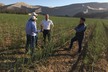
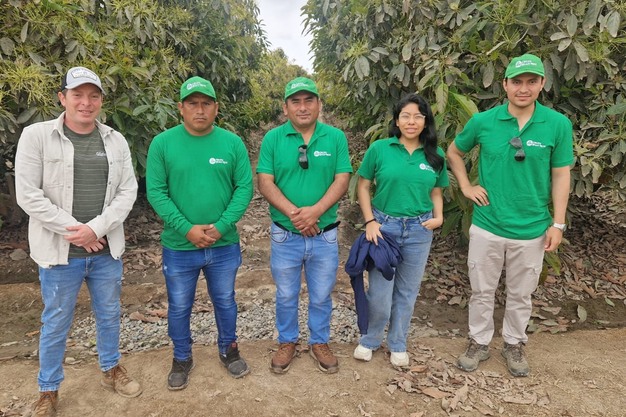
From left to right: Claudio Villegas (avocado producer associated with Grupo Juan Ruiz), Antonio Rojas (Field Supervisor), Guido García Mendoza (Operations Manager), Rita Sotelo (Quality Assurance Manager), and Renato Ramos (Strategic Planning and Operations Coordinator).
Their network of partner growers has been expanding naturally, driven more by word-of-mouth between neighbors than by formal recruitment efforts. In avocado cultivation alone, the group currently works across around 300 hectares, with growers typically managing between 5 and 80 hectares, mostly family-run farms located in mountain and coastal regions. For packing, they rely on third-party facilities based in several regions.
Avocados all season long
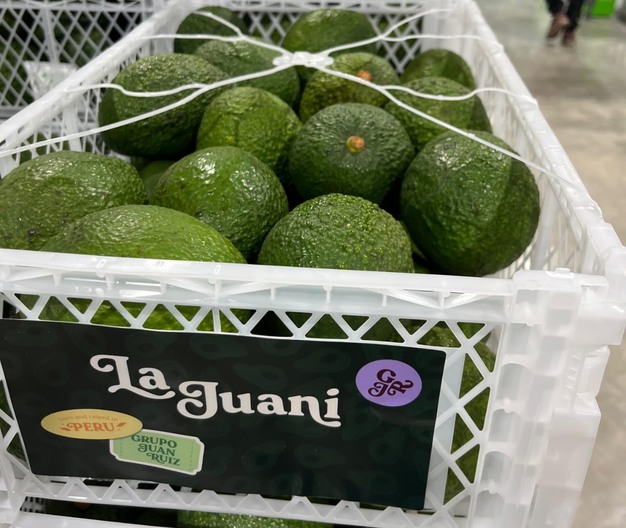
The Hass avocado season runs from February to September, following a geographic rhythm. Harvesting starts in the highlands of Ayacucho and Andahuaylas, then moves down through Huáncano, Ticrapo, Pisco, and Chincha, before heading north to regions like Huaral, Casma, La Libertad, Lambayeque, and Olmos.
 © Grupo Juan Ruiz
Last season, the group exported 72 containers and expects to reach 120 next year. Around 80% of their fruit goes to Europe, mainly Spain, where the CEO has strong business ties. But their focus is increasingly shifting toward Asia. "We've already sent 15% of our volume to China with excellent results and took part in Asia Fruit Logistica alongside Promperú," says Ramos. "The goal is for Asia to soon represent 30% of our exports. Beyond China, we're targeting Korea and Japan."
This Asian push also includes new logistics through the port of Chancay. "It's a more direct route, accommodates larger vessels, and offers more competitive rates. We truly believe in its potential. Eventually, we'd like to ship all our containers from Chancay," Ramos adds.
Harvest strategy that goes against the grain
While most companies rush to export during peak season, Grupo Juan Ruiz deliberately scales back shipments in May and June, months marked by oversupply. "It's not a matter of lacking fruit. It's a strategic choice," explains Ramos. During that time, South Africa and large Peruvian exporters from regions like La Libertad, Lima, Ica, and Lambayeque dominate the market, driving prices down.
 © FreshPlaza
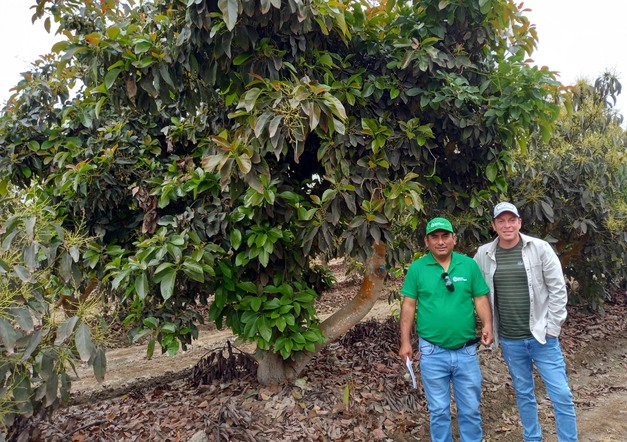
Guido García Mendoza (Operations Manager) and Claudio Villegas (avocado producer associated with Grupo Juan Ruiz) in front of a Zutano variety tree. "In this 8-hectare plot of Hass avocados, there are 105 Zutano trees, which serve as pollinators," says Villegas, who, after three years of collaboration with Grupo Juan Ruiz, emphasizes that he feels accompanied and backed throughout the cultivation and commercial process. "Moreover, I don't suffer losses due to fruit discard, since the group buys the entire production."
"We adjust our agronomic practices, especially irrigation, to delay ripening and avoid these low-price months," says Operations Manager Guido García Mendoza. "The idea is to hit the market when prices rebound. In March, we can ship up to 8 or 9 containers a week. In May and June, that drops to just 1 or 2. This pace helps ensure sustainable profits for growers."
 © FreshPlaza
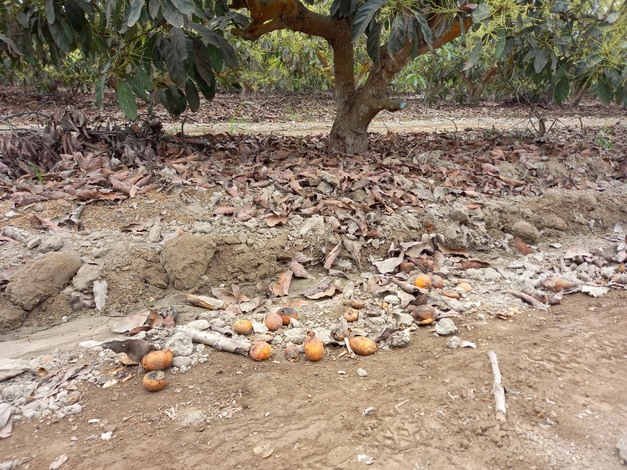
"The waste from a friend's tangerine harvest provides nutrients like calcium, magnesium, and potassium to the soil. The availability of water is not an issue since there is abundant well water just 3 meters deep," comments Claudio Villegas.
But this guidance isn't limited to high-production periods. "Throughout the season, we monitor market trends and advise farmers on the best time to harvest, maximizing income without compromising quality," he adds.
 © FreshPlaza
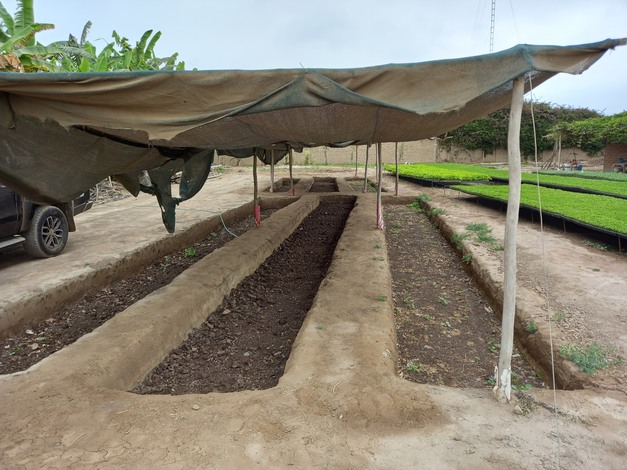
Claudio Villegas produces his own worm compost with horse manure and other organic matter.
A firm commitment to food safety
Although the group partners with a wide range of growers, that diversity doesn't translate into inconsistency. A robust internal traceability system tracks each piece of fruit from the orchard to the port. Every harvest is preceded by soil, leaf, and fruit analysis, along with multi-residue testing. "It's part of our commitment to safety and quality," says Quality Assurance Manager Rita Sotelo.
 © FreshPlaza
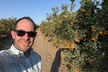
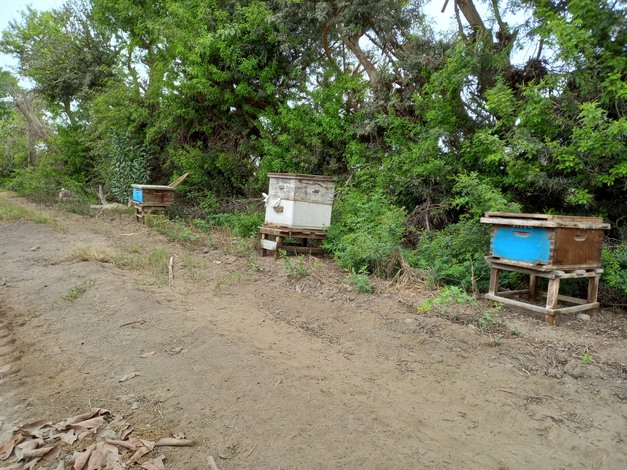
Beehives located along a row of trees that protect the plot from fungal problems caused by the cold and humid winds coming from the Pacific Ocean, five kilometers away.
Climate change has made vigilance even more crucial. "Quarantine pest risks, like fruit flies, are on the rise. That's why we work closely with SENASA, which inspects the fields every four weeks. So far, we've passed every check, even during alerts like the one for cadmium," she notes.
Grupo Juan Ruiz markets all harvested fruit; nothing goes to waste. "If a buyer doesn't want certain sizes, we redirect them to other markets. Thanks to strong relationships with our clients, we're able to place everything," García Mendoza emphasizes. Medium calibers (sizes 18–24) make up 65% of their volume, smaller ones (26–28) 20%, and larger sizes (10–16) around 15%. Smaller calibers are especially appreciated in China.
Branching out with mangoes and mandarins
Avocados may be the backbone of the business, but the group is expanding fast into mangoes and mandarins. Last season, they exported 27 containers of mango and aim for 80 next year. As for mandarins, they shipped five containers, four Satsumas to China and one W. Murcott to the U.S., with plans to triple those numbers.
A notable milestone: Grupo Juan Ruiz was the first Peruvian company to export mandarins to China via the port of Chancay. "It's a demanding market, but the potential is huge, and the competition, like South Africa, is tough," says Ramos. "As Europe tightens its regulations around traceability and certification, Asia offers a fresh, fast-moving alternative."
Business with purpose
Beyond figures and markets, what truly sets Grupo Juan Ruiz apart is its way of doing business. "We're not here to compete on price or volume," Ramos concludes. "Our goal is to build trust-based relationships with growers and buyers alike, ensure shared profitability, and grow in a way that makes sense for everyone involved."
For more information:
Renato Ramos (Strategic Planning and Operations Coordinator)
Grupo Juan Ruiz
Tel.: +51 967 964 189 (Peru)
[email protected]
[email protected]
www.jruizgrupo.com